Dean Adler wants to save Philly-area malls, the Bourse, and Center City’s biggest office building. Can one developer do it all?
Inside real estate mogul Dean Adler's ambitious plan to revive four Philly-area institutions at the same time.
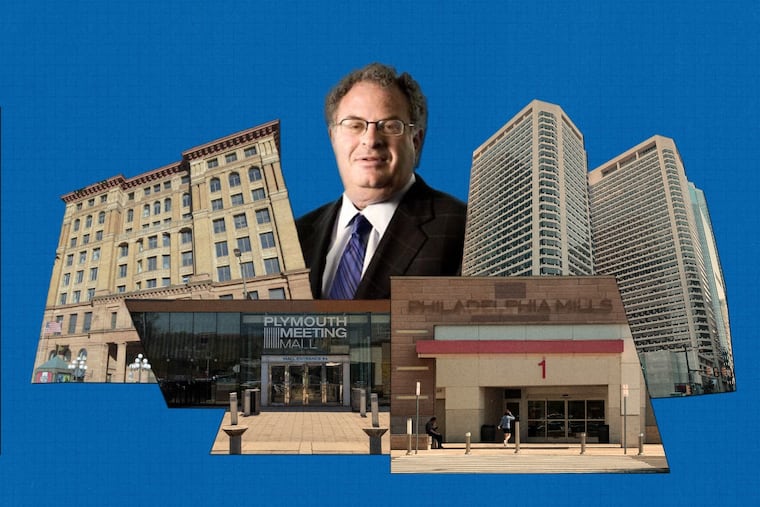
Longtime real estate investor Dean Adler sees unparalleled opportunity in the uncertainty of 2026.
Post-2022, the real estate industry has been scarred by vacant offices, canceled projects, rising debt, and heightened interest rates and construction costs.
Those stresses are keeping many real estate players in stasis. But Adler says that is why now is the time to bet big on new development in Philadelphia and beyond.
“We like to buy when people have fear in their eyes, when people are losing — have already lost — their money,” Adler said. “A crisis for most and a select opportunity for the select few. I’ve waited 40 years for this period. I’m not gonna let it go by.”
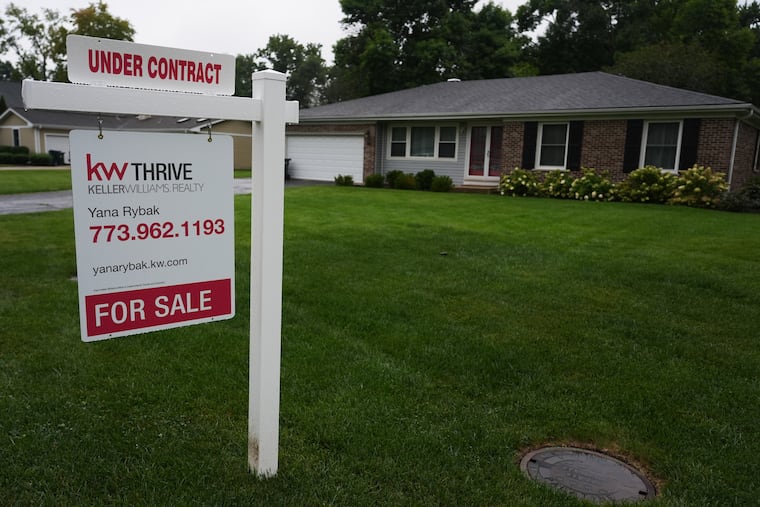
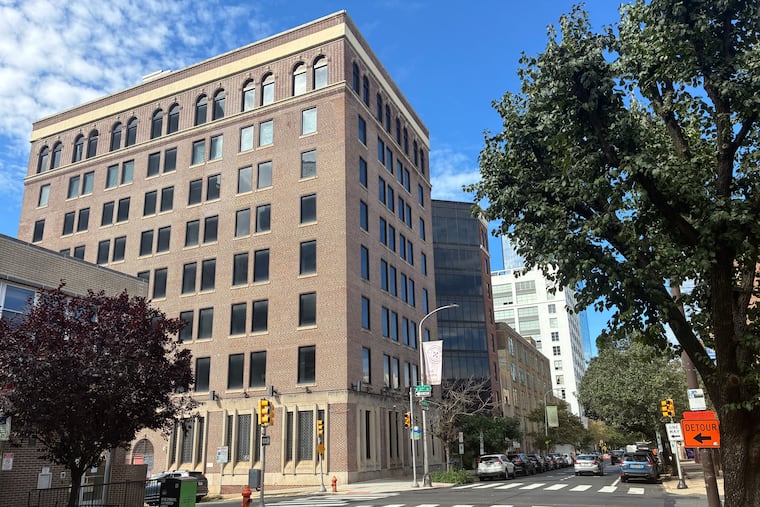
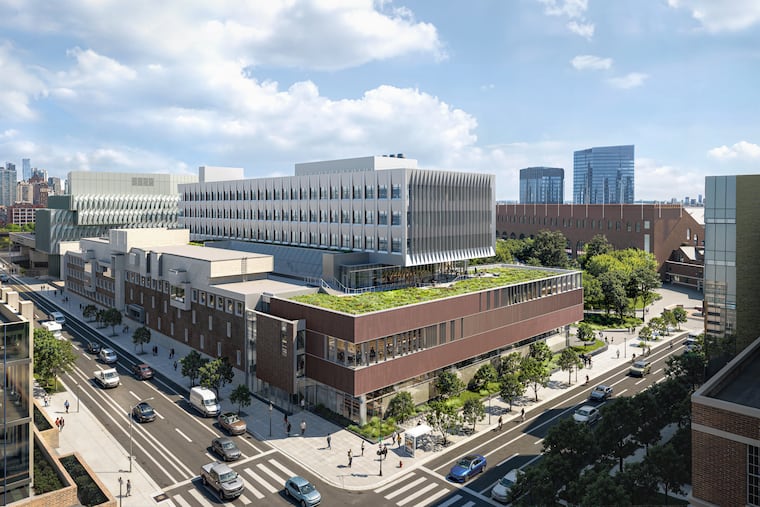
In recent months, he has announced plans to redevelop the 1.7 million-square-foot office complex at Centre Square with PMC Property Group, the city’s largest apartment developer. Now he is talking about buying the 137-acre mall formerly known as Franklin Mills and turning it into a hub for youth sports and mentorship in Northeast Philadelphia.
Combined, the projects would include 750 new homes and, according to Morningstar Credit, address $625 million of distressed commercial real estate debt.
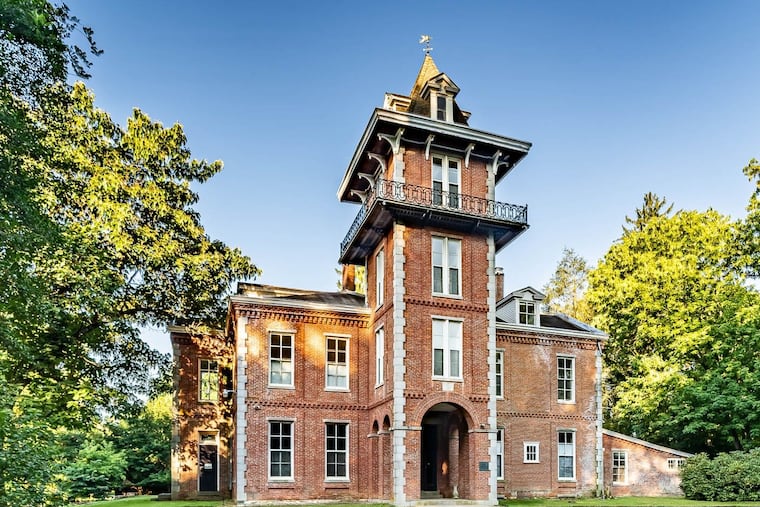
That is on top of previously announced plans to remake Montgomery County’s Plymouth Meeting Mall — Adler says that sale will close this month — and redevelopment plans for the Bourse in Center City with Keystone Property Group, with which he is currently clashing in court over a bid to replace it with apartment developer PMC.
Adler, who has spoken with The Inquirer four times since February, says these major proposals are just the beginning. He has his eye on the Willow Grove Mall, the stalled redevelopment of the Family Court building on the Benjamin Franklin Parkway, and the federally owned Custom House in Old City. He also has big ideas for the Fashion District and the generally troubled East Market Street, including the Disney hole.
Before this current spree, with his company Lubert-Adler Real Estate Partners, he helped remake a historic Philadelphia icon in the Bellevue Hotel on South Broad Street, resurrected a riverside power plant as a mixed-use mecca called the Battery on the Delaware River, and developed the new Aramark headquarters on the Schuylkill.
But even by that standard, Adler’s current to-do list stands out — and he is doing it under a new charter, Adler & Co.
Can one developer do it all?
Adler is a well-known player in Philadelphia real estate, with a boisterous personality and an often rumpled presentation. His recent burst of activity comes in the wake of the 2024 retirement of his former partner, Ira Lubert.
That’s why Adler says he is leaving behind Lubert Adler Partners and starting a new company.
“I’m sure he [Lubert] looks at this, and says, ‘What’s he doing?’” Adler said. “I was not so prolific before because the market was too expensive.”
But now? “For anyone who thinks I’m doing too much, guess what? I’m not doing enough.”
Lubert did not respond to requests for comment.
Eye-catching, if unconventional
Adler insists he is not being overly ambitious. He just has a winning formula: Buy old, underutilized office and mall complexes in high-demand areas for cheap, then add an array of uses.
Almost all Adler’s newer projects include housing, but they also focus on wellness with features like the Sporting Club at the Bellevue or the melange of indoor sporting offerings called Ballers at the Battery.
He also wants to dominate specific geographic areas — establishing what he calls districts or campuses across Philadelphia — near City Hall, along the Benjamin Franklin Parkway, Old City, and the stretch of the Delaware River waterfront north of Penn Treaty Park.
“I don’t rent rooms; I rent lifestyles and experiences,” Adler said. “When you own the district, you have a competitive edge. How could a single asset compete with me when I control wellness, apartments, and offices in the entire district?”
Adler, who is 69 years old and spends much of his time in New York these days, says that he has the financing for projects like the former Franklin Mills (now called Franklin Mall) lined up and that he is securing backing from several sources. He also plans to invest his own money.
“I have $10 billion in demand from pension funds, insurance companies, preferred equity groups. I have about 300 family offices,” Adler said. “More importantly, we have enough of our own cash where we significantly invest our personal money. I can’t ask other people to invest money if I don’t lead with my money.”
In interviews, a dozen prominent Philadelphia real estate developers and investors praised Adler’s creativity and daring. Some also raised their eyebrows at the volume and diversity of his recent ideas.
“Dean is one of the most well-established, most well-respected investors and developers of real estate in Philadelphia,” said Leo Addimando, managing director with Alterra Property Group, a major apartment developer in the city.
Several real estate professionals noted that Adler’s alliance with PMC Property Group’s Ron Caplan, his partner on Centre Square, is a boon to his ambitions. Caplan did not respond to an interview request.
But it is also true that Adler’s eye-catching, if unconventional, mixture of uses is markedly different from the norm in the traditionally conservative world of real estate.
Developers love to build apartments because they are easy to explain, almost guaranteed revenue-generators, and usually flush with willing buyers. After all, everyone needs a place to live.
“His creativity in trying to find unconventional sources of cash flow … is a novel approach but carries certain risks,” Addimando said. “Does that cash flow materialize? Is it sustainable, and how does it get valued [when it goes up for sale]?”
The Franklin Mills of the future
Adler’s vision for Franklin Mills is typical of his ambitions.
He says the workforce housing and youth mentorship programs are his way to give back. And the Margaritaville-themed water park he is planning? He points to the success of the indoor-outdoor Island Water Park at the Showboat in Atlantic City, which attracts families in the winter months, too.
Legacy is also why Adler says he is so focused on building youth sports infrastructure and offering mentorship programs at properties like Franklin Mills and Plymouth Meeting.
Adler’s youth sports-oriented vision for the mall properties is partly based on the complaints he hears from Philadelphia-area parents about how far they have to travel for tournaments.
“Families are driving for the weekends to the middle of Central Pa. and staying in crummy motels with their families,” said Steve Gartner, executive vice president with real estate services firm CBRE in Philadelphia.
Adler says the vast expanse of Franklin Mills has space for multiple baseball diamonds and soccer fields and a hotel — he wants a Homewood Suites — where traveling players and their parents can stay.
“Doing outdoor sports is cheap, building towers is a fortune,” he said. “I’m taking surface areas and putting fields on them. I redo the malls. I don’t build anything new. The truth is, they’re not so big plans. It’s all about easy execution.”
Adler declined to disclose his offer on the Franklin Mills mall but said he plans to invest $100 million in the property. He acquired Centre Square for less than a third of its previous sales price.
“You can’t make money building new. It takes too long; it’s too risky,” he said. “Buy cheap, add value with local boots on the ground, and then create an institutional asset at 50% cost of your competition and two times the return. Then monetize.”
Although some real estate industry insiders are skeptical that Adler can successfully juggle so many idiosyncratic projects, few would wholly bet against him either.
“Dean is a genius around real estate strategy and execution,” said John Grady, the former president of the Philadelphia Industrial Development Corp. “He’s always been ambitious and ahead of the curve.”
By most measures the real estate cycle is still in a downswing, and Philadelphia is not the only place with the kinds of assets Adler wants to buy for bargain basement prices.
Beyond his projects in Philadelphia, Adler’s eye is on other cities, especially those with more robust economies and higher-paying jobs — where he will be able to command higher rents.
Although he will not countenance doing business in cities like Denver or Houston, which lack historic buildings to restore, other older cities are in his sights.
“I’ve done everything I can in Philadelphia,” Adler said. "One more deal, the Family Court building that I want to buy. Then I retire from Philly, and I put my efforts in New York City and San Francisco.”