A once-crumbling Point Breeze church is being preserved as a brewery and community space
A city incentive to protect historically significant churches paves an easier path to redeveloping Second Nazareth Missionary Church.
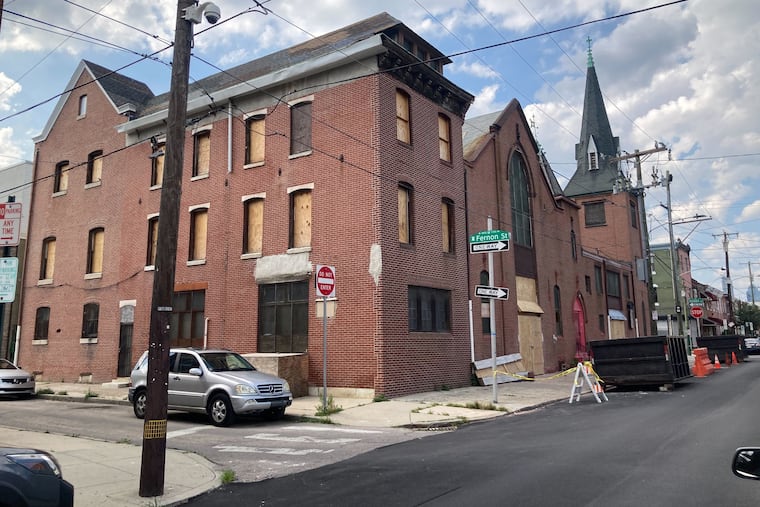
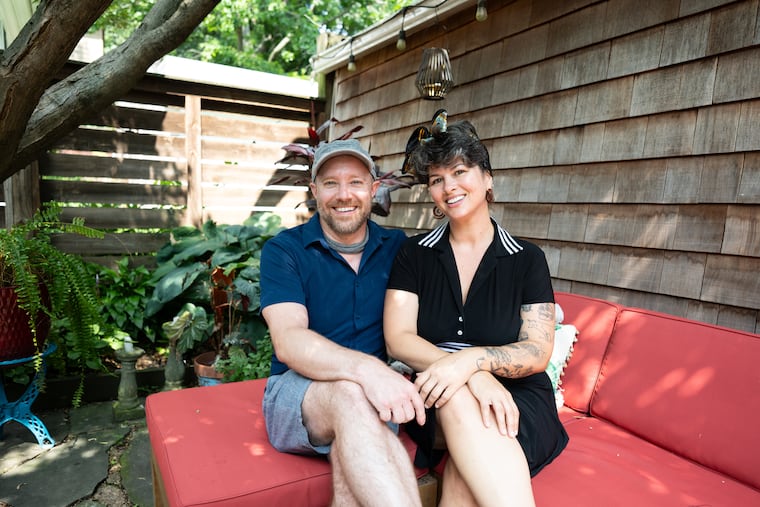
Dane Jensen isn’t a developer by training or profession, but he loves old buildings and he’s got big plans for the church at 1800 Tasker St.
The 138-year-old institution is a fixture in Point Breeze, but Second Nazareth Missionary Church’s shrinking congregation hadn’t been able to keep up with repairs. In 2024, as the church sought to sell, its leadership met with Jensen, who pitched them on his vision of a continuing life for the building as a communal space, if not a sacred one.
“A lot of adaptive reuse is taking these big institutional buildings and turning them into apartments and, to me, that loses some of the intent of the space,” Jensen said. “We are trying to preserve it as something where people can still gather and feel fellowship. Even without religious intent, it can still be a place where people can connect.”
Jensen bought the property in mid-2024 for $1.75 million, and he has begun renovations. He hopes to turn the church into a family-friendly restaurant, brewery, and event space, outfitted with an indoor playground, an idea he successfully pitched to Second Nazareth’s leadership.
“It’s a little scary to put that word out there because some people hear brewery, and they hear bar. They hear place to get drunk,” he said. “We envision it as a community space. During the day you can go grab a cup of coffee and do some work. In the afternoon, you can meet up with friends and have lunch, and, yeah, maybe you can grab a beer.”
Jensen isn’t imagining a traditional brewery, with giant silos and vats. He wants a place he will feel comfortable bringing his children, who are 4 and 7. That’s also why he’s been drawing up plans for play equipment inside the space.
The church is currently zoned for single-family use, like the rowhouses that surround it. But in 2019, City Council created historic preservation incentives to make it easier to repurpose churches that are on the Philadelphia Register of Historic Places.
That means Jensen can move forward, since the church was added to the register earlier this month. He won’t have to go to the Zoning Board of Adjustment or seek a legislative zoning change from Council President Kenyatta Johnson, who represents the area.
However, Jensen said he still plans to meet Johnson and arrange meetings with surrounding neighborhood groups known as Registered Community Organizations (RCOs).
“Needing to talk to your councilmember, needing to talk to your community through the RCOs, is incredibly valuable,” Jensen said. “We want to do that to make sure we’re not just coming in to extract value from the neighborhood. We really want to contribute in a real and meaningful sense. Hiring from the neighborhood feels really important.”
Jensen is applying for a sit-down restaurant and artisan industrial use permit. Other possible uses of the building include a bakery and a coffee roastery.
Whatever the final use, the historic church will require extensive renovation first. Currently, Jensen’s team is putting in steel reinforcements to brace the building. He plans to restore most of the stained glass, fix the leaky roof, and install fire safety and Americans with Disability Act infrastructure.
The church dates to 1886, when it was known as the Presbyterian Church of the Evangel. That denomination was in place for almost 100 years, but as that congregation shrank, the church sought a successor.
In 1978, the Second Nazareth Missionary Church took over the building and remained until 2024. In recent years, that congregation began facing many of the same challenges as their predecessors even as their membership was shrinking and repair costs were growing.
Jensen said he found notes from the waning days of the Presbyterian era that showed the leaking roof was a problem back then — a challenge that decades later, Second Nazareth was facing again.
When the Historical Commission accepted Jensen’s 48-page argument for the building’s importance earlier this month, that triggered the 2019 law that made it easier to find new uses for historic “special use” properties — like churches or theaters — by granting them more flexible zoning. That means no trip to the zoning board, which can add over half a year to the development process and often more if neighborhood groups or councilmembers contest the board’s ruling in court.
The 2019 bill was drafted in response to the fate of St. Laurentius in Fishtown, which got caught up in lawsuits over a zoning board ruling. The legal battles dragged on until the church was demolished.
“I’ve really fallen in love with the building throughout this process,” Jensen said. “I’m excited that I am in a position to try to get the building to a point that it can last another 140 years and still have people feeling togetherness in it.”