This developer wants to revive one of South Jersey’s deadest malls. But it’s not a done deal.
For two decades, the Echelon Mall, now called the Voorhees Town Center, has been on the cusp of revitalization. A developer says he’ll make it a “destination,” if he can get a New Jersey tax credit.
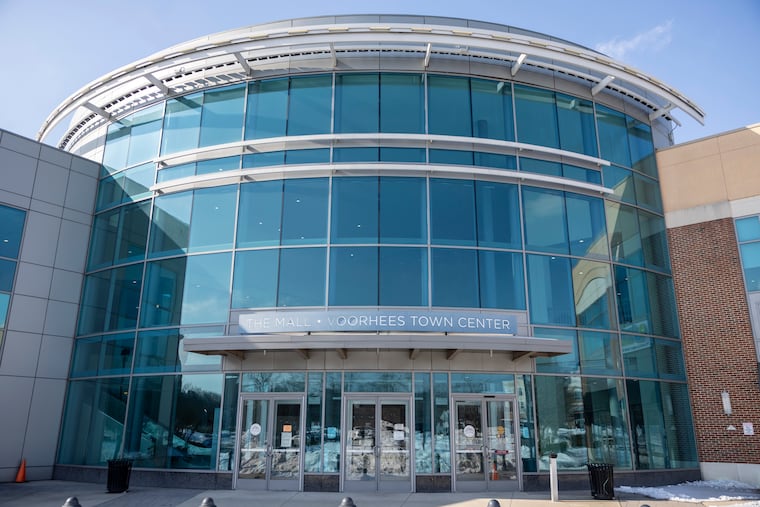
A North Jersey developer has plans to finally transform the long-dead Echelon Mall, saying he’d spend more than $250 million to create a “regional destination” with high-end restaurants, entertainment venues, sports retailers, housing, and perhaps even an “upscale supermarket.”
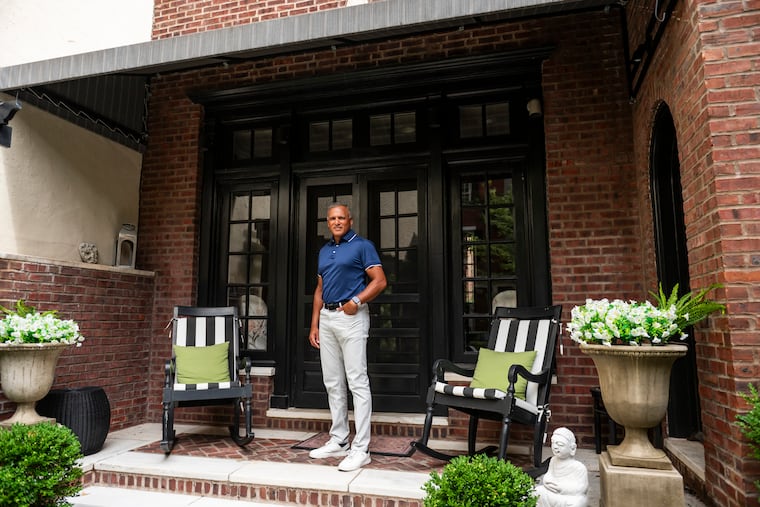
“We’re going to try to make it Voorhees’ main street” inside the old mall building, said George Vallone, president of the Hoboken Brownstone Co. “Just sort of reinvent the whole thing.”
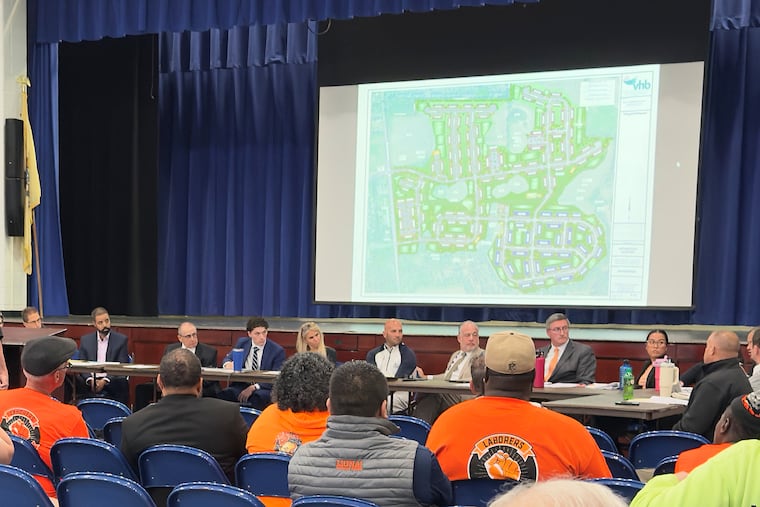
The project, which would include townhouses, apartments, a parking garage, and community spaces, was unanimously approved by the Voorhees Township Committee in October.
But Vallone said his plans aren’t set in stone: The revitalization of the former mall, now called the Voorhees Town Center, depends on whether Hoboken Brownstone can get financial help from the state.
Vallone said his company is applying for a $90 million tax credit for development projects and expects to hear in the coming months whether it is approved. If not, he said, “we walk.”
Vallone made similar statements in a Philadelphia Business Journal report earlier this week.
Voorhees Township Mayor Michael Mignogna said he supports “the thoughtful redevelopment of the former Echelon Mall site” as proposed by Hoboken Brownstone.
“Throughout the process, the township has worked collaboratively with Hoboken Brownstone and Namdar in their private transaction to advocate for the rejuvenation of Town Center, specifically a strong business and retail presence that will restore the site as the center of Voorhees tradition and community,” Mignogna said in a statement.
He noted that a state tax credit would not affect the developer’s local tax responsibilities.
The uncertainty represents the latest hurdle in the long quest to revive the sprawling complex off Somerdale Road. Over the years, the 400-acre property, one of the Philadelphia region’s many lifeless malls, has been redeveloped in fits and starts under multiple owners.
Recently, transformations have begun at nearby malls, including Moorestown and Burlington Center, as the old Echelon Mall languishes.
What $250 million could do for dead Voorhees mall
Voorhees officials, including Mignogna, have been talking about the troubled mall’s revival for two decades.
Built in the 1970s, the once-bustling Echelon Mall has been struggling with vacancies since the early 2000s.
In an attempt to turn the mall around, it was partially demolished, and a Main Street-style mixed-use development was built on part of the property in 2008. After this makeover, which cost an estimated $150 million, the complex was rebranded as the Voorhees Town Center.
Namdar Realty Group, which is known to scoop up distressed malls, bought the property from PREIT for $13.4 million in 2015, but the situation did not improve. Retailers continued to flee. Customers followed. In 2024, a two-alarm fire damaged the inside of the building. It has not reopened since.
Hoboken Brownstone plans to buy the mall building from Namdar in a pending sale, dependent on the tax break, Vallone said. He declined to disclose how much he would pay for the property, and Namdar executives could not be reached.
The sale would not include the Voorhees Town Hall, which occupies 22,000 square feet of the mall and cost the township $5.5 million.
Nor would it include the property’s existing mixed-use section, Boulevard Shoppes, which had been home to an Iron Hill Brewery until the company filed for bankruptcy and closed all locations this fall. (Township administrator Stephen Steglik said Voorhees hasn’t heard anything from Namdar about what’s next for the Iron Hill space.)
Boscov’s, the site’s sole department store, would also be excluded from the sale, and executives have said it would remain open.
If the sale goes through, Vallone said, construction could begin in early 2027.
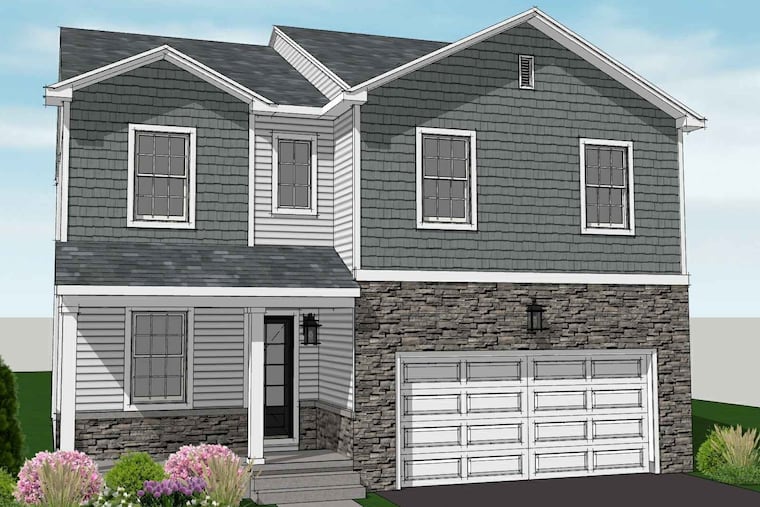
The company plans to build more than 200 market-rate townhouses; more than 100 units of affordable housing, including for-sale townhouses and rental apartments; and a parking garage with at least 1,300 spaces.
As for the retail space inside the mall, “we’re going to invest a lot of money because there has been very little maintenance done on that thing for the last 20 years,” Vallone said. The mall building will not be torn down, he said, and may look largely the same from the outside.
Why this developer invests in dead New Jersey malls
In Voorhees, Hoboken Brownstone’s plan differs from its other major mall redevelopment in New Jersey.
In Flemington, Hunterdon County, Vallone said they’re demolishing Liberty Village, considered the country’s first outlet center, and turning it into a mixed-use complex that will also include townhouses and apartments.
After buying Liberty Village from Namdar, Vallone said he reached back out to the real estate company to inquire about other mall properties for sale. That’s how he became interested in the Voorhees Town Center.
Vallone said he believes dead and dying malls can make good investments.
“Here we have a substantial amount of infrastructure that is feeding the mall,” including plumbing and electric, Vallone said. “That de-risks the project quite a bit.”
» READ MORE: What should a dead mall become? In Exton, the debate continues.
And he said he thinks customers will come to malls-turned-town-centers if they are developed thoughtfully.
After all, retailers like Amazon can’t deliver everything same-day, Vallone said, and shopping online doesn’t offer the same experience as browsing at a store.
In-person entertainment, fine dining, and even grocery shopping are also hard to replicate at home, he said: “Certain things, you have to go somewhere to do.”