Shuttered Iron Hill breweries sit empty across the Philly area. What will become of them?
In Media, West Chester, and over a dozen other communities, business owners wonder what will move into the voids left behind by the bankrupt local chain.

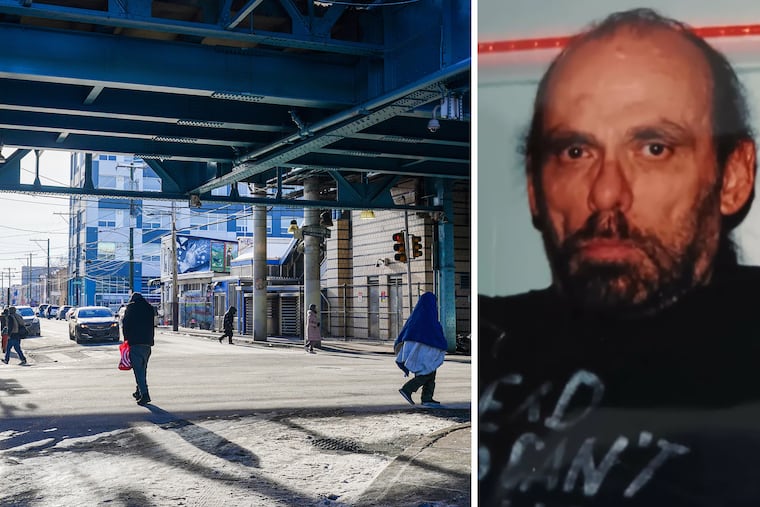
Dane Gray takes a gander across Gay Street in West Chester almost every day. But for three weeks now, the owner of Kildare’s Irish Pub said his view of downtown has been tinged with sadness.
The Iron Hill Brewery at the borough’s central intersection closed last month as the regional chain filed for liquidation bankruptcy. For the first time since 1998, the expansive corner space in an old Woolworth’s is dark.
“You’re used to having the hustle and bustle of the restaurant and the people,” Gray said. “I’ve been staring at it for 20 years and now all of sudden it’s empty.”
The massive hole represents a rarity in the Chester County borough, which had a commercial vacancy rate of 4% as of late September, according to John O’Brien, executive director of the West Chester Business Improvement District. Across from Iron Hill sits another empty storefront, the former Rite Aid that closed this summer after the pharmacy chain’s bankruptcy.
Like more than a dozen other shuttered Iron Hill locations, the West Chester brewpub will remain uninhabited, its insides frozen in time, as the company’s Chapter 7 bankruptcy winds its way through court in the coming months.
» READ MORE: Iron Hill Brewery has officially filed for bankruptcy, saying it has $125,000 in cash and owes creditors $20 million
Across the Philadelphia region, Iron Hill’s closures have left large voids in suburban shopping centers and walkable downtowns, where some nearby restaurant owners said they noticed a slight uptick in business as former brewery regulars sought alternatives.
The vacancies include an 18,000-square-foot taproom and production facility in Exton; a 10,000-square-foot renovated warehouse on the Wilmington riverfront; and an 8,500-square-foot restaurant that was supposed to help revitalize Center City’s beleaguered Market East.
For communities like West Chester and Media, the loss of their Iron Hills is poignant. Business leaders and owners there remember the local brewery chain as a catalyst that sparked restaurant booms and put their downtowns on the map.
Whenever these leased spaces hit the rental market, industry conditions could pose a challenge for landlords looking to fill the spaces.
What could move into a former Iron Hill Brewery?
Industry experts say it’s unlikely that many former Iron Hills will be resurrected as other breweries, since consumers don’t have the appetite for beer they once did. Nationwide, craft brewery closings outnumbered openings last year for the first time since 2005, according to the Brewers Association.
At each of these locations, “if it’s not going to be a brewery and use a chunk of the square footage for a production space, it’s going to be a really, really big restaurant,” said James Yoakum, an attorney at Philly’s Kleinbard firm who regularly represents craft-beverage companies, but not Iron Hill.
» READ MORE: With every Iron Hill Brewery closed, what happens to all of the beer?
An attorney for Iron Hill declined to comment.
In West Chester, “I’m not too concerned with our ability to find a great tenant,” said O’Brien, though he noted it can take time to secure the right one. Across the street from Iron Hill, a 5,000-square-foot storefront sat empty for several years until the region’s latest LaScala’s Fire location opened there this fall.
What’s become of the Ardmore and Phoenixville Iron Hills
The fates of two former Iron Hill Brewery locations that closed last year could prove prescient for this final round of closures.
In an Ardmore shopping center, the 12,000-square-foot brewery that closed in August 2024 is being turned into a Japanese barbecue restaurant. And along Phoenixville’s bustling Bridge Street, the 5,800-square-foot taproom that shuttered in October 2024 is still searching for a tenant.
Joe Raniszewski, a senior vice president with commercial real estate firm MSC, said the Phoenixville property is looking for a full-service restaurant with elevated cuisine but not necessarily one that focuses on liquor.
“Alcohol helped fuel the growth of Phoenixville,” Raniszewski said. “Now it doesn’t just have to be driven by alcohol.”
» READ MORE: Phoenixville has turned into a destination, but some locals don’t like what it’s become
Over the past year, MSC brokers have talked with several interested restaurant groups, he said, and they’ve gotten more inquiries since Iron Hill filed for bankruptcy, with potential tenants now realizing the Phoenixville closure was “not site specific.”
“Phoenixville is a thriving retail, restaurant market,” Raniszewski said. “It’s a great space and a nice opportunity for an established restaurant from another location or an up-and-coming restaurant.”
In Ardmore, landlord Mike Palladino said in 40 years he hadn’t lost a restaurant as large as the 12,000-square-foot Iron Hill. But an existing tenant, O Restaurant Group founder Sam Li, jumped on the space as soon as he heard it was available.
Palladino, president of Palladino Development Group, said he spent nearly $1 million gutting the brewery so Li could transform it into a new Japanese barbecue restaurant, Ogyu.
Li already owns several Osushi locations, including one in the same Greenfield Avenue shopping center, and the high-end Hiramasa in Newtown Square. Li said his new concept would focus on making Wagyu beef relatively affordable, with different all-you-can-eat pricing tiers and tabletop grills on which diners can cook their own meat.
“This was the perfect size for us,” Li said. “It’s going to be an all-you-can-eat concept, so we’re going to want volume.”
Li said he’s made a “multimillion dollar investment” in the 280-seat restaurant, which he hopes to open by May 2026.
Palladino said he feels lucky to have a tenant with the money and vision to expand into this former Iron Hill.
“What do they do with the rest of them? I don’t know,” Palladino said. But “Ardmore is going to be just fine.”
Without Iron Hill, some towns seek ‘something different’
In walkable downtowns across the Philadelphia region, business owners said they were especially curious to see what moves into their shuttered Iron Hill.
In Media, Rick Whittington has worked at restaurants across the street from Iron Hill for the past two decades. He remembered when Iron Hill customers would spill over into neighboring bars during long waits for tables on weekend nights. In recent years, however, the Iron Hill crowds had dwindled, said Whittington, general manager of State Street Pub.
Whatever business takes over the space would have to bring in more customers to be profitable, he said. And he noted that downtown Media is largely devoid of national chains.
“A local business would probably be best-received, but being such a large space, it would have to be an established local business,” Whittington said. “It’s just daunting. To be able to afford the space, you’d have to put a lot of butts in seats.”
The Media Business Authority “has been in contact with a number of exciting potential replacements,” executive director Dave Fairman said in a statement, noting the town has “very few commercial vacancies.”
On Germantown Avenue in Chestnut Hill, the business community is “optimistic about what comes next” for the former Iron Hill, the business district’s retail advocate, Ann Nevel, said in a statement. The Chestnut Hill location closed two weeks before the company announced it was shutting down all its restaurants and filing for bankruptcy. Nevel said the landlord has received significant interest from several restaurateurs.
In West Chester, several business owners said they hope something unique fills the Iron Hill void, such as a higher-end Mexican or Asian restaurant.
“What would I like to see there? Something different from anywhere else,” said Joe Monnich, chef and owner at Stove & Co. Restaurant Group, which operates Stove & Tap on Gay Street. “The last thing I feel West Chester needs is another American-style restaurant, selfishly because I have one there. … [But] I think that would just do a disservice to the community.”
Even the West Chester University students are drinking less than previous generations, local business owners said, so another brewery or booze-focused spot might not be the best fit. (That observation aligns with national trends: Only half of U.S. adults under 35 drink alcohol, according to Gallup.)
“West Chester is really screaming for something different,” said Gray, the Kildare’s Pub owner. “Someone who is going to remain there long-term would be good.”