AN EYE-CATCHING TRADITION
These Philly homeowners added their properties to the city’s rich tapestry of murals.
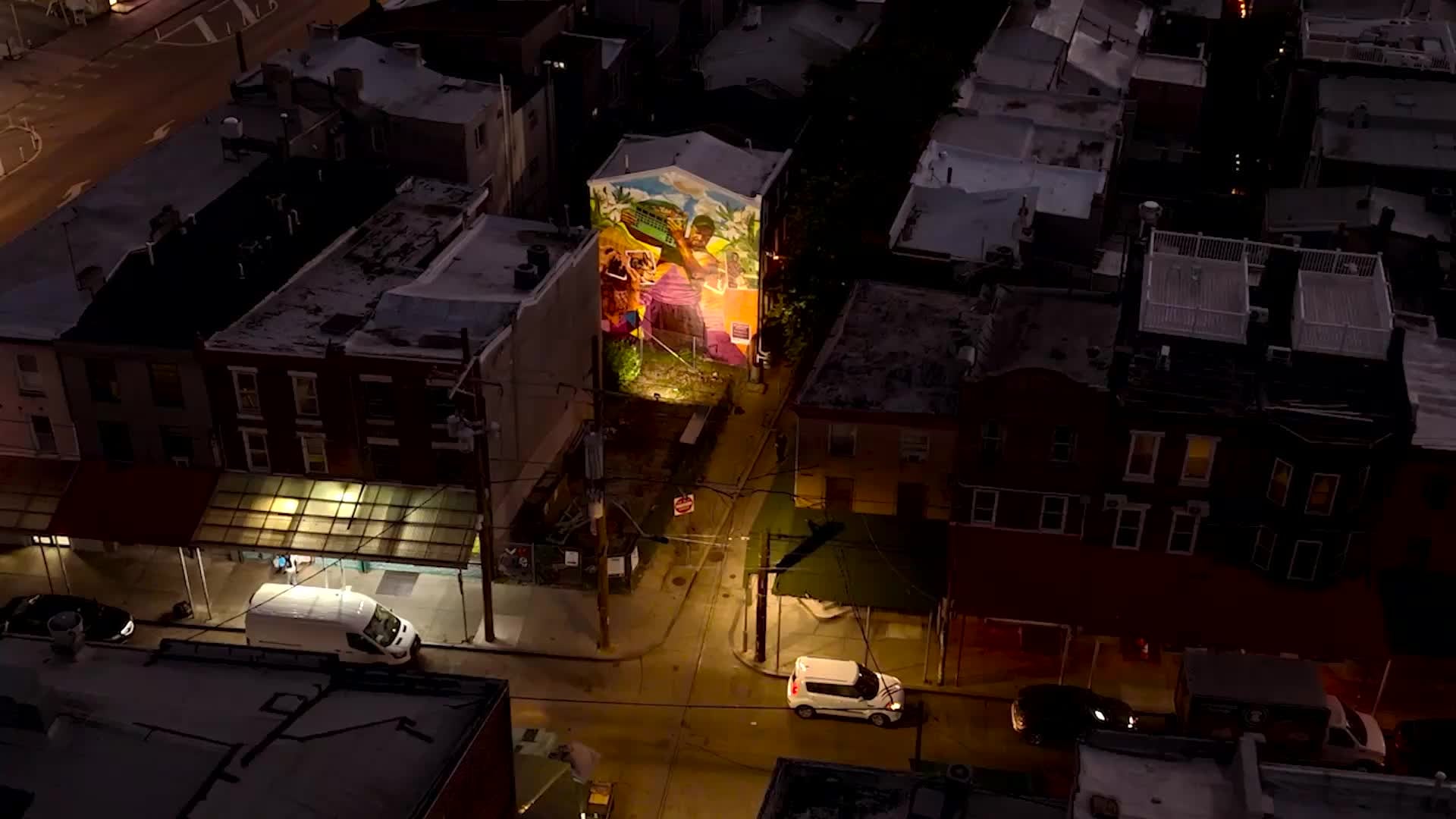
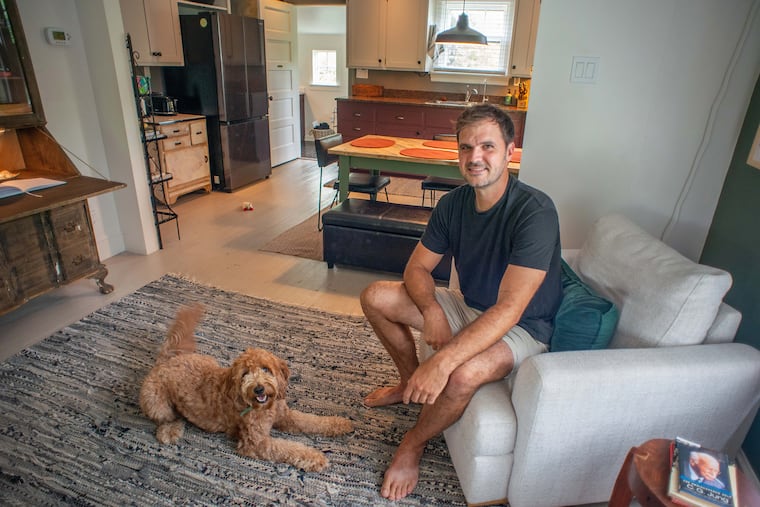
After first-time homebuyer Brendan McCreath settled into his Bella Vista rowhouse last spring, his first priority was contacting Mural Arts Philadelphia.
During the closing process, he had learned that the previous owner had agreed to let an artist paint a mural on the house, but withdrew her support. McCreath wanted to revive the plan.
“I love that Philly is just loaded with murals,” he said. “It’s beautiful.”
In a city internationally known for murals, roughly 1,000 are on private homes through partnerships with Mural Arts. Homeowners don’t have to go through the organization to put a mural on their house. But if they do, Mural Arts covers the costs of preparing the wall, installing the piece, and maintaining the mural.
“We appreciate homeowners so much who really hold art in esteem and are thinking not just about their house but about the communal effect the art will have on the city,” said Jane Golden, founder and executive director of Mural Arts. “Murals become part of our collective identity.”
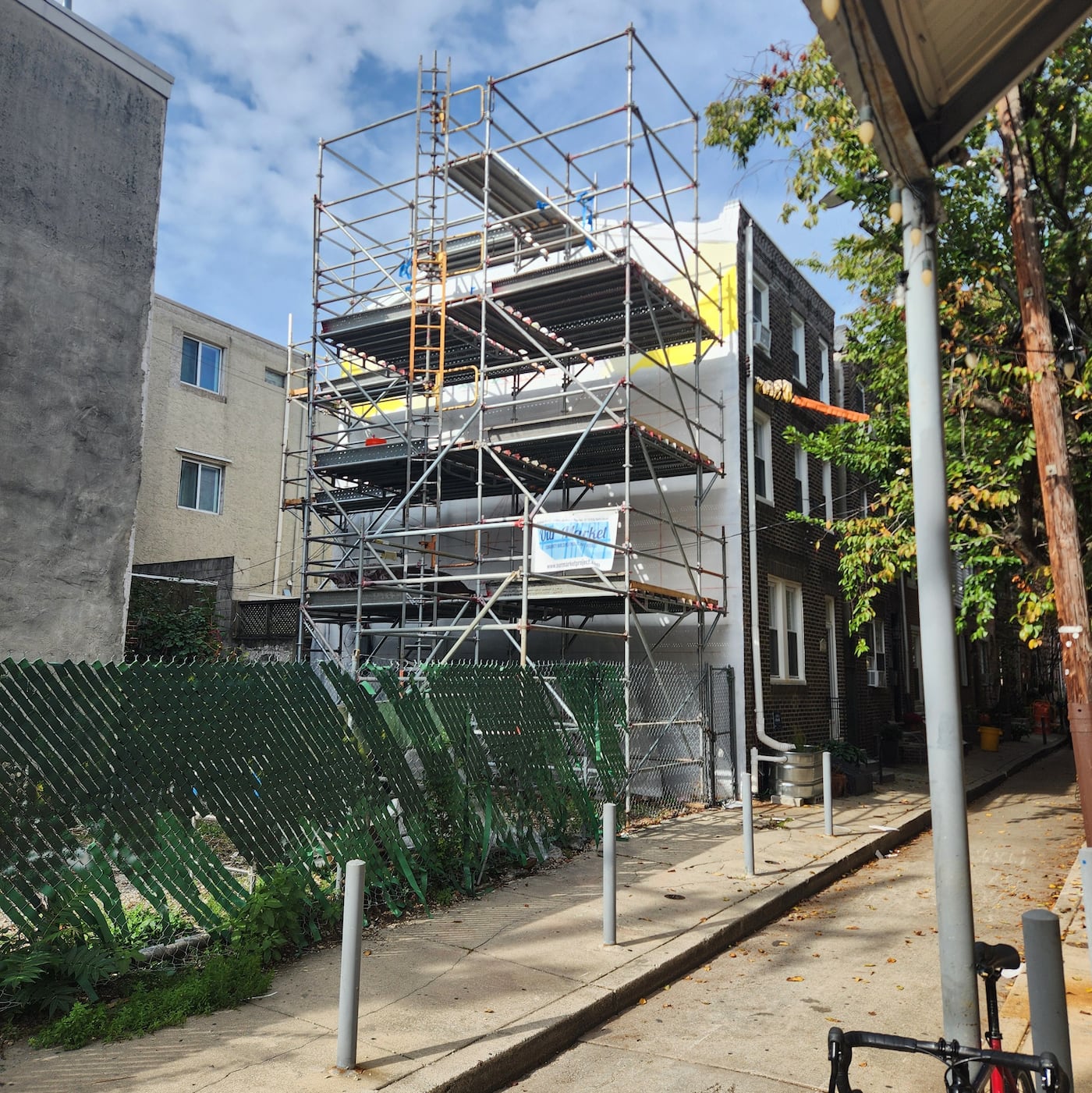
Artists plan murals in collaboration with homeowners and neighbors. Some paint directly onto walls, but most now paint on large sections of cloth and piece them together later on surfaces, Golden said.
She estimates the wait list for artwork through Mural Arts is close to a thousand strong. In Philadelphia, “people 100% absolutely love public art,” she said.
The city gets about a hundred new works per year through Mural Arts. Pitches come from the wait list as well as artists, Mural Arts staff, city officials, and funders.
But the city also loses murals to development and demolitions. Mural Arts tries to stay away from vulnerable sites, including those next to vacant lots.
Lack of funding is usually what prevents Mural Arts from doing more work, Golden said. But sometimes, artists just need walls. The organization has an official “wall hunter” who scouts potential locations. The job has gotten harder, as more properties are owned by limited liability companies (LLCs), and tracking down humans who can give permission for murals is difficult.
Bella Vista homeowner John Del Rossi gave an immediate “yes” when Mural Arts approached him.
“I can’t imagine anybody saying, ‘No, don’t put this beautiful mural on my wall. Leave it blank and ugly,’” he said.
The Inquirer asked six homeowners why they wanted their properties to join Philadelphia’s rich tapestry of murals.
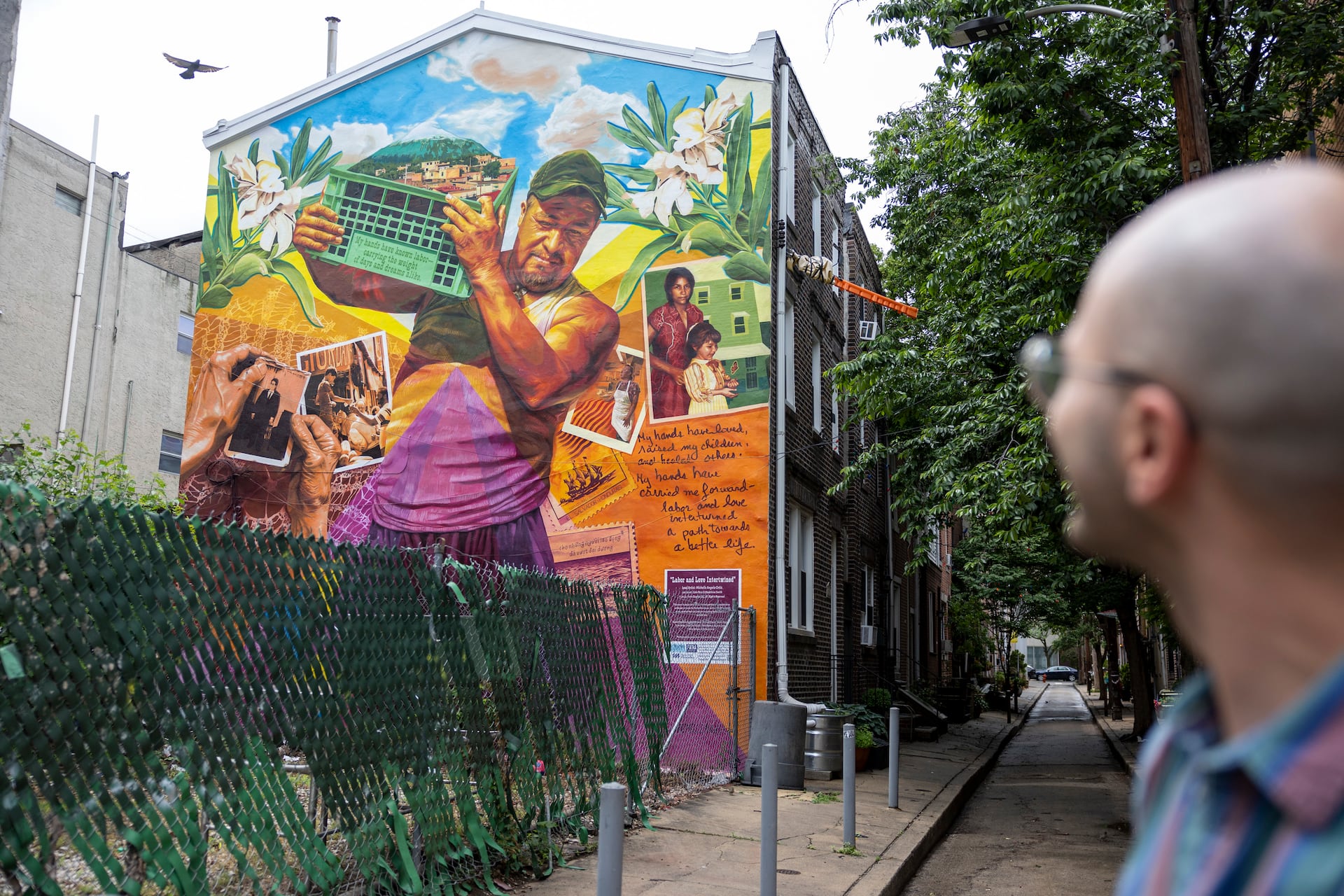
Sometimes, McCreath will spot people gazing at the mural and stop to gaze with them. Then he’ll take out his keys and walk through the door behind it.
“There’s many people who will stop dead in their tracks and take a photo of the side of my house,” he said. “It’s such an open wall out to Ninth Street. It truly feels like the perfect placement for a mural.”
Creator Michelle Angela Ortiz makes art nationally and internationally, and turned to other projects when the mural fell through. But she was disappointed. She was born and raised on this block of League Street, and her parents still live there. Ortiz had wanted to paint a mural “at home” in her neighborhood.
So when McCreath revived plans for the mural, she was ecstatic.
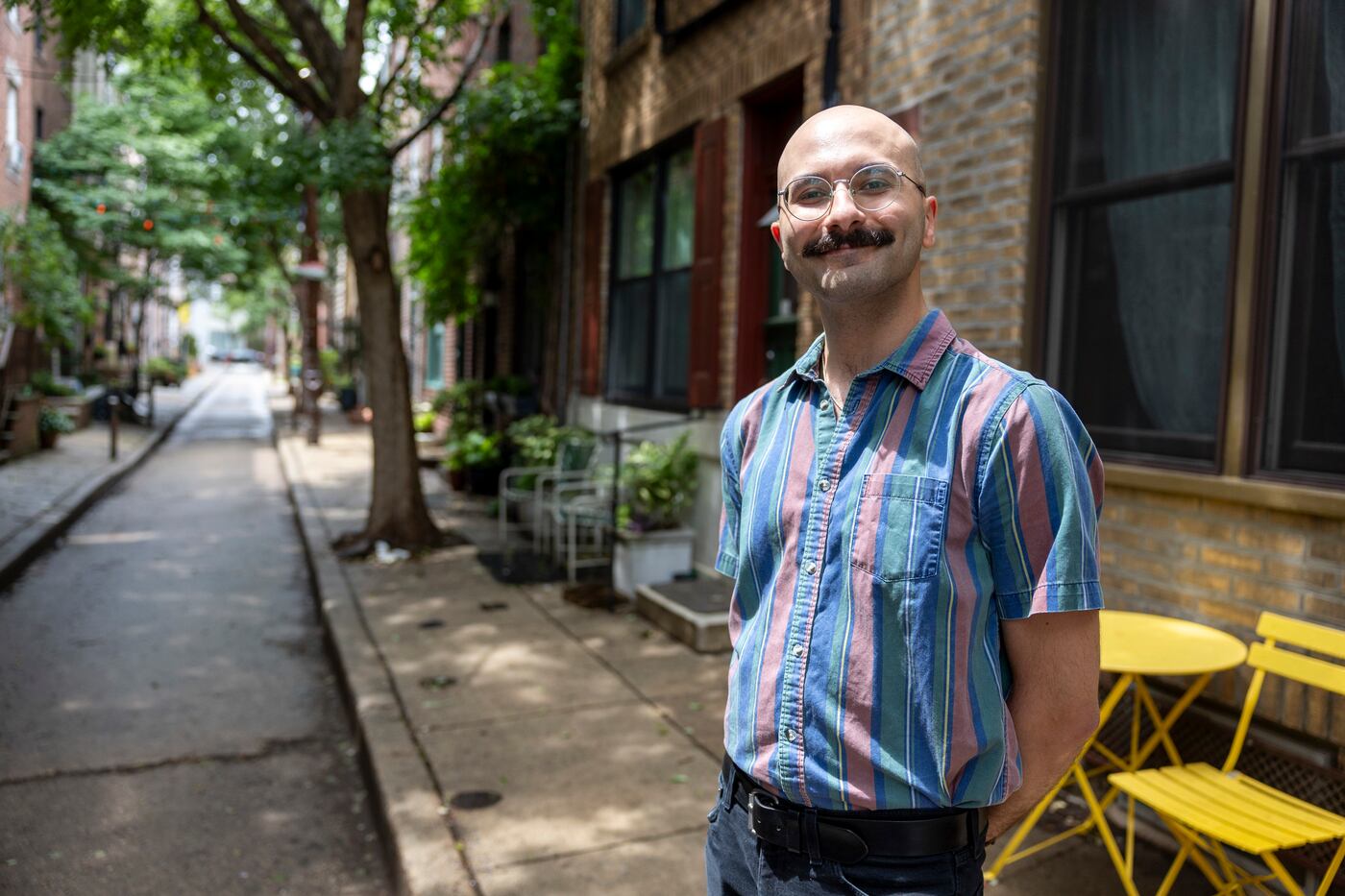
The work is part of the Our Market Project that Ortiz created six years ago to broaden the narrative of what has become known as the Italian Market and honor the people from different backgrounds who make the market on South Ninth Street what it is.
“What we do in the market is not just sell things. We take care of one another,” Ortiz said. “We raise our families. We bring our culture. We bring our values and our spirit to the market.”
In the mural, which she painted directly onto McCreath’s wall, she highlights stories of neighbors with ties to the market. The center image is of a Mexican immigrant named Gabriel who works at Tran’s Produce, owned by Vietnamese immigrants. The mural includes a poem by Alice Harrison, a longtime market worker and the daughter of Holocaust survivors, who also lives on League Street.
Ortiz said her Our Market Project is “my love letter to my community, but also a way to pay homage and honor to my mother, who is an immigrant from Colombia and work[ed] at Giordano’s for 25 years.”
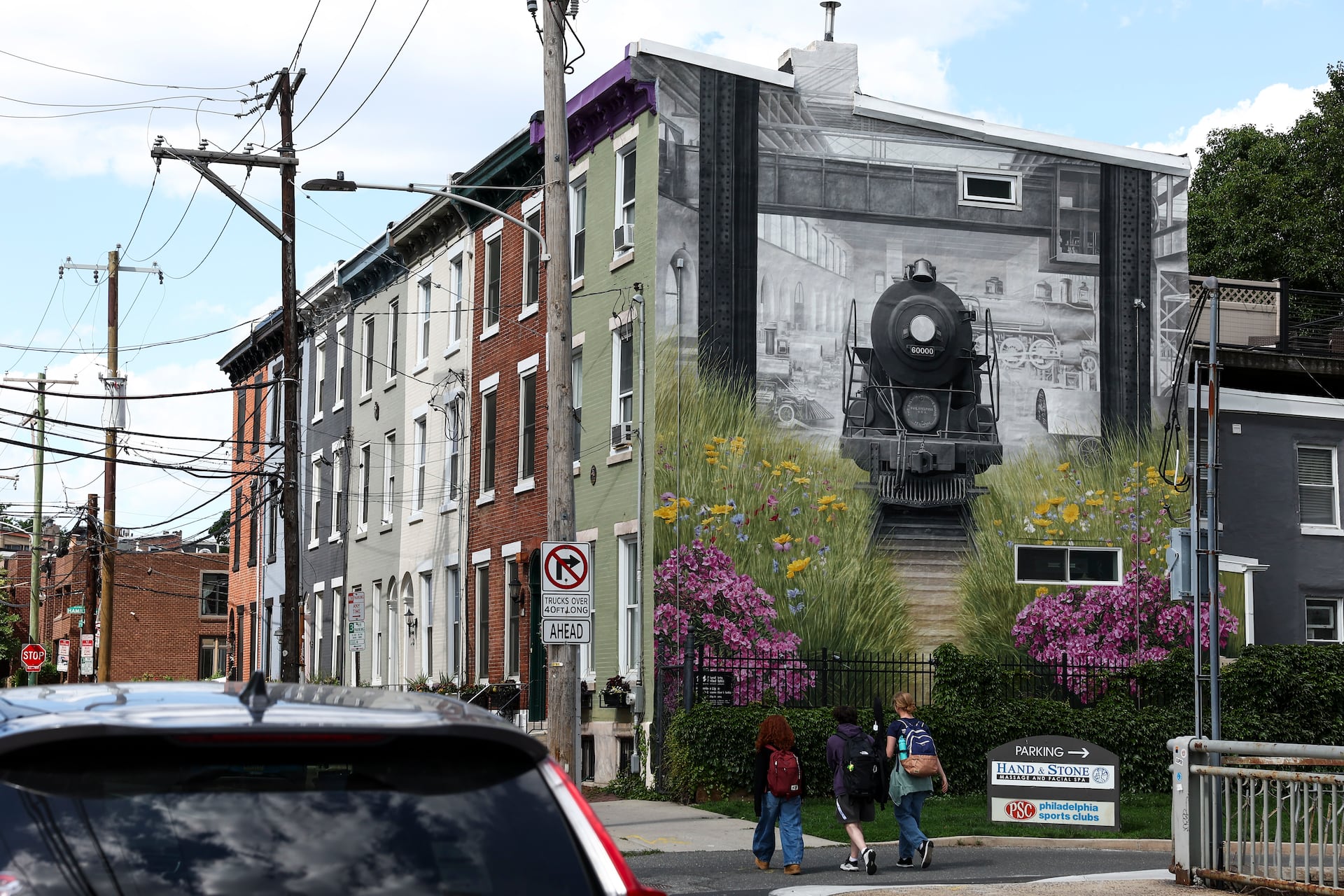
If you stare at the mural of a train on North 20th Street and think you hear a faint whistle, you’re not imagining things. Homeowner Susan Freeland likes to blow a train whistle when she sees the mural getting attention.
“Many people remark that it actually looks like the train is coming toward you, because it looks larger than life,” she said.
Freeland and her husband owned their house for a few years before she called Mural Arts about their “ugly, empty” wall. It was visibly lumpy from when the neighboring house was torn down.
“You would never know that to see the mural on it,” she said.
About six months after Freeland’s call, Mural Arts called back. That led to meetings with nearby neighbors and artist Phillip Adams. The mural stalled when neighbors said they didn’t like Adams’ first idea for a still-life painting.
His second idea, Freeland said, “really spoke more to explaining what used to be in the area right where we live.” It pays tribute to Baldwin Locomotive Works, once the world’s most successful builder of steam locomotives, and the Lenape, who once lived on the land.
For Freeland and her husband, having the mural on the house “makes us feel very special indeed.”
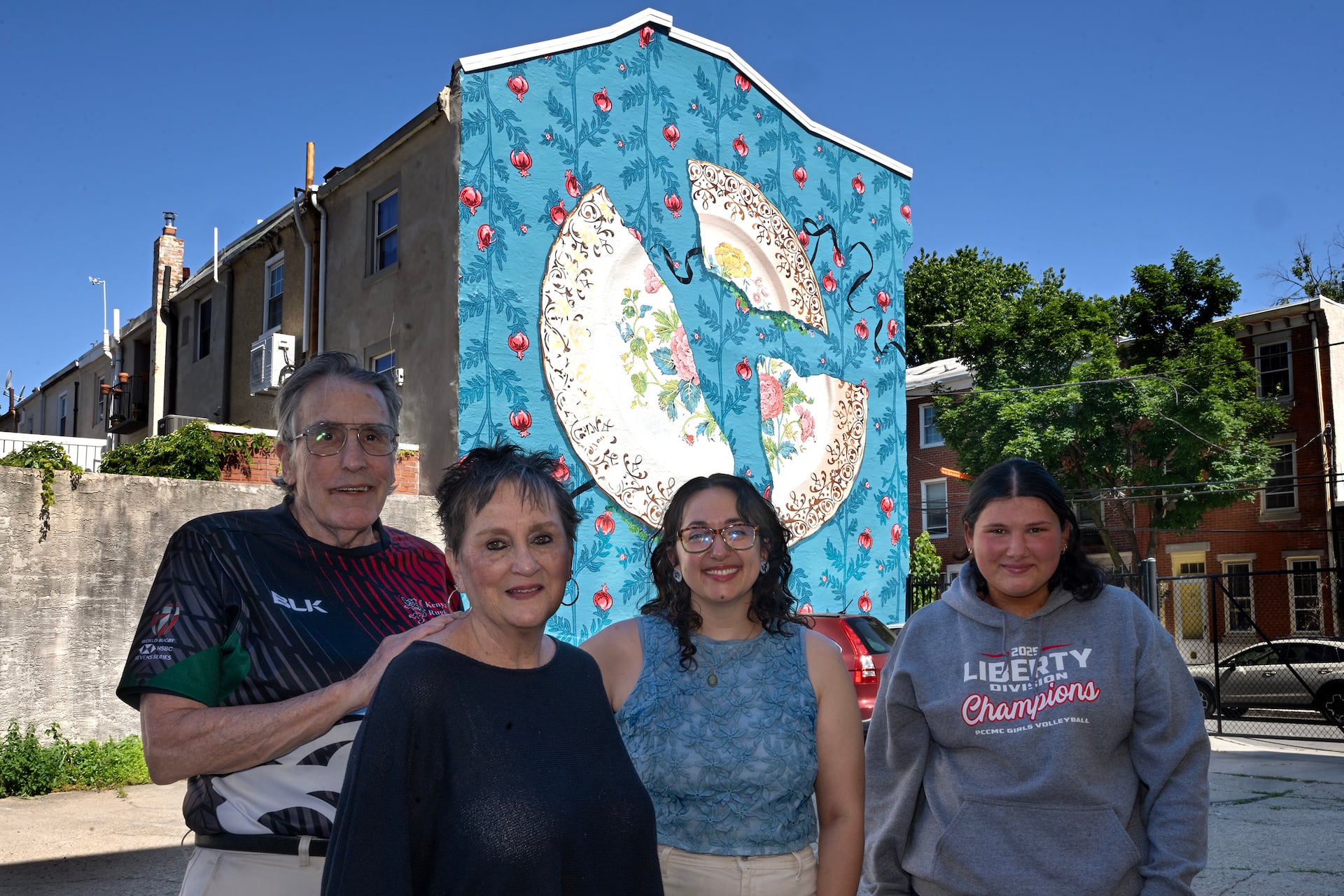
Sara DeLeon was persistent. She kept calling to check on her 2016 application for a mural through Mural Arts. For years, she stayed on the wait list.
“My husband and I, we just kept believing that one day, the right mural would be up on our wall, and the right artist would choose our wall,” she said.
In 2024, Sara and her husband, Clark, finally got the call they’d been hoping for. Artist Sammy Kovnat needed a wall after another one fell through when a neighbor refused to make space for the installation process.
“We feel very lucky that she chose us,” DeLeon said.
Three renters in the neighboring building enthusiastically gave up their spots in the parking lot for a month so the mural could be installed.
The DeLeons were thrilled with the design, and so were their neighbors.
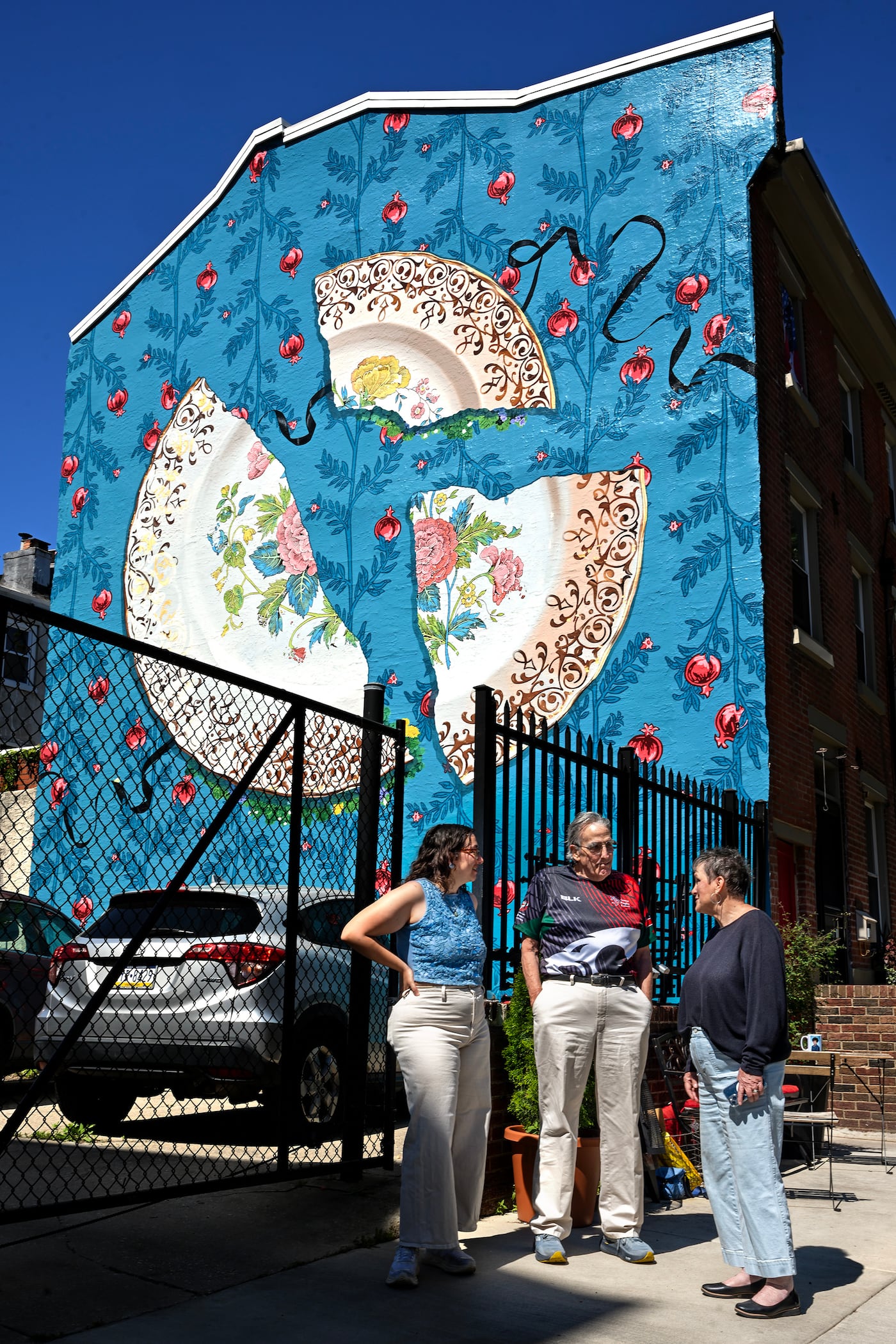
“It’s the block’s mural, not just ours,” DeLeon said. “It’s become just a wonderful focal point.”
The DeLeons also discovered a surprising personal connection when they saw the artist’s plans that made the mural feel “like fate.” They had inherited a set of dishes from Clark’s mother with an almost identical design to the one on the large plate featured on the mural.
Kovnat makes mosaics using broken dishes, and painted the plate in shards as part of her work exploring healing after trauma. The background of the mural is an homage to her grandfather, the Philadelphia-based founder of a national wallpaper hangers union.
Whenever the DeLeons see people they don’t recognize looking at the mural, they always stop to talk and answer questions.
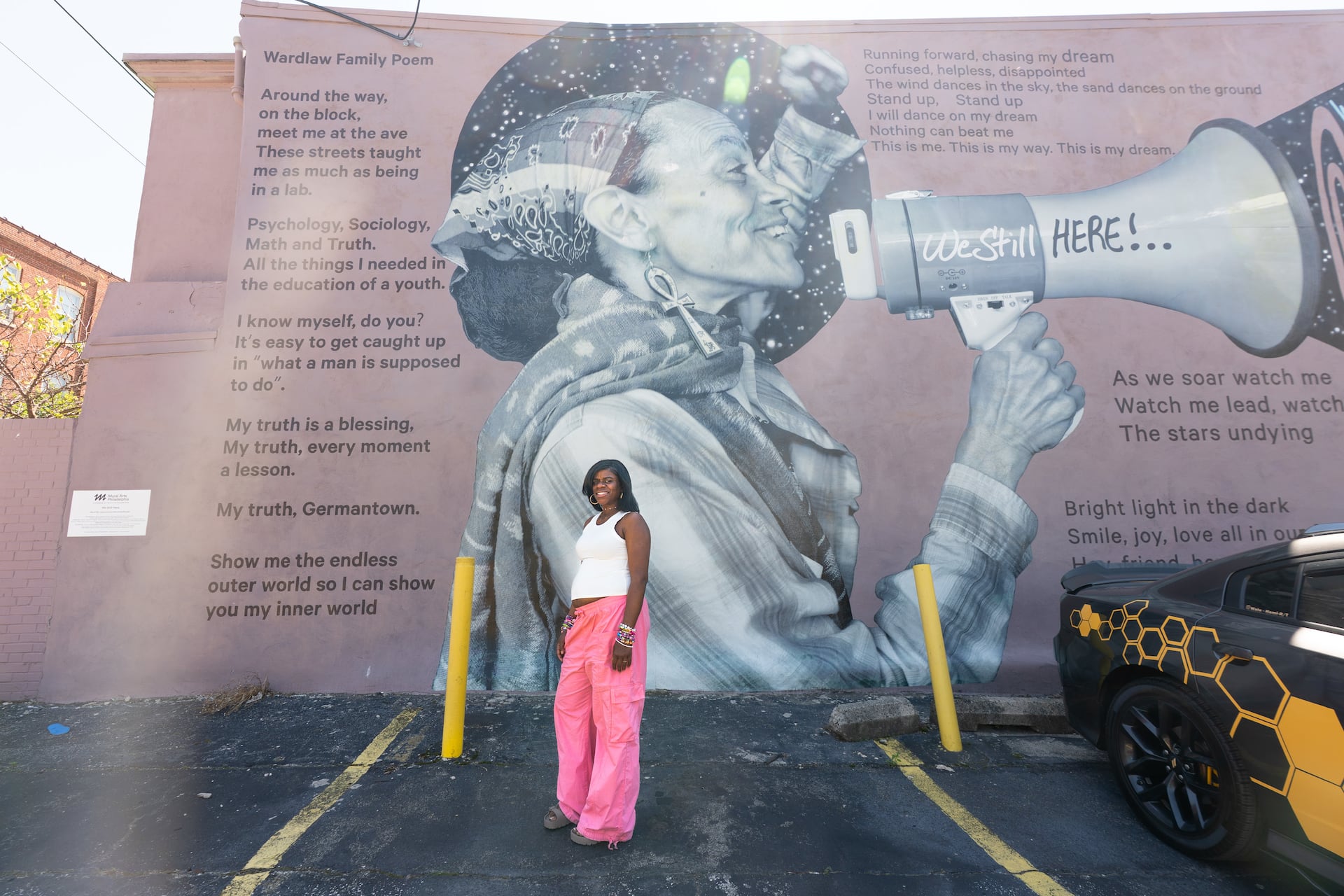
In 2019, a North Philadelphia mural of poet and recording artist Ursula Rucker was covered when a developer constructed a mixed-use building next to it. So Mural Arts invited artist Chip Thomas, aka Jetsonorama, to create another. The organization asked Shirley Wardlaw whether a mural of the Germantown native could go on her mixed-use building in Germantown.
Wardlaw operates a nursery school out of the building, and for a few years lived in the apartment above with her husband, Eckloff, and daughter, Sanayah. When the Wardlaws bought the property, the side wall had a partly sketched-out mural that had languished since Shirley was in high school. The wall was cracking, and it “looked pretty bad,” she said.
So Wardlaw applied to Mural Arts. And in came Jetsonorama.
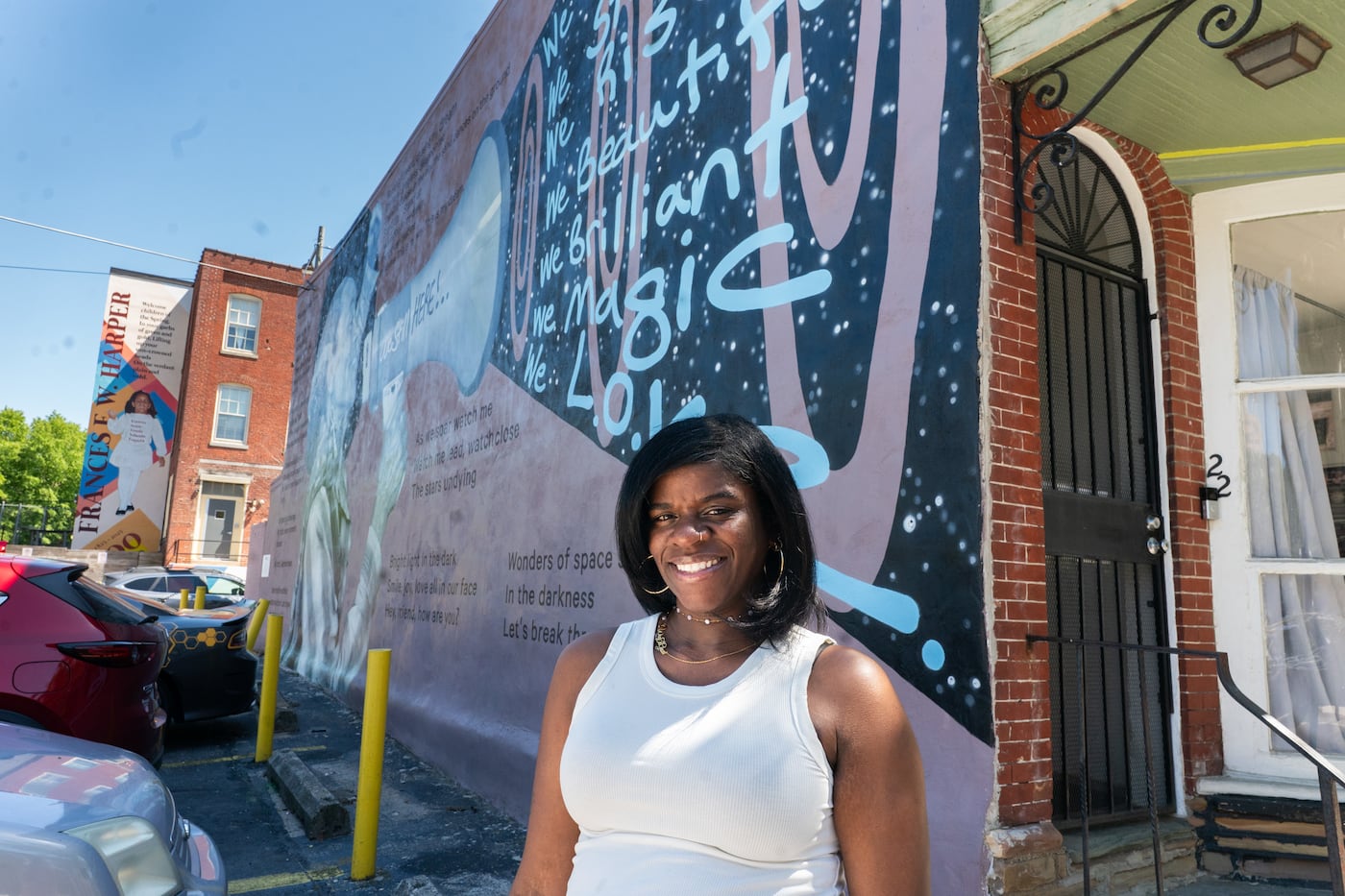
“I was really attracted to his real-life art and the black and white photos,” Wardlaw said.
The mural features an image of Rucker holding a megaphone that amplifies a poem celebrating the community. Another poem was written by the Wardlaw family. Young people in the neighborhood also contributed poetry.
The mural “brought back life” to the area and is “a big attraction” for visitors, Wardlaw said.
“It’s a beautiful, colorful space at the end of our block,” she said.
Wardlaw thinks the mural helps draw families to her nursery school, and she has pitched murals to other neighborhood businesses as a way to attract customers.
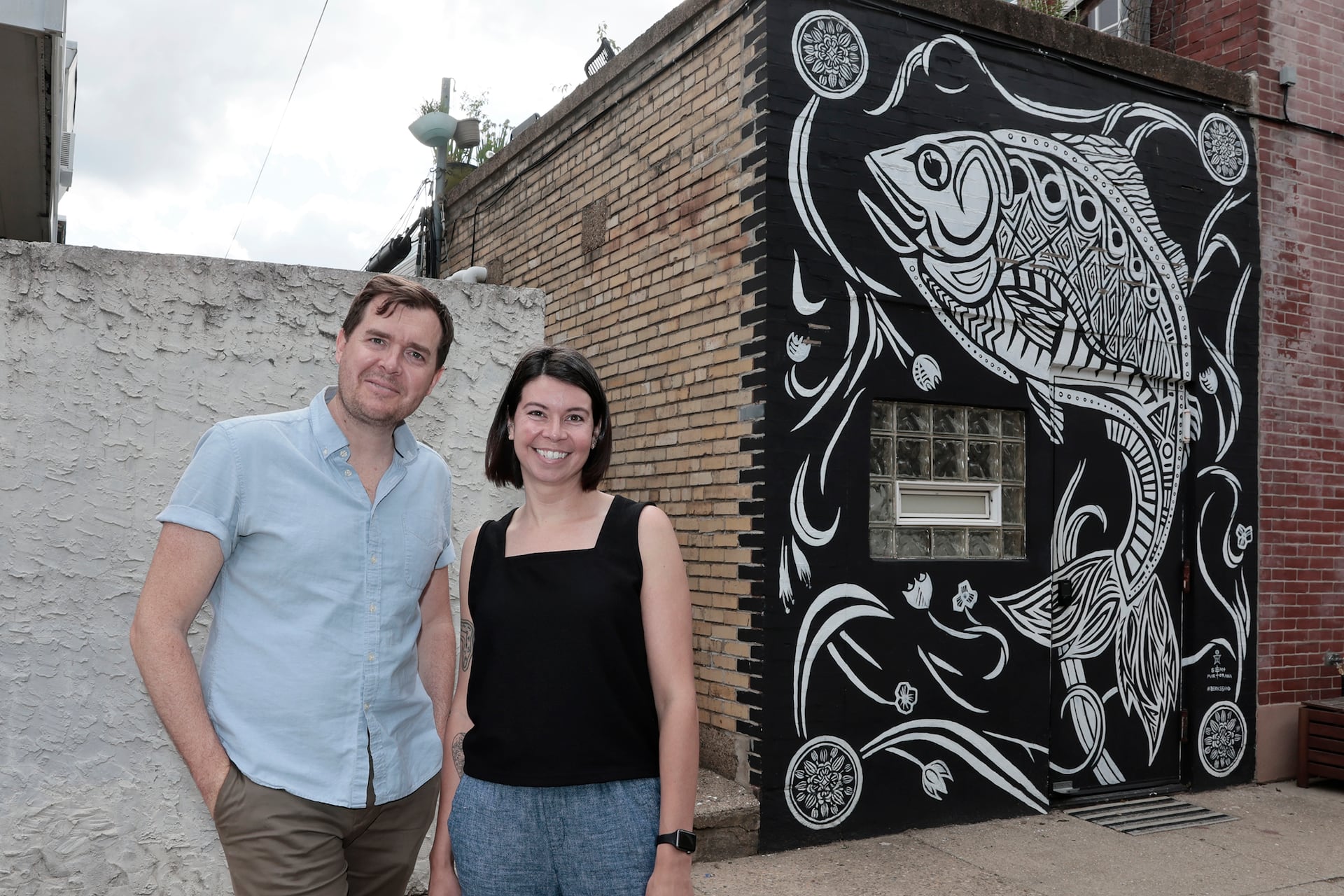
Berks Shad
The plain brick wall on Shannon and Christopher Wink’s Fishtown property was “screaming for a mural,” Shannon said.
The year after they moved in, it got one.
The Winks had known Philadelphia artist Sean Martorana for years and liked his style. So they asked him to paint the exterior wall of a structure that had been a cold storage room decades earlier. It was Martorana’s first outdoor mural.
“We knew we wanted something Fishtown,” Shannon Wink said. “It can easily get a little over-the-top, but it’s so nice to have a neighborhood that has its own visual identity.”
Martorana painted a giant shad surrounded by the Pennsylvania state flower, mountain laurel, in black and white, since the Winks didn’t want something too colorful. It all stands out next to the brick of their house.
“The way that the fish is oriented, it’s facing the river, which is something that Sean and we wanted to be really intentional about,” Wink said.
Sightseers often use their mural as a backdrop for photos. People have come in their wedding dresses.
The Winks’ two daughters were born after the mural was painted, so they’ve never known a home without it. The girls love walking around the neighborhood and seeing other decorated walls.
A neighbor of theirs, inspired by the Winks’ mural, got a similar one on their home, also painted by Martorana.
Wink encourages homeowners to get in on the city’s mural tradition.
“It’s just a really nice way to sometimes beautify, but also just create some more fun in a neighborhood,” she said.
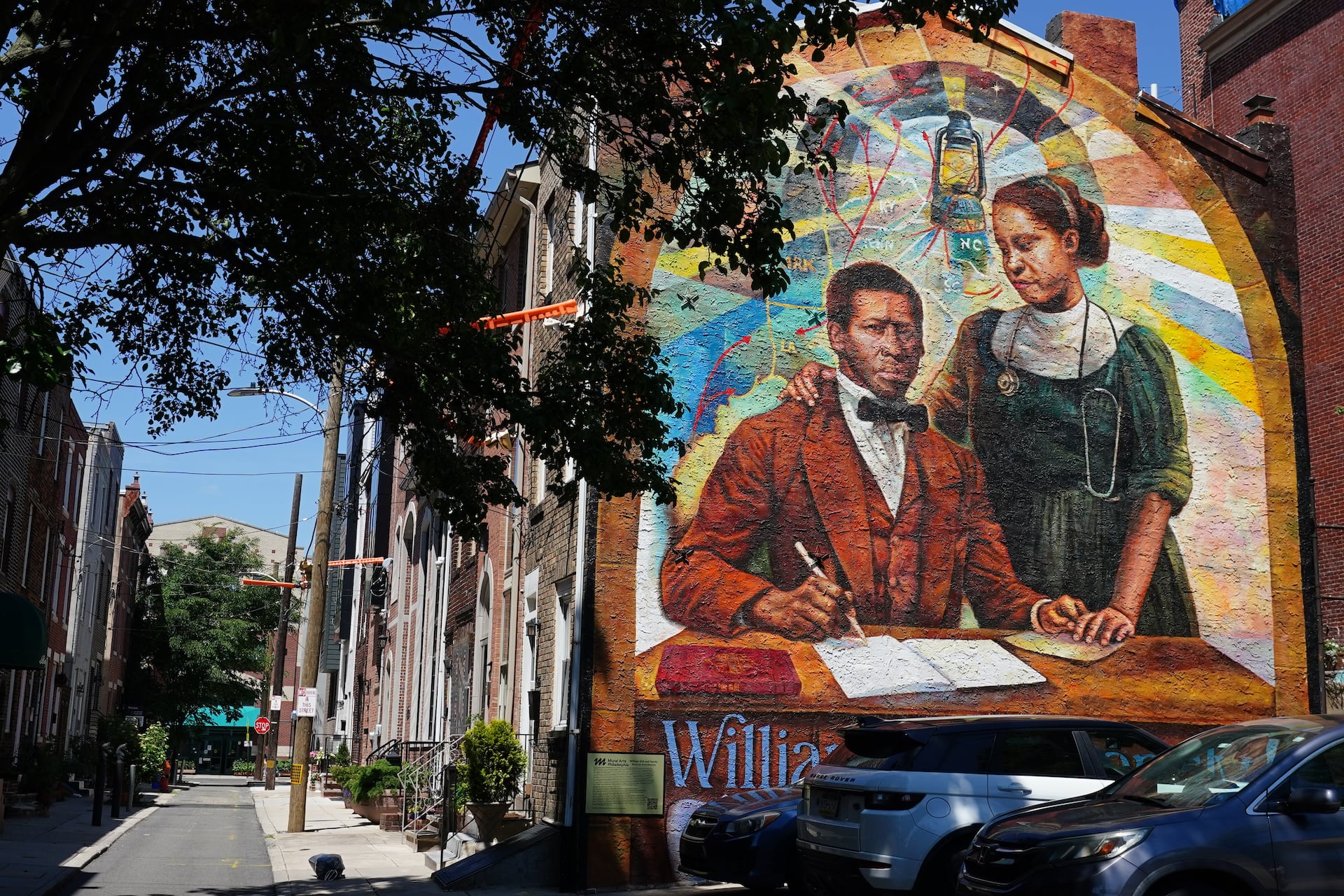
John Del Rossi bought his Bella Vista rowhouse in 2006. But he didn’t know about its historic significance until 2018, when he learned the property was nominated for designation as the William and Letitia Still House, named for the Underground Railroad leaders who once lived there.
A few years after the house joined the Philadelphia Register of Historic Places, Mural Arts asked Del Rossi for permission for a mural to honor the Stills. He said hosting the artwork is an additional honor.
“The mural says a lot about what the house stood for,” he said. “It’s a visible representation of what took place in the home, and the sacrifice and the courage that people had in order to make that home what it was.”
During the design process, Del Rossi got to meet descendants of the Stills, which he called “a goose bumps type of meeting.”
“It was pretty surreal,” he said.
As the homeowner, he was invited to share his thoughts on the mural’s design, but he left the decisions to those who know more about art.
“I’m not an artist. I’m in medicine,” said Del Rossi, who works in California and rents out his home.
All mural expenses were covered, but he said he would have paid for the artwork himself if he had to in order to honor this piece of Philadelphia’s abolitionist history.
“I’m not gonna live forever,” Del Rossi said. “But hopefully, the mural will remain, and it’ll be a representation for the neighborhood and people in future generations to be able to see and understand what took place within those walls.”

-
Smooth stucco, cinder blocks, or brick
-
Locations next to protected lots or immediately adjacent to a sidewalk
-
High visibility
-
A north-facing orientation for slower fading from the sun
-
A size between 1,000 and 2,000 square feet, the area of the sidewall of a standard Philadelphia rowhouse
But artists can make other surfaces work, too. Apply for art on your wall here.
Editor’s note: This story has been updated to correct the name of the mural, “Pomegranates and Plate Shards.”