Philly’s first-in-the-nation experiment giving cash to struggling renters is working, researchers say
Families that got cash rental assistance were less likely to be evicted, experience homelessness, and report having serious problems with their homes, according to a study of the PHLHousing+ program.

When Brianna Gaskin had her first child, she applied for a federal housing voucher that would help her pay rent. Five years and two more children later, she’s still on a wait list.
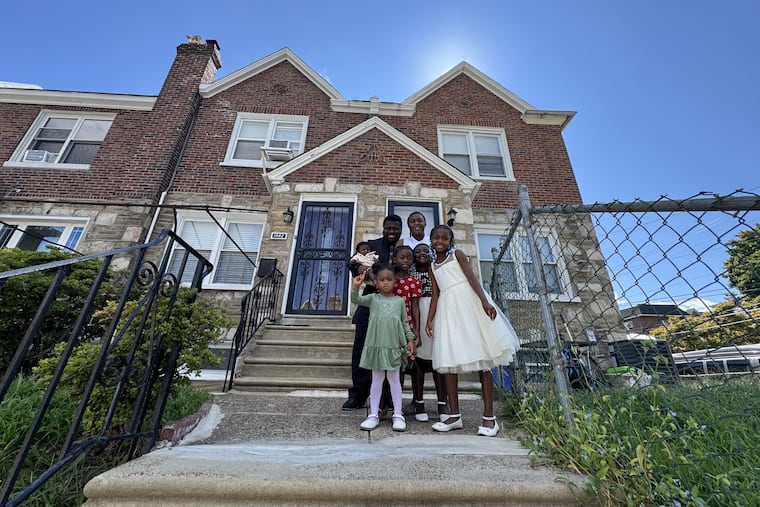
But in fall 2022, she was chosen as part of a groundbreaking pilot program in Philadelphia that gives cash to struggling renters. Gaskin, her fiancé, and their children were able to stop living with family and rent a house.
Since then, the young family has had ups and downs. They were forced out of that house and couch-surfed for six months. The cash assistance from the program “kept us afloat,” paying for necessities such as food and diapers and eventually helping to pay for their current apartment in West Philadelphia, she said.
Gaskin, 29, calls the program “a blessing.”
Since fall 2022, Philadelphia has been giving no-strings-attached cash to 301 households randomly selected from the Philadelphia Housing Authority’s wait lists for public housing and federal subsidies. The program was scheduled to end in June, but because of new findings about the program’s success, it has been extended until next June.
A report analyzing the first two years of the program by researchers at the University of Pennsylvania and staff at the Philadelphia Housing Development Corp., which partners with the city to administer the program, found that the PHLHousing+ program has been helping to keep families housed.
PHDC is discussing what the next phase of the program could look like, said Rachel Mulbry, the organization’s director of policy and strategic initiatives and a coauthor of the report, but “we’re in a much stronger position now that we have results like these.”
‘Showing a lot of promise’
Households that received cash were less likely to be evicted or become homeless than households without assistance, according to the report.
Households that got cash also had fewer concerns about the quality of their homes. Researchers asked about issues such as extreme heat and cold, unsafe and substandard buildings, and flooding and fire damage.
“This was very much designed as an experiment, so we weren’t sure what the relative impacts would be,” Mulbry said.
The results show “when we invest in people in Philly, their lives do improve,” she said. “And this model of very flexible rental assistance given directly to tenants is showing a lot of promise.”
Federal housing subsidies through the Housing Choice Voucher Program, formerly known as Section 8, help households in similar ways, the report said. But there are not enough vouchers for every household that needs one. And even households that are offered a voucher aren’t always able to find a willing landlord or an available and qualifying rental home.
In the PHLHousing+ program, everyone was able to use the cash they were offered, because it came with no requirements on how to spend it.
Researchers anticipated their findings would show that cash assistance helped tenants, but “we were surprised by the magnitude of the effects,” said Vincent Reina, a Penn professor who founded the Housing Initiative at Penn and coauthored the report.
“These findings suggest a cash rental subsidy would be a valuable addition to existing support for low-income renters,” researchers wrote in a separate paper.
Philly at the forefront
Since 2022, $10.8 million has been allocated to implement the program, half from public dollars and half from philanthropy, according to PHDC.
Philadelphia and other cities have piloted other types of no-strings-attached guaranteed income programs.
But Philadelphia is the first city in the country to run a trial of cash-based rental assistance since the idea of rental assistance was first formalized in the 1970s when the U.S. Department of Housing and Urban Development created the Section 8 program, Reina said.
Mayor Cherelle L. Parker’s plan to create or preserve 30,000 homes includes the continuation of the program.
Other cities across the country are in various stages of starting cash rental assistance programs of their own, and they’ve reached out to Philadelphia to learn from PHLHousing+, Reina said.
“This is a case of Philadelphia really being at the forefront of a national conversation. And one in many ways that the broader country wasn’t looking to have when we started this program,” he said. “To me, that’s really exciting.”
How the program works
PHLHousing+ gave debit cards to participants and loads money onto them each month. Funds are calculated to fill the gap between how much money each household can afford to pay for housing and how much their home actually costs.
Monthly payments currently range from $15 to $2,057, with a median payment of $1,000.
All households currently in the program have at least one child under 16 and make less than 50% of the area median income, which is about $60,000 for a household of four.
Unlike federal rent vouchers or vouchers of up to $500 that are offered through Philadelphia’s Shallow Rent program, PHLHousing+ works directly with tenants and does not require landlords’ participation.
“It’s designed in a way that’s a much lighter lift,” Mulbry said.
The program focuses on households on subsidy wait lists and that have children because “the idea was to focus on households that were really vulnerable and at risk,” she said.
Part of the experiment was to see what happens when tenants are allowed to make their own decisions about how to meet their financial needs, Mulbry said.
“There was a fair amount of skepticism” about giving tenants unrestricted cash, she said. The program was only able to happen because it was a pilot and not a permanent commitment to this type of assistance model without knowing whether it would work, she said.
“We know that they’re using [the cash] for housing,” Mulbry said, “because they’re staying housed.”
Rent is one of tenants’ largest expenses each month. The program “allows people to plug holes” and make ends meet, especially for people who work in positions such as home health aides in which hours can vary and income is inconsistent, she said.
Gaskin now has a newborn daughter, so she is on unpaid medical leave from her job as a home health aide. The $1,150 she gets every month is helping to keep her family in their home.
Gaskin plans to go back to school next spring to become a nurse. She won’t have to keep picking up extra shifts while juggling her studies and motherhood because of the cash she gets through the program.
“For those that really need it, especially at the times they need it like my family, it’s life-changing,” Gaskin said. “We’re very, very, very grateful.”