Mayor Parker wants $10 million to bring a factory that manufactures housing to Philly
The mayor wants to provide jobs for Philadelphians building new homes for other city residents.
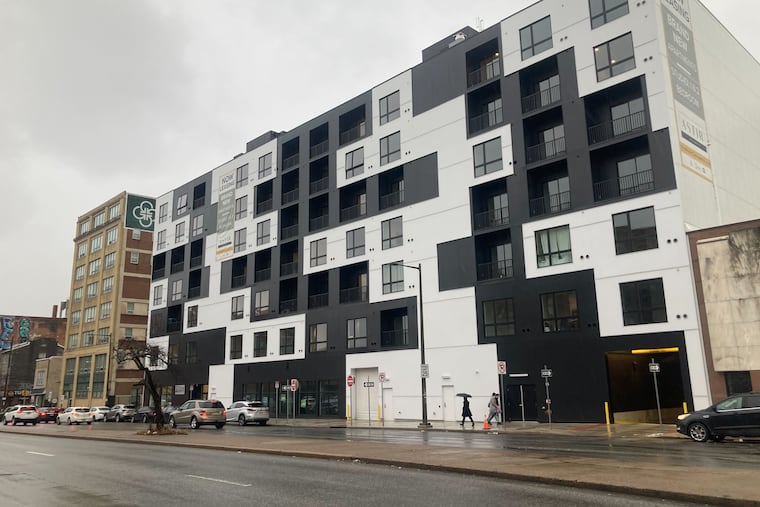
Mayor Cherelle L. Parker wants to bring a factory that builds housing to Philadelphia, and included $10 million in her latest budget proposal to help make it happen.
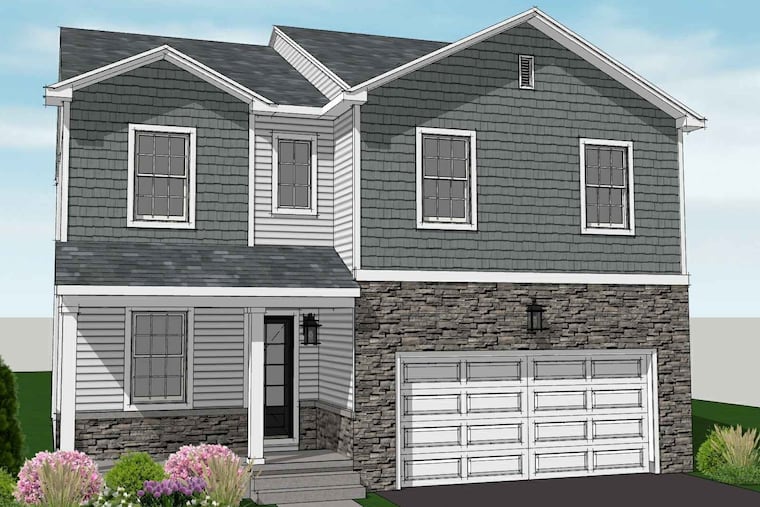
Currently, Pennsylvania has 27 such manufacturing facilities, although none are in the Philadelphia area. In these factories, pieces of houses or apartment buildings are constructed and outfitted with appliances, wiring, and plumbing fixtures — and then transported to construction sites where they are fitted together.
This is called modular construction. It’s a small, but growing, part of the national home construction industry. The technique can save a lot of time, and these days, as developers race against inflation, building quickly is more important than ever.
“I want you to think of factories with employees working around the clock because they’re in a controlled climate, and they don’t have to worry about the elements,” Parker said during her budget address Thursday.
“I want you to think about three shifts working 24/7, family-sustaining union jobs to build affordable and workforce homes for Philadelphians who need housing right now,” she said.
» READ MORE: Mayor Cherelle Parker unveils ‘economic mobility agenda’ in $7 billion city budget proposal
Parker’s ambitious goal is inspired by a similar effort in Cleveland, where Mayor Justin Bibb has been working on a plan since 2024 to bring a modular housing factory to his city. That facility is expected to break ground this year and begin operations in mid-2027.
Earlier this year, Philadelphia issued a Request for Information for modular housing factory development, a prelude to a more concrete proposal bidding process. Several companies responded from outside the region and so did Philadelphia-based Volumetric Building Cos. (VBC).
When VBC opened in 2009, modular construction was used in less than 1% of all new housing units in Philadelphia. Today, it is closer to 10%.
VBC has developed apartment buildings in Philadelphia and supplied materials from its factory in central Pennsylvania’s Berwick to local developers such as Alterra Property Group.
For Parker’s proposal to work, VBC’s chief executive officer Vaughan Buckley says the factory would need a steady supply of work from the Philadelphia region.
That’s because the cost of doing business in the city would be much higher — due to local business taxes and wage rates — than it is in Pennsylvania’s other factories.
“Once you add the transportation cost to move it outside of Philadelphia, plus the cost of doing business there, you will not be competitive against any of the other 27 factories already located in lower-cost environments,” Buckley said.
“A company in Washington, D.C., or New York is very unlikely to pick a Philadelphia factory over a factory in Scranton,” he said.
As in any factory, it’s won’t be profitable if it sits idle for stretches of time.
The desire for a modular housing factory in the city could be fueled by Parker’s signature Housing Opportunities Made Easy (H.O.M.E.) plan and the $800 million in city bond money that is set to flow into housing programs in the coming years.
Using those funds, Parker wants to see 30,000 housing units built or repaired.
“I’m not in a position to say that this is an investment that we would make, but it’s certainly an investment that we could make,” Buckley said.
“As part of our consideration of whether a factory in Philadelphia is a good investment, we need to understand how this incredible bond program that’s been announced is going to unlock the ability to produce at scale,” he said.
How Cleveland attracted a housing factory
Cleveland faced a similar challenge when it began considering how to lure a modular housing factory in 2024. Mayor Bibb also has an ambitious housing plan. He wants to see 5,000 homes built in his city over the next 10 years.
To attract modular home companies, Cleveland, which has a population of about 365,000, packaged several prospective properties through its Site Readiness Fund, which prepares vacant land for redevelopment by dealing with zoning and other regulatory issues up front.
Both Cleveland’s land bank and its counterpart in Cuyahoga County, where the city is located, have lined up properties where their modular housing developer can build. The name of the company has not yet been made public.
“We are taking the posture as the public sector to go above and beyond to help secure and aggregate demand for this manufacturer,” Bibb told The Inquirer.
Local and state incentives will be available for the manufacturer, as will national historic tax credits, because the sites slated for a new modular housing facility are in vacant former factory buildings from the early 20th century.
“We’ll be essentially eliminating fees for permits, [implementing] aggressive tax abatements, and we are also exploring a host of tax credits with the state and the city as well to lure this manufacturer here,” Bibb said.
A jobs program and a housing program?
In Philadelphia, the $10 million ask in Parker’s budget proposal is likely just the beginning. Her finance director, Rob DuBow, described it as a “placeholder” during a briefing.
“It is intended for site preparation, utility, and infrastructural improvements to support the development of underutilized assets that could be candidates for this types of facility,” city spokesperson Karen Guss wrote in an email.
Buckley says new factories cost between $15 million and $50 million to build, and it takes a while for a new facility to become profitable, which is another reason that a steady stream of work is so important.
His company has seen the effect that local policy can have on their product’s use in Philadelphia.
When the 10-year property tax abatement was still in force for new construction, 90% of the Berwick factory’s products went to projects in Philadelphia. After it was halved in value — and interest rates spiked — only 10% now goes to projects in the city.
Buckley also says his company wants to better understand Parker’s priorities when it comes to modular housing.
“It will be helpful for us to understand where that money would be best placed,” Buckley said. “Is the goal Philadelphia-based jobs? Or is it Philadelphia housing? Because the most economically efficient way to create housing in Philly may not be a factory in Philly.”
In Parker’s budget speech and at earlier events about modular housing, she has said she wants this policy to create union jobs and homes for Philadelphians.
During a January news conference at the Logan Triangle — a North Philadelphia site she sees as a potential home for a future housing factory — Parker placed her proposal firmly in Philadelphia’s lineage as “The Workshop of the World.”
“Do you remember when our great city was the dominant manufacturing hub?” Parker said in January. “When I was growing up, I remember the adults talking about what people had when they went to work at these places. If you worked there, you had a good job.”
Bringing modular housing manufacturing to Philadelphia would “not only solve challenges that we are facing in the City of Philadelphia but help to put Philadelphians on a path to self-sufficiency,” she told the crowd of politicians, union leaders, and developers.