North Philly coaches feel overlooked by MLB’s decision to not invest in their baseball programs
MLB will renovate Ashburn Field in FDR Park, among other initiatives, through funding from the All-Star Legacy program, which benefits host cities of the annual showcase.
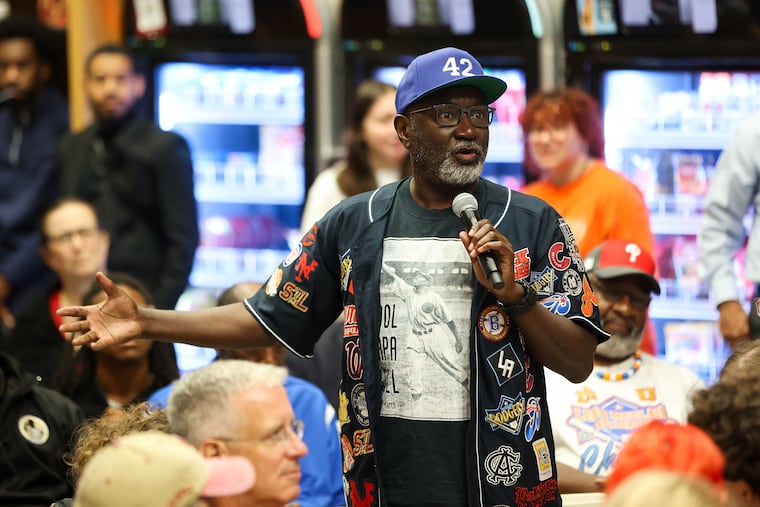
When a panel of baseball representatives discussed how to revive the sport in North Philadelphia at a Temple University event last August, Tyrone Young was the first person in the audience to stand and ask a question.
“How can we sit at the table that y’all want to put together so we can help make the decisions?” Young, who runs the North Philadelphia Heritage League, asked the panel composed of MLB and Phillies leadership. “Some of the things y’all want to put together, it’s not what we need.”
Almost a year later, Young and other North Philly baseball coaches have their answer: MLB will pour $5.5 million into a variety of initiatives as part of its All-Star Legacy program benefiting host cities of the annual showcase, but the money won’t be going to the fields or programs they say are in desperate need.
“When they earmarked this money, we’re not sitting at the table to say where we want the money used at,” Young said in a recent interview. “It’s really a slap in the face.”
Instead, MLB is renovating Ashburn Field in FDR Park, a city field managed and maintained by the Phillies that hosts a variety of youth baseball programs.
» READ MORE: Shane Victorino Boys & Girls Club getting a facelift as All-Star festivities come to Philly
“Ashburn Field was originally built in 1998 using funds generated from the 1996 All-Star Game in Philadelphia,” said Jon Joaquin, the Phillies’ director of youth baseball and softball development programs. “For nearly 30 years, it has served area youth and remains an extremely popular field, hosting approximately 125 events each year, including games, practices and programming for local colleges and high schools.
“This investment will make a meaningful difference for so many young athletes and we’re excited to see the impact it will have across the community.”
With the All-Star Legacy funds, MLB will also host a PLAY BALL event at Athletic Recreation Center on July 10; invest in renovations of the Shane Victorino Boys & Girls Club in Nicetown, Tree House Books in North Central, and the Veterans Multi-Service Center in Old City; fund statues honoring Negro League players in West Philadelphia; and pour dollars into the Miracle Leagues of Southeastern Pennsylvania, which builds fields for ballplayers with disabilities, and the Pennsylvania Horticultural Society.
MLB has donated funds to the host of the All-Star Game since 1997. In years past, baseball has invested between $4 million and nearly $7 million in the form of field renovations, funding for veterans, and grants to nonprofits.

Temple University’s Logan Center for Urban Investigative Reporting and the Claire Smith Center for Sports Media, in partnership with the Philadelphia Inquirer, have launched a series examining the state of North Philadelphia’s recreational facilities and youth sports programs and whether investing in them should be a cornerstone anti-violence strategy for City Hall.
We’ll visit parks, pools, and playing fields north of Girard Avenue to document the conditions of facilities and compare them to others throughout the city. We’ll also outline the challenges leaders face in maintaining activities for young people in the city’s poorest neighborhoods most impacted by gun violence.
Many recreational fields across the city, especially those in nonwhite areas, are in poor condition. Trash, holes in base paths, and a lack of nearby bathrooms for players are just some of the issues coaches say make it difficult to maintain programming.
Those difficulties are reflected in the Phillies’ youth baseball program, which primarily operates in the city’s predominantly white, middle-class neighborhoods in the Northeast. The Phillies recently partnered with a neighborhood-led baseball league trying to address the disparity by introducing baseball to young children primarily in North and West Philly.
MLB is replacing Ashburn’s 135,000-square-foot grass and dirt field with a “high-performance synthetic turf system” and an updated drainage system, according to Tuesday’s announcement. The renovation will benefit teams in the Phillies MLB Urban Youth Academy and Nike RBI All-Star teams as well as high school, college, and community teams who use the space, including the Anderson Monarchs, whose Philadelphia Stars teams play and practice there.
Amos Huron, the Monarchs’ executive director, said the field renovation at Ashburn is an important first step in closing the gap between the quality of fields in Philly compared to the suburbs and other cities. The field renovation will help bring consistency to the Stars’ practices and play during more times of the year, he added. Thirty percent of scheduled events at Ashburn are canceled each year due to weather, according to the MLB announcement.
» READ MORE: The push to put baseball into the minds of more North Philly kids is going to take a ‘brotherhood’
But Huron also understands where coaches upset with the decision to not renovate their fields are coming from, he said, as the Monarchs are constantly pouring their own money into upkeep of their field at the Marian Anderson Recreation Center in Graduate Hospital.
“I know that in certain parts of the city, where the neglect has been greater and the disinvestment has been greater, it’s almost impossible to even start a baseball program because of the condition of the fields,” Huron said. “I hope that this is a step in building better infrastructure around the city.”
Dave Fisher, who runs Tioga United Baseball, said he sees hypocrisy in how MLB can pay for statues of Negro League players but not fix up the fields that his “Black, young, underserved players” use. In Tioga, the program maintains its field, sustained by donations from volunteers who used to play there, he added.
“We’re doing everything we can do to keep baseball alive and violence from entering in the community where young kids who still want to play and develop in the game of baseball can play,” Fisher said.
Joaquin said the Phillies invite feedback from their RBI program participants through surveys and convene focus groups with coaches to understand “where additional support may be needed.”
“North Philadelphia coaches and organizations also play an important role in growing the game, and we are always open to hearing their feedback,” Joaquin said. “We welcome continued input and communication from coaches and organizations, and remain committed to working collaboratively to support and strengthen youth baseball across the community.”
David Lisby, who coaches the North Philly Camelots, said he feels “very negative” about the decision to not invest in North Philadelphia baseball. The field he plays on at 33rd and Diamond streets needs a makeover, he said, which would get kids to come out and play in his program.
“I don’t appreciate how they overlook North Philly,” Lisby said.
Playing Fields, not Killing Fields is an Inquirer collaboration with the Claire Smith Center for Sports Media and The Logan Center for Urban Investigative Reporting, to produce a series examining the current state of Philadelphia’s youth recreation infrastructure and programs. The project will explore the challenges and solutions to sports serving as a viable response to gun violence and an engine to revitalize city neighborhoods.