What to know about the Philadelphia Cycling Classic’s return and history
The iconic street race featuring the Manayunk Wall was a staple for decades, and in 2026, it’s coming back.
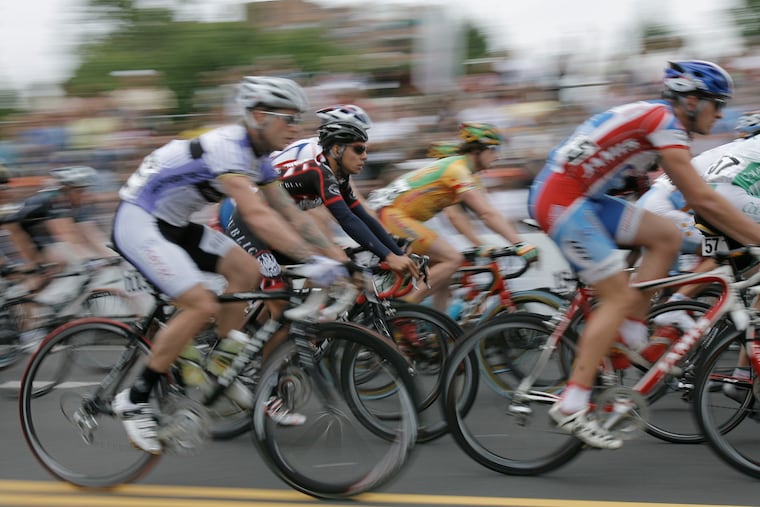
For the first time since 2016, cyclists will race through the streets of Philadelphia for the Philadelphia Cycling Classic.
The iconic street race was a staple for decades, and in 2026, it’s coming back. Here’s what you need to know:
When is the 2026 Philadelphia Cycling Classic?
The race will officially return on Aug. 30, 2026, with both a men’s and women’s race.
What is the Philadelphia Cycling Classic?
The Philadelphia International Cycling Classic is a bike race that took place in Philadelphia in early June from 1985 to 2016. It was one of the most iconic cycling races in the United States, and attracted a massive field of internationally recognized racers.
The course is a 14.4-mile circuit that will start and finish on the Benjamin Franklin Parkway. The women’s race will total 65 miles, while the men’s race will be 122 miles.
» READ MORE: The Philadelphia Cycling Classic will return next summer after a 10-year hiatus
When did the race first come to Philly?
Though known by many names over the years, the race we today call the Philadelphia Cycling Classic first came to town in 1985. That year, it was considered the first big bike race in Philadelphia’s history, and drew scores of onlookers to take in a 156-mile race across six grueling hours.
In its debut year, the race — then known as the CoreStates U.S. Pro Cycling Championship — took about 100 professional riders on a 10-lap circuit spanning Fairmount Park and the hills of Manayunk. At the time, with a total of $100,000 in prize payoffs, it was considered the “richest one-day cycle race in the world,” according to Inquirer reports from the time.
“This race, the first of its magnitude and importance in America, is another indicator of the national and international attention Philadelphia is receiving as what we call an ‘international city,’” then-Mayor Wilson Goode said in 1985.
Who won the first year?
The inaugural winner was Eric Heiden, then known as an American hot-shot speed skater who took home five gold medals in the 1980 Winter Olympics. After his dominant performance there, Heiden had turned his attention to cycling, and developed what the Daily News described as “tree-trunk thighs that Arnold Schwarznegger would bend barbells to have.” He was 26 at the time.
Heiden’s 1985 win in Philly, the Daily News reported, was his first professional cycling victory, earning him a cool $20,000 as a member of a team sponsored by 7-Eleven. It was, he said, comparable to his performance at the Olympics.
“Today, I definitely raced the best race I’ve ever raced in my life,” he said.
Why did the race end?
In late January 2017, city officials announced that the race’s run had come to an end. That year, organizers said, the race would cost an estimated $1 million to successfully and safely put on, and not enough sponsors were interested in ponying up the funds.
“The city did everything it could to try to salvage the race for this year, but there just wasn’t enough money available to cover the rising event costs as a result of heightened security demands,” said Manayunk Development Corp. executive director Jane Lipton. “None of us want to lose yet another wonderful Philadelphia tradition like the bike race, but government can’t be solely responsibly for footing the bill.”
City officials had engaged in “extensive fund-raising efforts,” but were unable to secure the money, said Jazelle Jones, deputy managing director for the Office of Special Events. And while some officials did not rule out pursuing its return for 2018, it never made a comeback — until now.
Still, the race’s cancelation in 2017 inspired mixed reactions, according to Inquirer reports from the time. Some Philadelphians lamented the loss of a long-running signature event, while others celebrated the end of what some described as little more than an excuse for public intoxication.
It was, however, not the first time a version of the race faced funding issues. In fact, 2017 marked the second time in four years that it had been called off, following difficulties obtaining funding for security and other city services in 2013. With the help of U.S. Rep. Robert Brady (D., Pa.), it was able to return in a smaller, less expensive incarnation leading up to its final year, The Inquirer reported.
“It had a sense of history,” said sports entrepreneur Richard Adler, who helped organize the event in 2013 and 2014. “People didn’t want to see it go away.”
Where does it take place?
The original course ran up the Ben Franklin Parkway to Kelly Drive, passing through East Falls, Roxborough, and Manayunk, which was home to the most famous part of the course, the Manayunk Wall.
This year’s race will return to that original course, and will take participants past Strawberry Mansion, Lemon Hill, Boathouse Row — and, of course, up the Wall.
What is the Manayunk Wall?
The Wall is a steep incline hill, reaching up to a 17% grade over a stretch of about a half mile, mostly on Levering Street in Manayunk. It is considered one of the race’s most iconic components, and has been part of the race since 1985, when Jerry Casale and David Chauner mapped out the course, The Inquirer previously reported.
» READ MORE: A visual history of the Philadelphia Cycling Classic, from the Art Museum to the Manayunk Wall
It reportedly reminded Chauner of a feature known as “Mur Gramont” — or “The Wall” — in a race in Belgium, leading to its moniker here. Ultimately, though, it became the stuff of cycling legend not only because of the difficulty it presents to participants, but because of how crowds tend to gather there on race day.
“The cheering for the athletes, the respect everybody has for the athletes, is fantastic and very motivating,” former pro cyclist Brian Walton, who raced in Philly numerous times, told The Inquirer in 2011. “I tell people it’s almost impossible to get dropped, if you have a soul.”
Over the years, the Wall area also became home to an unofficial feature known as “O’Brien’s Water Hole,” which was the home of a resident named Bill O’Brien until about 2007, according to cycling news outlet Velo. O’Brien was known for spraying riders with water as a way to cool them down — a practice he started with the first race in 1985, according to Inquirer reports. Many participants looked forward to it, and not just for the chance to cool down.
“I love it,” cyclist Chris Horner told The Inquirer in 2004. “I go through it every time, and every once in a while I’ve been known to take a beer on my way up, too.”
Who’s organizing the 2026 race?
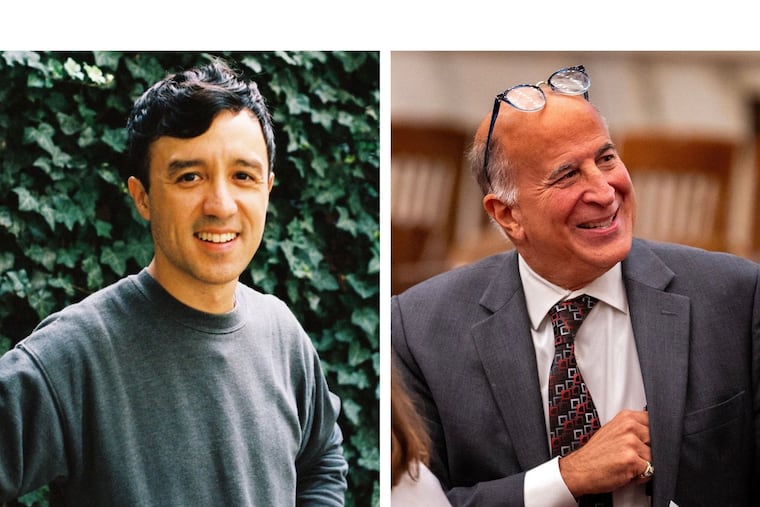
Former racer Carlos Rogers told The Inquirer in 2024 that he was making an attempt to bring the race back, and now he’s fulfilled that promise, alongside former Philadelphia Mayor Michael Nutter and Eric Robbins.
“This is Philadelphia’s race; it is the people’s race,” the three said in a statement. “It is open and free for all to engage with and enjoy. We are grateful to our friends at AmeriGas who embraced this vision wholeheartedly and joined us as the title sponsor. There are so many Philadelphians who remember growing up with this race, and we are beyond excited to be bringing it back in spectacular fashion for generations to come.”
How can I watch?
Access to the race will be free, meaning anyone can line up along the course to watch. Locally, 6abc will air the race live on television for those who want to watch from home — unless, of course, you live along the route, like many in Manayunk and Roxborough, then simply look out the window.
Traditionally, large parties take place along the tight streets of Manayunk, turning the race into a festival of sorts. Manayunk residents recounted the party-like atmosphere of race day to The Inquirer in 2000, with one saying every house in Manayunk felt like a house party during the race’s heyday. And yes, there was typically plenty of beer.
“It’s keg parties, but people call it a barbecue,” one man said. “People walk into my house and I have no idea who they are. Last year, my neighbor had 17 kegs.”
Who will compete?
Historically, the race has hosted some of the best cyclists in the world. It’s early to say who might compete in 2026, but the race in the past has drawn a strong field of elite talent.
What do this year’s winners receive?
The Philadelphia Cycling Classic offers equal prizes, in the men’s and women’s races, a total of $75,000 each.