They were owned by Peter Frampton and hung with The Rolling Stones, but the Fury couldn’t make soccer happen in Philly
A cast of rock stars tried to make soccer thrive in Philadelphia almost 50 years ago, but it proved to be too tall a task. The Fury is “a fascinating tale,” says former goalkeeper Bob Rigby.
The word spread through the Veterans Stadium locker room: The Rolling Stones were at the bar across the street, and the Fury were invited.
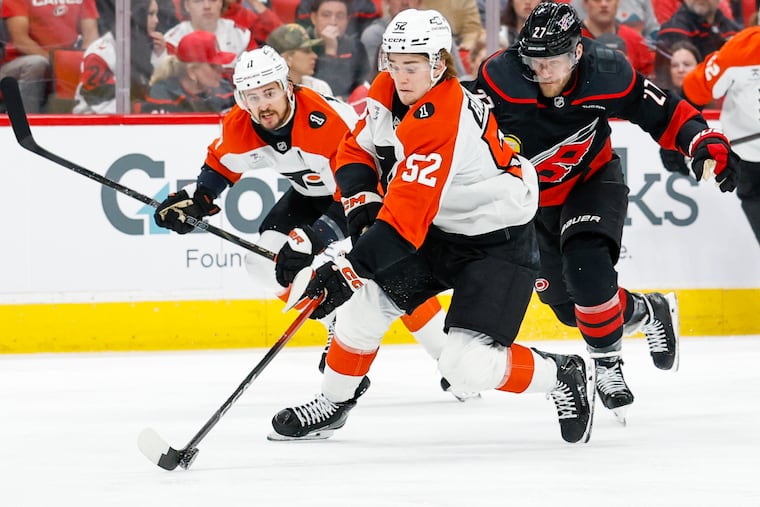
The Philadelphia Fury played on artificial turf that goalkeeper Bob Rigby said “might as well have been black rocks on Iwo Jima.” The crowds, Rich Reice said, often were so sparse that he could point to the people he knew in the stands. The players didn’t make much, the team lasted only three seasons, and the losses piled up.
The team’s publicist, Thom Meredith, said a few years ago on a podcast that the Fury — a North American Soccer League franchise that debuted in 1978 — were “a poster child for what not to do.”
» READ MORE: Philly’s path to the World Cup was paved at Newt’s, where playing on cinder was a ‘badge of honor’
But the players still had someone waiting for them at the back entrance of the Holiday Inn, opening the door and ushering them to where the Stones were hanging while a mob of fans were kept in the hotel lobby.
The Fury was owned by rock stars — Peter Frampton, Paul Simon, and Rick Wakeman of Yes had stakes — and rock executives like Stones manager Peter Rudge and music agent Frank Barsalona. They entered when the NASL was riding the momentum of Pelé, who had retired a season earlier.
But that wave faded, and the Fury struggled to grab Philly’s attention before moving to Montreal in 1980, leaving Philadelphia without a first-division men’s soccer team until the Union arrived in 2010.
“The Fury is a story in and of itself,” Rigby said. “Oh my God. Really. There’s aspects of it that are mind-boggling. It’s a fascinating tale.”
The sport has been met this summer in Philadelphia with fanfare as the city hosts its sixth World Cup match on Saturday at Lincoln Financial Field. But the game still was a curiosity to most of the region in the 1970s. Philly had soccer hot spots — places like Kensington, Frankford, and Roxborough, along with ethnic clubs in Bucks County — surrounded by soccer deserts.
The Fury players grew up in those soccer neighborhoods, and that was enough to get them a drink with the Rolling Stones.
“They were just as excited to talk to you as you were excited to talk to them,” said former Fury player Bill Straub. “You were a professional soccer player, and they were wide-eyed. What’s it like to play professional soccer? It was nothing to us. It was just what we did.
“These rock stars all grew up wanting to be professional soccer players in the Premier League. And we were here, we wanted to be rock stars.”
A mini-circus
Philadelphia had an NASL team for four seasons, but the Atoms flamed out shortly after winning an unlikely title in 1973 as an expansion team. The local owners sold the team in 1975 to a Mexico-based group that stocked the roster for a season with Mexican players. Interest dipped lower, and the team folded with $90,000 in unpaid bills.
The NASL returned to Philly a year later when the league added six expansion franchises. The Fury signed Irish midfielder Johnny Giles, 1966 World Cup champ Alan Ball, and former Chelsea forward Peter Osgood.
“They have books written about him,” former Fury player Brooks Cryder said. “The Wizard of Os, they used to call him. But it was a little soon for soccer in the United States.”
» READ MORE: Benny McLaughlin was a Philly soccer pioneer. He couldn’t get off work to play in the World Cup.
The real attractions were the stars in the crowd. An Amtrak train brought a cast of A-listers from New York for the season opener at the Vet. Gilda Radner, James Taylor, and Peter Wolf of the J. Geils Band joined owners Frampton, Simon, and Wakeman in a super box.
“It wasn’t the Cosmos with Pelé,” Straub said. “That was a real circus. But this was a mini-circus here in Philly because you never knew who was going to show up.”
The Fury drew 18,191 to their opener, but the crowds soon dwindled. The Fury averaged 8,075 fans in 1978 and had the league’s lowest attendance in the 1979 (5,624) and 1980 (4,465) seasons. They had cheerleaders, held free clinics at schools, and even tried to spice up their uniforms. Nothing worked. Veterans Stadium felt cavernous.
“It was tough because it seemed like everyone was far away from the actual field,” Dave MacWilliams said. “It was a different environment, for sure. I wanted it to succeed and do well, but it was tough.”
» READ MORE: Philadelphia’s World Cup love affair shows just how far we’ve come
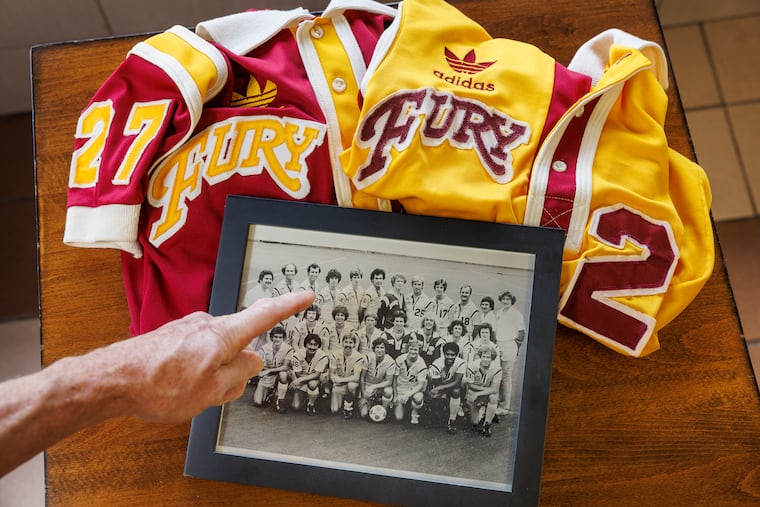
The team’s uniforms were designed by fashion designer Sal Cesarani after Ralph Lauren outfitted the Cosmos. Barsalona told The New York Times in 1978 that the Fury wanted their uniforms to have “a touch of show business and a lot of sex appeal.”
They were inspired by the wife of owner Larry Levine, who Barsalona said struggled to follow the play at a soccer game but enjoyed seeing “guys running around in what looked like their underwear.” Cesarini had simple instructions: the tighter, the better.
The burgundy and gold jerseys, which were made by Adidas, had a three-button collar and capped sleeves. The shorts were two inches shorter than the usual soccer shorts. It was as close to underwear as Cesarini could get.
“Looking back, they do show a lot of leg,” Reice said.
The stars
Kevin Murphy was a senior at Pennington Prep near Trenton when a group of Fury decision-makers visited his home to meet his parents and ask if he was willing to turn pro. The new franchise planned to use its draft pick on Murphy as the NASL introduced a rule allowing teams to draft high schoolers.
Murphy was in, as Walt Chyzowych — “Philadelphia soccer royalty,” Murphy said — told him earlier that year that he had the skills to be a pro. A few months later, he sat in a suite at the Vet with Frampton to sign his contract.
“It was Frampton’s birthday,” Murphy said. “I thought, ‘Well, I probably made a good decision.’ That was pretty amazing.”
Pelé retired in 1977, but the NASL still was filled with some of the game’s biggest names. The Cosmos had Giorgio Chinaglia, Carlos Alberto, and Franz Beckenbauer. The Los Angeles Aztecs had George Best. Johan Cruyff played for the Washington Diplomats, Gerd Müller was with the Fort Lauderdale Strikers, and the Tampa Bay Rowdies had Oscar Fabiani and Rodney Marsh.
» READ MORE: Mark Franek quit being a lawyer to teach the history of U.S. soccer to the future of U.S. soccer
The foreign Fury players had great careers overseas but were past their primes and did not draw in Philly. They filled their roster with a cast of locals. Straub went to Germantown Academy, MacWilliams played on a cinder field in Kensington, and Bobby Smith was from Trenton. Rigby grew up in Ridley and was on the cover of Sports Illustrated. Cryder learned to play at a YMCA in Roxborough, and Pat Fidelia went to Rancocas Valley Regional High School.
“It was exciting because as American players we had a chance to play in a professional league,” Fidelia said. “But you knew sooner or later that it wasn’t going to last because we weren’t getting paid much at all. It was like we were amateur players in a professional league. My first contract was $20,000. They gave you a car and an apartment to share with two other players.”
The Fury could not match the star power of the other NASL squads, but they did have actual rock stars. The players could score tickets to any concert they wanted. They were backstage at JFK Stadium, in boxes at the Spectrum, and saw the Stones at a tiny theater in North Jersey.
“We would drive back and we’d say, ‘This is unbelievable. How are we in these places?’” said Straub, who was working at his family’s jewelry store while playing for the Fury.
The Fury played a charity game at Franklin Field with Wakeman and other members of Yes. Frampton, whose industry-shifting live album Frampton Comes Alive! was released in 1976, regularly popped into the locker room after games. And Murphy found himself backstage at Madison Square Garden standing with Dan Aykroyd before riding an elevator with Meat Loaf, Debbie Harry, and the Wailers.
“That was pretty good,” Murphy said. “It was more than pretty good. It was awesome.”
‘No sun. No sun.’
The Fury fired their first manager midway through the season, finished the year with a player-manager, and hired Marko Valok in 1979. The former Yugoslavian national team coach didn’t speak much English.
“I used a line from him for years on the kids I coached,” said Reice, who coached soccer at Neshaminy High School for 17 seasons. “If I took a bad shot at goal, he would say, ‘Reach, why you make present to goalie?’ He would be thinking in Yugoslavian and then it would come out in English.”
Rigby, the goalie for the Atoms’ title squad, returned to Philly during the 1979 season after being traded from the Aztecs. He was told by the Fury to join the team in Houston, but they said Rigby would be on the bench. That was good by Rigby, since he had not practiced in a week while his trade was finalized and spent his final night in L.A. at a going-away party with his Aztecs teammates at Best’s bar in Hermosa Beach.
» READ MORE: World Cup fans are spending money in Philly. How much will actually stay in the city?
And then Valok approached him in the locker room and asked through an interpreter if he was ready to go.
“I have no clothes and no intent to play,” Rigby said. “I’m literally not playing. I’m just coming in. Honest to God. I played a half. I’m thinking, ‘If this is the onus of coming back to Philadelphia, I probably made the biggest mistake of my life.’ But what was I supposed to say, ‘I’m not going to play’ in front of a new team?
“Then I’m sitting during the pregame meal, and Marko Valak stands in front of the team with a chalkboard for 45 minutes just drawing arrows all over the place. Speaks no English. I’m going, ‘I just left five guys who played in the World Cup final and the most tightly run team,’ and I’m like, ‘What is this?’”
Frank Worthington, a Fury forward from England, left the team that season when Valok had the team practice at the public fields in FDR Park instead of the Vet or JFK Stadium. He flew to Memphis, visited Graceland, and returned to the Fury after a few days.
The Fury advanced that season to the playoffs despite having a losing record and played the Houston Hurricane at the Astrodome. The team practiced at the stadium and then returned to their hotel. Valok told his players to stay inside — “No sun, no sun,” he said — and rest for the game.
» READ MORE: These Philadelphians planned the perfect World Cup weekends for their families. Then their tickets never came.
“I look out the window when we get back, and Frank is laying out, reflecting himself with a sun blanket,” Reice said. “All of the energy is being zapped out of his body. Frank was a free spirit, to say the least.”
The Fury still had enough energy to win that game before falling in the next round to Tampa Bay. The franchise lasted one more season before soccer left Philadelphia again.
A cast of rock stars tried to make soccer happen in Philadelphia, but it proved to be too tall a task. Nearly 50 years later, the game has found its place in Philly. The Linc has been a happening this summer. If only the Holiday Inn — which was razed in 2019 — was still here to see it.

Nine nations will compete in five group stage matches this summer, plus two more in a knockout game on July 4. Here’s what you need to know about those countries — and what those fans need to know about Philly. Click here for more.