Philly’s Summer of Sports: No ICE arrests, unruly fans, or scary scenes at World Cup, PGA, All-Star Game
The people in charge and those they represent can breathe sighs of relief and stick their chests out after three high-profile events went off without a substantial hitch.
Well done, Philadelphia.
The World Cup, the PGA Championship, and the Major League Baseball All-Star Game, the most daunting events in this Summer of Sports Celebration, are finished here.
Philly is undefeated.
“This summer proved what we have always known: Philadelphia is built to host world-class events,” said Mayor Cherelle L. Parker. “Our city shined on the national and international stage.”

Marcus Hayes alerts
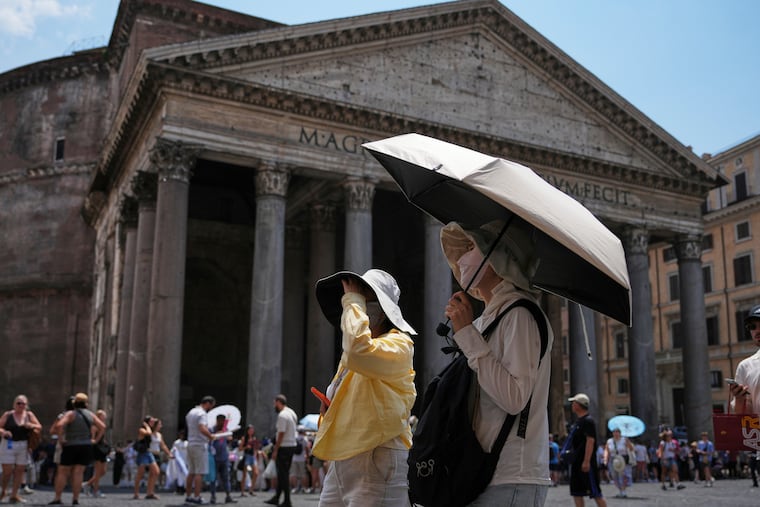
It was hot, and it was rainy, but hey, that’s Philly in July. At least the big three events didn’t have to deal with the current wildfire smog.
Think about it. So many things could have gone wrong.
There could have been embarrassing incidents involving the Department of Homeland Security, ICE, and other complications involving our suddenly inhospitable visitation policies in the United States.
“Worry number one was, with the influx of all of these people from all over the world into the city, making sure it was a peaceful experience for them,” said Dan Hilferty, the Flyers’ governor and CEO of Comcast Spectacor, who also served as co-chair of Philadelphia Soccer 2026 and is a Philly-area native.
It was peaceful, Hilferty said, relieved.
“We live in troubled times, not only in America but around the world. Sports can be a soft diplomacy effort,” he said. “To see people come to our city and us, as Philadelphians, welcome them with open arms — people of different faiths, different races, different nationalities — commingling in a peaceful and exciting environment … I witnessed that. It gave me a real hope for a more friendly future.”
There could have been incidents on the streets of Philadelphia — crime or intimidation or boorishness — that would further entrench stereotypes about American cities, especially East Coast cities, and especially Philly. Nope.
» READ MORE: Philadelphia was the star in its men’s World Cup debut
There could have been incidents in the golf crowds, the soccer crowds, and the baseball crowds. Nope. Local cops, state police, and private security kept cool and kept everyone in line.
There could have been massive traffic problems, vociferous price gouging, public transportation disasters. On the whole, however, there was none of it. Hotels and short-term rental agencies offered reasonable options, some of them including public transportation vouchers in the rental price. Smart routing and parking rules kept cars at the sites flowing. And Philly subway rides stayed at $2.90 a pop while New York and New Jersey charged almost 10 times their normal fares. It might have taken a while to get onto the Broad Street Line after matches, but fans were patient, and the trains ran on time.
“SEPTA really stepped up big,” Hilferty said.
Philadelphia and its surrounding area, on the 250th anniversary of the signing of the Declaration of Independence, was glorious.
Aronimink Golf Club stood strong as a major-championship venue, and, just as critically, Philly golf fans made the obnoxious New Yorkers at Shinnecock and Bethpage Black look bestial by comparison. Actually, there was no comparison: Philly golf fans once again proved to be the best in the country.
“The crowd had great energy.” That was from Scottie Scheffler, Texas native and Cowboys fan, who had been heckled mercilessly in his opening round. “It was all in good fun.”
» READ MORE: Aronimink and Philly fans star at the PGA Championship in a year of big events in Philadelphia
The World Cup, the biggest event in Philly since the Sesquicentennial Exposition held 100 years ago, in which 10 teams played six games in a span of 21 days — including Iraq, a country with which the U.S. has a recent war history — held the largest possibility of calamity. There was none.
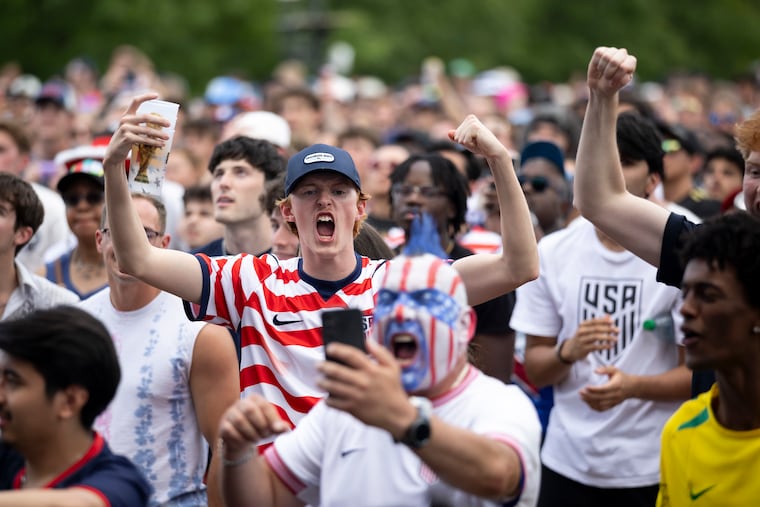
Philadelphia, its law enforcement, its public transport, its politicians, and, more than anything else, its businesses and residents, literally could not have acquitted themselves better. From the specially installed pitch at Lincoln Financial Field (renamed Philadelphia Stadium for the World Cup), to the neighborhood restaurants and bars, to the sites at the South Philly sports complex that accommodated visitors, to the Lemon Hill Fan Festival that sometimes had crowds of 50,000, all you heard were stories of camaraderie and welcome.
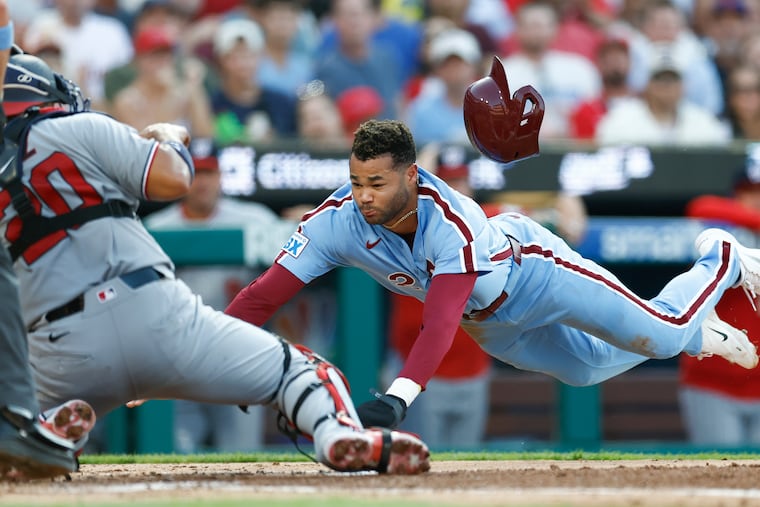
And, finally, this past week, MLB and the Phillies collaborated on five days of celebration capped by two nights of baseball magic that not only went off without a hitch but, really, incorporating the pomp and pageantry, were without compare. The key moment: The Sandlot interlude.
For five minutes after the fourth inning Tuesday, 10 kids joined 10 players on the field as fireworks exploded and Ray Charles sang “America the Beautiful” from the scoreboard screen, a tribute to a scene from the 1993 kids’ baseball movie The Sandlot. It even got to me, and I don’t like the movie or fireworks.
The game itself wasn’t great, but the Home Run Derby on Monday was superb. It was almost everything the Phillies could have wished for.
“Together, these were not simply successful events,” said Phillies CEO John Middleton, also a Philly-area native. “They were defining moments that elevated both Major League Baseball and the City of Philadelphia, leaving a legacy that will endure for years to come.”
David Montgomery, the late Phillies CEO who dreamed of having Citizens Bank Park host the midsummer classic in the middle of this special summer, surely is smiling down from above.
It’s hard to overstate how unlikely it was that all of these events went off without an appreciable glitch. I’ve worked with the PGA of America, with FIFA, and with MLB. They are not particularly streamlined, seamless organizations. Combine the balkiness of those organizations and the history of glitches and missteps in Philadelphia’s past, there always was a chance that things might go haywire here this summer.
But between Pennsylvania’s state government, local municipalities and city governments — more than 40 entities in all — and the golf course, the baseball team, and the guy who runs the Flyers, anyone who watched or attended the big three events should know that the efforts on a local level cannot be credited too much.
“People came from across Philadelphia, our region, the nation, and the world, and, by every measure, they experienced the very best our city has to offer,” Mayor Parker said.
Now, as the World Cup final in North Jersey closes down these 10 weeks of spotlight — there will be one more watch party at Lemon Hill in Fairmount Park, 2 p.m. to 8 p.m. Sunday for the Spain-Argentina final — the folks in charge and the folks they represent can breathe sighs of relief and stick their chests out, proud of the concept, the planning, and the execution of a summertime run such as the region has never seen.
To be fair, incidents and accidents at other World Cup sites in the U.S., Canada, and Mexico were virtually nonexistent. But few venues faced the unique logistical and cultural challenges you get in Philadelphia.
The bigwigs made sure to monitor the situation.
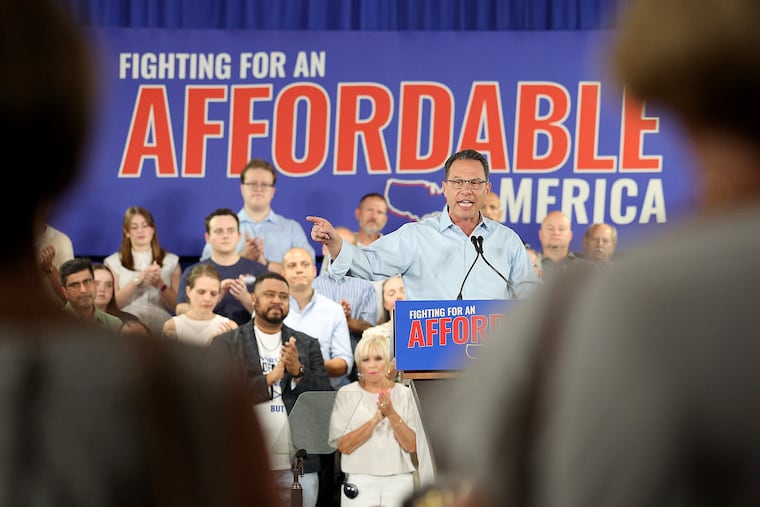
Mayor Parker went to Lemon Hill and commingled with Mexico soccer fans. She, Gov. Josh Shapiro (a Montco native), and the owners kept running into each other at the various events, their attendance less choreographed appearances than invested fandom and stewardship. They wanted to make sure everything was OK.
Before the first World Cup match in Philadelphia, Hilferty and his wife, Joan, walked across the parking lot from his office at the Xfinity Mobile Arena to the Stateside Live! open-air bar. There, they saw Ecuador fans in yellow jerseys exchanging partisan chants with orange-clad Ivory Coast supporters — then exchanging cellphones so they could take pictures for each other.
Ivory Coast won the match. The fans shared drinks in the parking lot and subway rides home.
“After the first match,” Hilferty said, “I felt really good.”
That feeling remains.