The wildfire smoke in Philly is forecast to last into the weekend — and be followed by storms
Air quality conditions in the area were generally in the "unhealthy" and "very unhealthy" ranges on Friday.
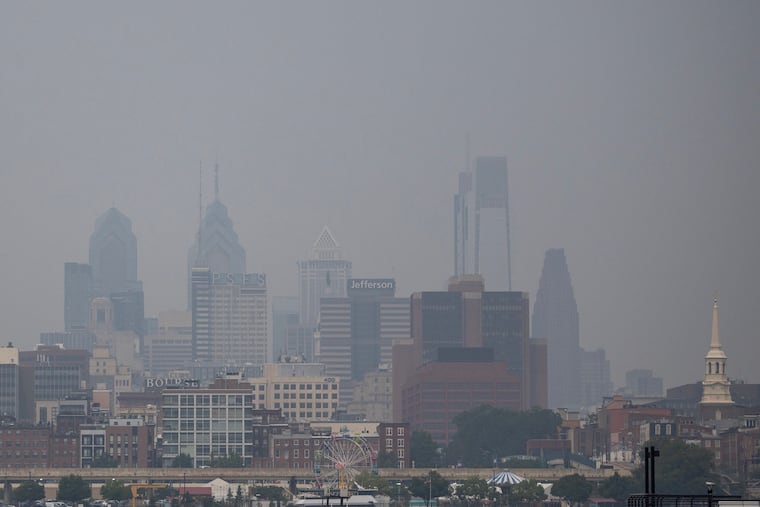
Impacts from Canadian wildfire smoke increased throughout the Philadelphia region Friday, degrading air quality enough to prompt a code purple alert, and force the closure or suspension of some city amenities and services.
It was the latest bad weather event in Philadelphia’s run of tough luck in July, which has so far resulted in record-setting heat and destructive storms that have marred back-to-back weekends. Smoky conditions arrived Thursday, and were bad enough Friday to prompt the closure of city pools and spraygrounds, and temporarily stop trash pickup.
“Our worsening air quality is a dangerous development,” Palak Raval-Nelson, commissioner of the city Department of Public Health, said in a statement. “I strongly encourage all residents to take action to protect themselves by staying indoors, unless they need to be outdoors.”
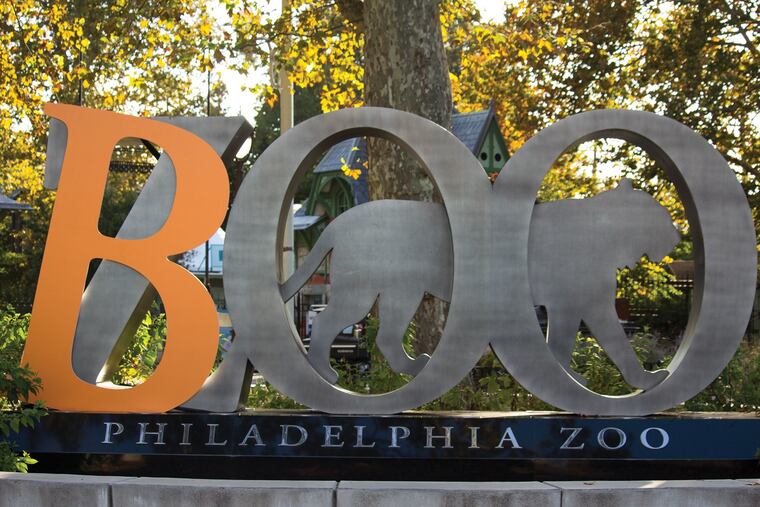
Likewise, the Philadelphia Zoo remained closed Friday, saying in a statement that its animals were being “closely monitored.” The city, however, stopped short of recommending the cancellation of outdoor events, and large productions like comedian Shane Gillis’ performance at Lincoln Financial Field and a Death Cab for Cutie performance at the Highmark Mann Center for the Performing Arts were still set to go on as of late afternoon.
Officials said that venue owners had been advised of the conditions, and were able to make their own decisions as to whether those events would happen.
Trash collection in the city was expected to cautiously resume Saturday, officials said. Resumption of services was contingent upon improvement in air quality conditions, which vacillated between code purple and the comparatively less severe code red Friday.
» READ MORE: What Philly’s air quality is like right now, in maps and charts
“We will make judgment decisions as to when we will resume collections in terms of a start time tomorrow,” said Carlton Williams, director of the Philadelphia Office of Clean and Green Initiatives. “But we do plan on working all day Saturday and Sunday to ensure that last week’s trash and recycling is collected in time for our services to be on a regular schedule starting Monday.”
Pools would reopen Saturday if air conditions were code red or below, said Susan Slawson, commissioner for Philadelphia Parks and Recreation.
The Pennsylvania Department of Environmental Protection said the Philadelphia region would be under a code orange air quality alert Saturday, marking a decrease in smoke pollution. That alert level, described as “unhealthy for sensitive groups,” is the lowest it has been since the wildfire smoke arrived this week.
Air quality conditions in the area were poor Friday morning. The city’s air quality index stood at about 267 as of 7 a.m. Friday — a figure that put it solidly in the “very unhealthy” range, meaning the general public was at risk for serious health effects. It later moved into the code red — or “unhealthy” — range, but stood to potentially again become more severe as the day wore on, Raval-Nelson said.
The city of Chester, however, recorded an air quality index of 312 early Friday, putting it in the “hazardous” range — the highest on the U.S. Environmental Protection Agency’s scale. It later dipped into the “very unhealthy” range.
The region’s smoky conditions were expected to last at least until Saturday afternoon, the National Weather Service office in Mount Holly said. The sky’s hazy appearance, according to meteorologists, came from northwest winds that blanketed the region with particulate-filled air that was expected to stick around through the start of the weekend.
However, by Saturday, an anticipated storm system should clear the smoke out — though that development would likely come with its own risks. That system, said weather service meteorologist Joe DeSilva, could also bring “multiple rounds” of showers and thunderstorms, as well as the potential for flash flooding and possibly damaging winds — as well as a potential tornado.
» READ MORE: What to know about the wildfire smoke in Philly and its health impacts
“It definitely looks like damaging winds will be the primary hazard type,” he said.
City officials warned residents to prepare for potential flooding due to heavy rainfall Saturday. A flood watch will be in effect from 10 a.m. Saturday through 2 a.m. Sunday, the city’s Office of Emergency Management said, as storms could produce up to 2 or 3 inches of rain per hour.
Philadelphia is not the only area at risk this weekend. Berks, Carbon, Delaware, Chester, Montgomery, Lehigh, Bucks, Monroe, and Northampton Counties also face dangers from the storm, as do portions of northern Delaware and parts of New Jersey including Camden and Gloucester Counties.
“Excessive runoff may result in flooding of rivers, creeks, streams, and other low-lying and flood-prone locations,” the city said. “Creeks and streams may rise out of their banks. Flooding may occur in poor drainage and urban areas.”
The risk of storm damage Saturday comes a week after high winds and four “microburst” storms downed nearly 300 trees in the city, and left tens of thousands of residents without electricity. As a result of that storm, Philadelphia still remains under a disaster emergency declaration amid its ongoing recovery.
On Friday, officials encouraged city residents to “do what you have been doing since last week’s storm” in the face of renewed threats.
“As Mayor Parker constantly reminds us, we are one Philly,” said Adam Thiel, managing director of the city of Philadelphia. “We are a united city, as our entire city workforce, along with our residents, our neighbors, our communities, continue to move us forward through this unprecedented year.”
Staff writers Rob Tornoe and Emily Bloch contributed to this article.