The Caitlin Clark Effect will continue: WNBA averts disaster with 11th-hour settlement with union
The vanguard league of women's professional sports nearly threw away its momentum.
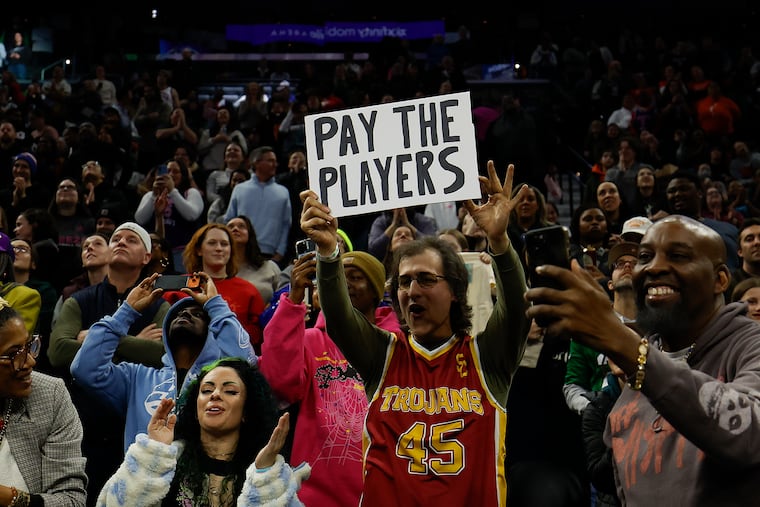
For the first time in years, my wife and her college basketball teammates from 30 years ago convened for their alumni weekend in Philadelphia. They came from the Rocky Mountains and the Big Apple and West Coast. The centerpiece of the three days: the Unrivaled league’s first-ever tour stop in late January.
The ladies were a loud and raucous portion of the record 21,490 rabid fans at Xfinity Mobile Arena who watched the three-on-three games that served as an appetizer to the arrival of the WNBA expansion franchise that could play its first season in 2030 in a brand-new arena. They shared the Friday night festival with such celebrities as Jason and Kylie Kelce, Dawn Staley, and Wanda Sykes.
There was an air of joy and foreboding that night: joy that women’s sports continued to build momentum on the popularity of Iowa legend Caitlin Clark; foreboding that the momentum might die in May.
At that point, the WNBA and the WNBA Players Association were stalemated in negotiations that seemed headed for a work stoppage — a lockout or strike that would have been catastrophic.
Catastrophe averted.
» READ MORE: Unrivaled’s Philadelphia spectacle delivers not just a big crowd, but a profitable one
In the wee ours of Wednesday morning, after eight consecutive days of negotiation in Manhattan that culminated with a 12-hour marathon session that began Tuesday afternoon, the league and the players’ executive committee emerged with a verbal agreement on a collective bargaining agreement. It must be ratified by the players and the WNBA and NBA’s board of governors, but those are expected to be formalities.
The season doesn’t start until May 8, but this was a textbook 11th-hour resolution. Not only does it need to be voted upon, but the addition of expansion franchises in Toronto and Portland, Ore., this year added an expansion draft to normal preseason asset allocation like the college draft and free agency. Training camps open in a month.
The sides have operated without a CBA since October 2024, when the players association opted out of an expiring deal, and extensions have been added. However, in December the players voted overwhelmingly to authorize their executive committee to call a strike, and both sides seemed intent on not letting this drag into the 2026 season.
So, yeah: whew.
According to ESPN, the players get a 367% increase in their salary cap, which rises from $1.5 million to $7 million; a 467% increase in their maximum salary, which rises from around $250,000 to $1.4 million; a 400% increase in their average salary, which rises from $120,000 to $600,000; and a 354% increase in their minimum salary, which rises from about $66,000 to $300,000. They also will share about 20% of revenues, up from 9.3%.
» READ MORE: Philly has long been a special place for tennis legend Billie Jean King. And she wants to see the WNBA succeed here.
This ends 17 months of imperious posturing by a league that had been wildly unaware of the leverage these women had earned. In a breathtaking betrayal of confidence, Napheesa Collier, before a playoff game with her Minnesota Lynx, dropped a bombshell at a news conference. She said that WNBA commissioner Cathy Engelbert, during conversations with Collier about the labor impasse, said Clark “should be grateful she makes $16 million off the court because without the platform the WNBA gives her, she wouldn’t make anything,” and that “players should be on their knees thanking their lucky stars for the media rights deal that I got them.”
Engelbert denied making those exact comments and said she was “disheartened” by Collier revealing their interaction.
In light of that episode and others, if a work stoppage had happened, I’m not sure it wouldn’t have hurt the players, who cast themselves as victims, whether accurately or not.
In the two years since Clark joined the WNBA, the league set viewership records, merchandise records, and attendance records. The Unrivaled league — created in 2025 by Collier and fellow WNBA star Breanna Stewart partially to keep women players from having to go overseas in the offseason to supplement their income — exceeded expectations in its maiden season and exploded in its second year.
But all of it hinged on whether the league and its players could settle on a vision for the future of women’s sports. Because that’s what this is.
Ripple effect of the tsunami begun in earnest in 2023 by Clark at Iowa continued to spread for the past three years. Every woman in every sport benefited from this, from Nelly Korda in golf to Coco Gauff in tennis to Olympic gymnast Simone Biles. Each is superior in her own right, but Clark has been the most significant driving force in women’s sports since Billie Jean King. The WNBA has been the vanguard.
And so it shall remain.
Which makes my wife and her friends happy.
Me, too.