Parlez-vous ‘L’? Hablas Filadelfia? SEPTA transit ambassadors have your back.
SEPTA ambassadors will be staffing important stations from Saturday, when World Cup fans are expected to be arriving, through July 19.
OK, this scenario looked easy. Maybe I have what it takes.
A passenger approaches you during your shift asking for directions to get to Northern Liberties from NRG station.
I took the training class last week for SEPTA ambassadors alongside about 35 transit agency employees who had volunteered to help travelers find their way in a strange city during the World Cup.
My tablemates asked what I would tell the person.
Take the B (Broad Street) Line to 15th Street/City Hall, transfer to the eastbound L, and disembark at Spring Garden Station, on the southern edge of the neighborhood.
Correct, to a point.
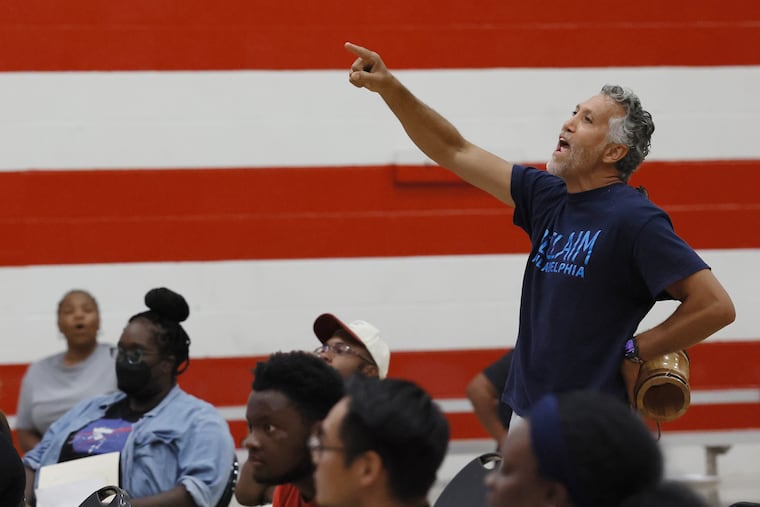
“I didn’t say where I need to get to in Northern Liberties, right?” said Jena Burley, the SEPTA training facilitator teaching the class.
Ack! Maybe the passenger would be better off taking the L for one more stop to Front-Girard, depending on the precise destination.
“Ask for as much specific information as possible,” Burley said.
SEPTA supervisors, administrators, and managers have been assigned 1,300 shifts as ambassadors in critical transit and Regional Rail stations from June 13 through July 19.
During that stretch Philadelphia will host six World Cup matches, the FIFA Fan Festival, the height of the nation’s 250th birthday bash, and Major League Baseball’s All-Star Week.
Four to 12 ambassadors will provide information, directions, and, ideally, a friendly welcome in each designated station — along with crowd control, and de-escalation techniques for conflict.
It’s a lot, which is why up to 1,000 employees have spent half a day in training with a detailed curriculum that feels like cramming for finals.
I worked with them through scenarios of escalating severity to simulate situations they will encounter: sweaty, frustrated crowds on platforms; medical emergencies; confusion over SEPTA’s fares and methods of payment; and how to troubleshoot travel glitches. And scarier stuff.
“This summer is an opportunity for SEPTA to shine, and you are such a big part of that,” said Lex Powers, chief officer for customer experience.
The Disney approach
This summer SEPTA is also debuting a new customer-service philosophy that subordinates other priorities to creating a safe and positive experience for people using the system.
The approach is inspired by Disney’s iconic “four keys” of customer service, admired by general manager Scott A. Sauer, a Disney fan.
The transit agency has used ambassadors since 2000 to help customers during special events like the Eagles Super Bowl parade last year, service changes, and the like. Officials rebooted the training program.
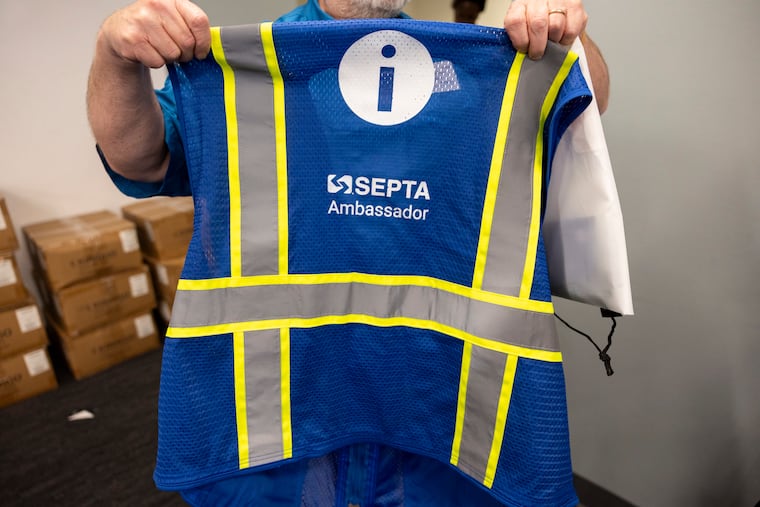
This summer, ambassadors will carry “cheat sheet” cards and wear blue vests to differentiate them from other workers in typical yellow safety vests.
I got my own blue vest at the start of the class — pretty snazzy — and tried to earn it.
Cultural correctness
The recent training included “cultural diplomacy” briefing sheets with guidance on customs and backgrounds of the countries with national teams playing here, prepared by the World Affairs Council of Philadelphia and protocol experts.
For instance, I learned:
Never flash the “OK” hand gesture to a Brazilian. It’s offensive, like flipping the bird.
When greeting or handing things to a person from Ivory Coast, use your right hand. It is a social slight to use the left, which is reserved for personal hygiene.
In some cultures, such as Ghana, it is customary to exchange pleasantries before getting down to business. People from Curaçao, influenced by Dutch culture, can be more direct and, while friendly, value personal space.
‘Bring the temperature down’
My fellow trainees and I shared tables in a conference room and huddled to work through often complex scenarios in a 24-page workbook.
You notice a particularly long line forming at one fare gate and go to investigate. …
A customer is tapping a credit card over and over, but it doesn’t work. Another customer tries to squeeze past them, increasing tension, and voices in the line start to rise.
“You want to bring the temperature down,“ said Noah Lee, manager of service-information development, with whom I shared a table. ”Take the person whose card doesn’t work off to the side to figure it out, and let other people go through.“
Nithin Vejendla said the bottleneck could be a two-person job and suggested bringing in another ambassador to wave people through the gate.
“Try empathizing with them,” said Vejendla, a SEPTA operations planner who was at my table. “Like, ‘I know it’s frustrating. I’ve had times where [tapping] doesn’t work. … We’ll get you on the next train.’”
Meanwhile, fix it. Is the person tapping incorrectly? Maybe the card reader’s bad, so try another turnstile. Consult a cashier.
The situation worsens.
A customer that has been held up in the line starts pushing and shoving the people in front of them. They are clearly agitated … [and] verbally threatening people.
“If they keep escalating, at that point your responsibility shifts to keeping the other passengers safe,” Vejendla said. “Maybe you stay between them and the fare gates, a physical barrier.“
Lee worked an ambassador shift during the 2025 Super Bowl parade and said he didn’t see anything like that.
“The atmosphere was joyful, and it was in the morning,” Lee said.
Vejendla, an operations planner who has worked at SEPTA for almost three years, was an ambassador for the Eagles parade and the Flower Show, and when SEPTA briefly cut and changed bus routes last year.
Later, trainees downloaded Google Translate to practice.
Vejendla speaks fluent Spanish and rough French. Powers, his boss, was teasing him about it.
“Lex was like, and I quote, ‘I can’t believe the system understood you. That French accent was terrible.’”
When emergencies arise
Sometimes, the scenarios are more serious. People wind up in the track area, trying to retrieve an item or having fallen off a platform. What do you do?
“Stop the train. Think about everything else later,” Burley said.
Go to the cashier and get them to push the Emergency Train Stop button, which activates a “stop” signal light. There are red flags in the booth to wave at incoming trains.
Moving your arm back and forth at chest level is a traditional railroad stop signal. “Or go berserk,” Burley said, waving your arms over your head or flashing a phone flashlight.
Do not enter the track area, and don’t try to pull a person up. The third rail carries 600 to 750 volts of electricity.
“You’re there to keep customers safe, but if you’re not safe, you can’t help,” Burley said.
As class ended and everyone left, I carried a deeper respect for the job of ambassador. I wished my fellow students good luck.