Tacony Station’s design led to fatal train collision, lawsuit against Amtrak and SEPTA claims
Hector Mejia-Gomez, 77, was fatally struck by an Amtrak train in October.
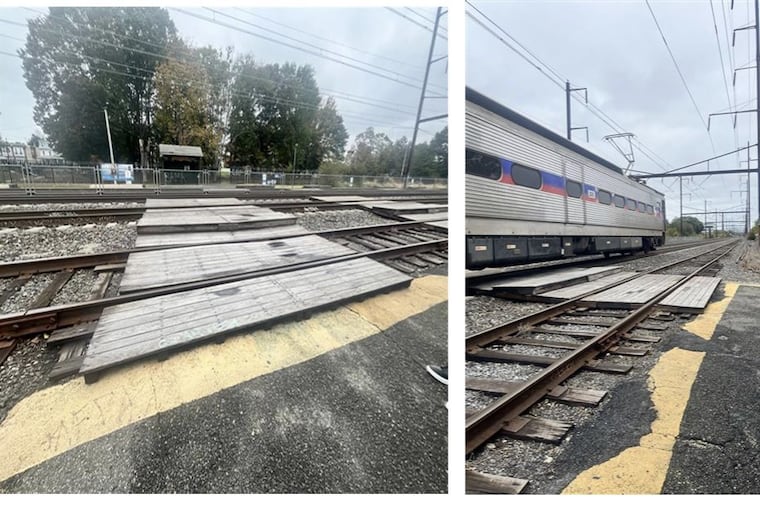
The daughter of a man who was killed in October by an Amtrak train at Tacony Station in Philadelphia has sued the national rail company and SEPTA, alleging the station was designed in a way that made such an incident inevitable.
Hector Mejia-Gomez, 77, of Northeast Philadelphia, was killed on Oct. 9 at the unmanned station, which requires passengers to stand on wooden planks that cover the tracks to board trains, according to the suit, filed Monday in Common Pleas Court.
Mejia-Gomez was planning to travel to Trenton but never made it onto his train.
The station does not have warning signs about the danger of trains that pass through without stopping, the complaint says.
“By design, passengers are essentially invited into the zone of danger to wait for and board their trains, as they must board and disembark directly where high-speed trains like the Acela train travel through Tacony Station,” the suit says.
The incident was captured by a nearby business’ security camera, and the footage shows Mejia-Gomez, assisted by a cane, beginning to cross the tracks and then turning around to return to the platform when he appeared to realize a train was approaching, according to Greg Prosmushkin, an attorney for the family.
It is “inconceivable” that a train station in a densely populated area, where high-speed trains pass through, does not take steps to protect passengers, the attorney said.
“There are no safeguards, there are not cameras, there are no instructions,” Prosmushkin said.
The lawsuit accuses Amtrak and SEPTA of negligence that caused Mejia-Gomez’s death, which was ruled an accident, according to the attorney.
A spokesperson for SEPTA declined to comment. Amtrak did not respond to a request for comment.
At least three other people have been killed at the station since 2010, the suit says.
Mejia-Gomez was born in Honduras, where he worked at a banana plantation, according to attorney Jonfranco Esimio, who also represents the family. In the last decade of his life, he lived with his daughter, Claudia Mejia, in Rhawnhurst to help with his grandchildren.