SEPTA riders say Regional Rail trains catching fire ‘is what decades of disinvestment looks like’
After Harrisburg failed to find recurring funding for mass transit and temporary help from the governor, the Regional Rail crisis has become an emblem of SEPTA's plight.

A Spirit Halloween fog machine pumped “smoke” from a box tricked out to look like a burning Regional Rail car on Tuesday morning near Suburban Station.
The pointed display was part of a protest by fed-up SEPTA riders who blamed Regional Rail train fires and the resulting chaos on the state’s failure to properly fund mass transit.
SEPTA is rushing to inspect 225 Silverliner IV cars, all more than 50 years old, under an emergency order by the Federal Railroad Administration issued Sept. 29 in response to five train fires of undetermined cause this year.
“All these issues stem from the fact that our [state] government refuses to acknowledge the severity of our transit funding crisis and is out of touch,” said Patrick Garraud of Bucks County, a regular commuter on the West Trenton line.
Regional Rail trains have been delayed or canceled and are skipping stops due to overcrowding as the aging cars are pulled from service in batches for extra scrutiny, repairs and installation of a modern thermal detection system.
“That is what decades of disinvestment look like,” said Madison Nardy, director of the 215 People’s Alliance.
The protest was organized by Transit Forward Philadelphia and Transit for All PA!, advocacy groups that are continuing to push for recurring state operating funds for transit.
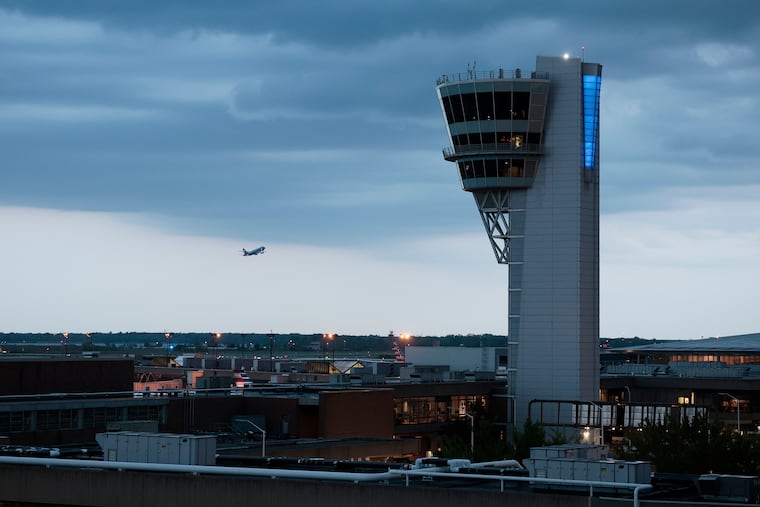
Quyen Le, an American Airlines flight attendant who takes the Regional Rail Airport Line, told the crowd about the day her train caught fire in 2021, halfway between the Penn Medicine Station and Eastwick.
“We couldn’t evacuate,” Le said. “The conductor told us we were going to roll back to Penn Medicine, and the rest of the trip was canceled.”
Four years later, federal officials indicated up to two-thirds of the Regional Rail fleet was at risk of catching fire. “This is more than unacceptable. It’s unfathomable,” said Le, who is responsible for passenger safety on airliners.
The state budget is more than three months overdue, and there is no apparent movement to revisit transit after months of negotiations on the issue failed to yield a deal. Earlier this year, SEPTA canceled 32 bus lines and significantly curtailed other service as part of a “doomsday scenario” the agency said was caused by lack of new state funding.
Lawsuits were filed, riders were inconvenienced, and the cuts were reversed when Gov. Josh Shapiro decided that Senate Republicans would not budge on more transit funding and found a two-year fix that allows SEPTA to tap $394 million set aside for capital projects in a state trust fund for operating expenses.
Garraud, an organizer with the Philly Transit Riders Union, called it “a short-sighted scheme.“ There is no publicly announced plan to replenish the capital money, which otherwise could pay for things such as infrastructure work and new transit vehicles.
SEPTA officials are concerned that the Regional Rail situation may drive away customers.
“Everybody understands that once in a while there’s going to be a disruption, but they can’t see it every single day,” General Manager Scott Sauer said last week. “Then they find a new route.”
It would cost about $2 billion and take 10 years to replace all the Silverliner IVs, he said.
The first car of a Wilmington-bound train caught fire Feb. 6 as it pulled out of Crum Lynne Station in Delaware County.
Four other Silverliner IV fires followed, according to the National Transportation Safety Board — in Levittown on June 3, in Paoli on July 22, in Fort Washington Sept. 23, and in the city on Sept. 25.
Passengers were evacuated in all five incidents, with minor injuries reported.
The FRA, which regulates freight and passenger railroads, ordered SEPTA to undertake the inspections but stopped short of saying the agency needed to remove all of the Silverliner IVs from service at once.
“The pattern of failures persuades [the Federal Railroad Administration] that reliance alone upon the prior assurances and cooperation of SEPTA is not possible, nor in the interest of public safety,” said the emergency order, which was published in the Federal Register last week.
“We’re going to keep talking to riders until we get a funding solution,” said Stephen Bronskill, coalition at Transit Forward Philadelphia. “Our fight is not over.”