Free SEPTA fares for low-income riders could end next year. Advocates are pushing to save it.
The Zero Fare program needs permanent funding, argue advocates and some elected officials.

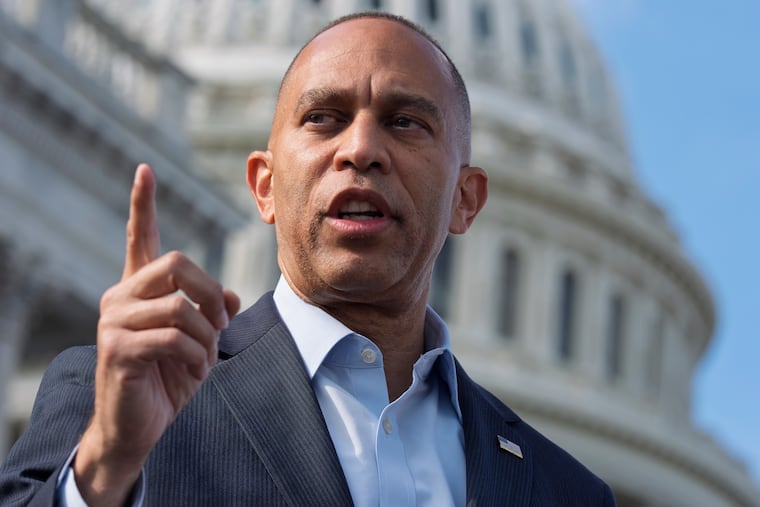
SEPTA’s 21.5% increase in transit fares and service cuts fell hardest on disadvantaged Philadelphians this year, showing an urgent need to make the city’s Zero Fare program permanent, City Councilmember Nicolas O’Rourke argues.
He touted his proposal to dedicate 0.5% of the city budget each year to pay for the initiative that provides free SEPTA passes to people living in poverty.
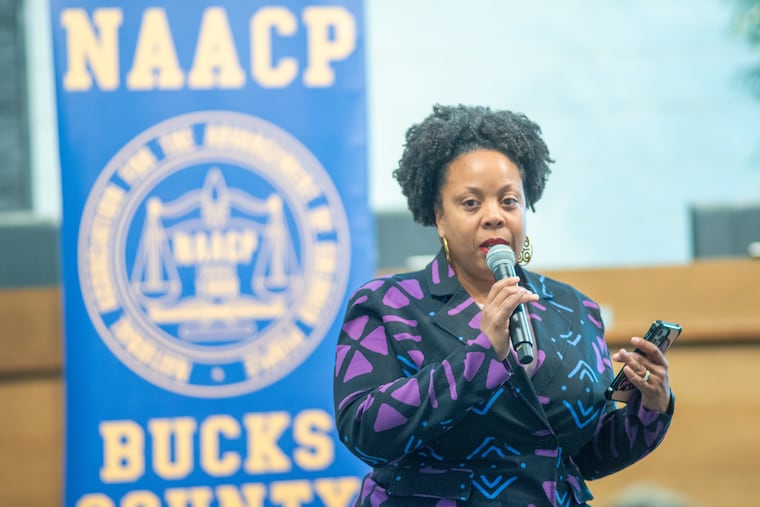
O’Rourke’s proposed Transit Access Fund would be written into the City Charter “so it can’t be yanked away at a moment’s notice when somebody wants to shift something around in the budget,” he told about 150 people in a town hall at the Friends Center on Cherry Street.
O’Rourke, Democratic State Sen. Nikil Saval, and the advocacy group Transit Forward Philadelphia called the meeting to push for affordable public transportation and ways to sustainably fund SEPTA after Harrisburg’s failure to provide new state money for mass transit agencies.
Their affordability agenda is in keeping with the message in Democratic wins for governor in New Jersey and Virginia, as well as Zohran Mamdani’s election as mayor of New York.
A broad coalition and patience are needed in Pennsylvania, Saval said. " Every major political win comes from months, years, sometimes decades, of work," he said.
Earlier this year, Mayor Cherelle L. Parker’s budget would have eliminated funding for Zero Fare, a two-year pilot program launched in 2023. Money was restored after backlash.
“We pushed back hard,” said O’Rourke, a member of the Working Families Party. “People with the least income are paying a larger share of their money just to get around. That’s upside down.”
Funding is not guaranteed after June 30, when the current budget expires, however.
If enacted, a Transit Access Fund would generate an estimated $34 million in the 2026-2027 fiscal year, O’Rourke’s office calculates.
That would generate enough money — between $20 million to $25 million, according to managers of the Zero Fare program — to give free SEPTA passes to 60,000 Philadelphians at or below the federal poverty standard.
O’Rourke and his staff also are considering using the remaining $10 million to $14 million for matching grants to help businesses, landlords and housing developments to join the SEPTA Key Advantage program, which provides subsidized transit passes.
People living at or below the federal poverty standard are eligible for the Zero Fare SEPTA passes. For 2025, that is $15,650 for an individual and $32,150 for a family of four.
Philadelphia’s poverty rate was 19.7% in 2024, the latest figure available, according to the U.S. Census.
To win sustainable state funding for SEPTA, activists need to break through the narrative that urban and rural areas of Pennsylvania are hopelessly divided on transit.
This year, the Transit for All PA coalition campaigned for more state dollars for transit systems in every county of the state. About 45,000 people representing every legislative district participated.
“When we’re made to feel like we’re on opposite sides of the fight, our numbers become smaller and we focus on the wrong targets,” said Saval.
“It’s not the person in Schuylkill County frustrated about potholes and road conditions that’s to blame for lack of transit funding” he said. “That person deserves to get safely where they need to go, too.”