See it, hear it, feel it: All the Philly art we loved this week
By Elizabeth Wellington, Morgan Ritter, Bedatri D. Choudhury, Dan DeLuca
Ringing freedom
y dream of ringing the Liberty Bell has (sort of) been achieved.
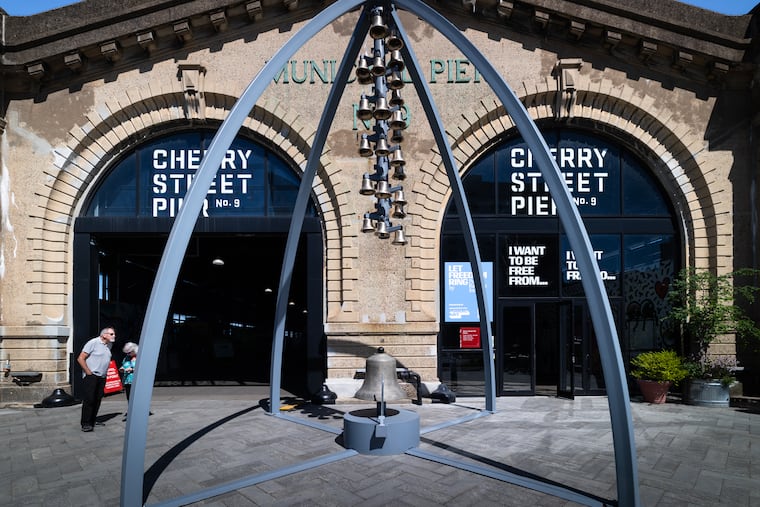
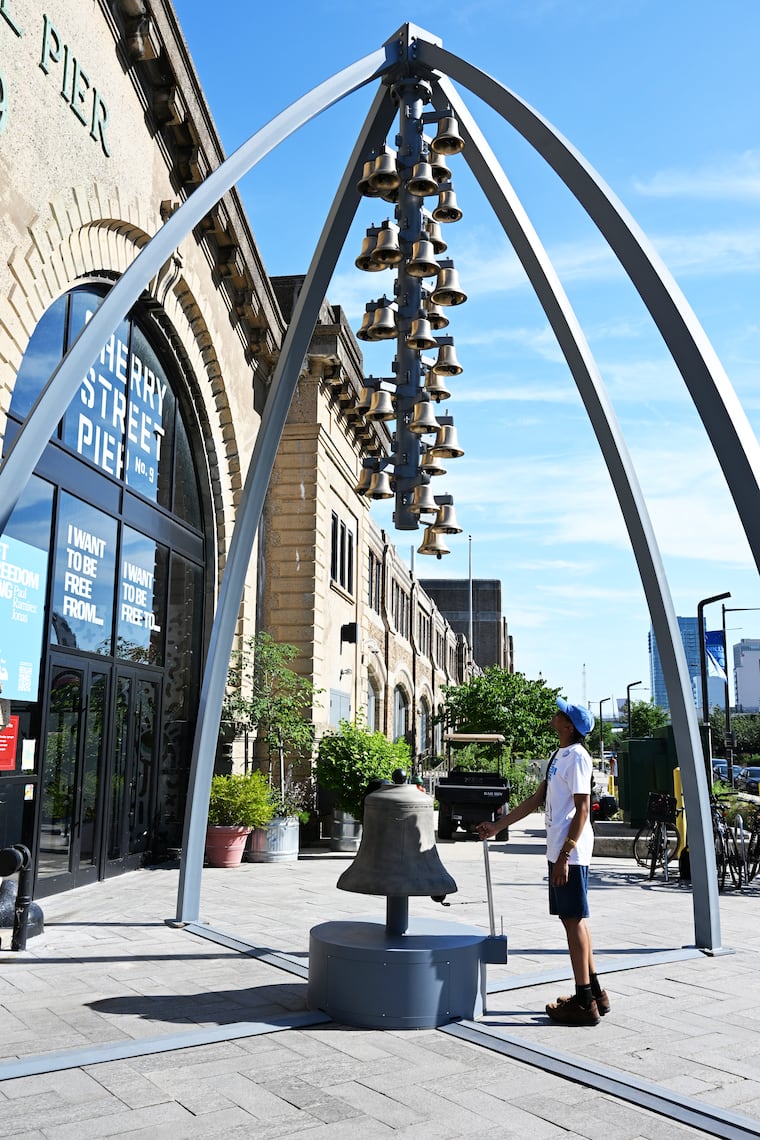
Just in time for America’s 250th anniversary, a 600-pound Liberty Bell look-alike has popped up on Cherry Street Pier. The exhibit titled “Let Freedom Ring” by artist Paul Ramírez Jonas features a lever in front of the bell that allows passersby to ring it, resounding a bright gong sound.
That’s not all; a spiral of 32 smaller bells hang overhead. Together, in tings and gongs, they play “My Country ‘Tis of Thee” every 15 minutes on the hour but the very last note is left out. This final note is meant to be rung from the bigger bell using the lever by onlookers, allowing them to be a part of the exhibit.
The most moving part for me were the inscriptions on the big bell itself. Engraved on either side of the bell, one says “I want to be free from …” and the other “I want to be free to …” These simple open-ended statements invite Philadelphians to question what freedom means to them in today’s American society.
It got me thinking about this country, where freedom is meant to be a founding principle. How much freedom do we really have, especially across diverse identities?
Let Freedom Ring runs through Sept. 27 at Cherry Street Pier, 121 N. Christopher Columbus Blvd. associationforpublicart.org
— Morgan Ritter
The return of a Philly anti-folk hero
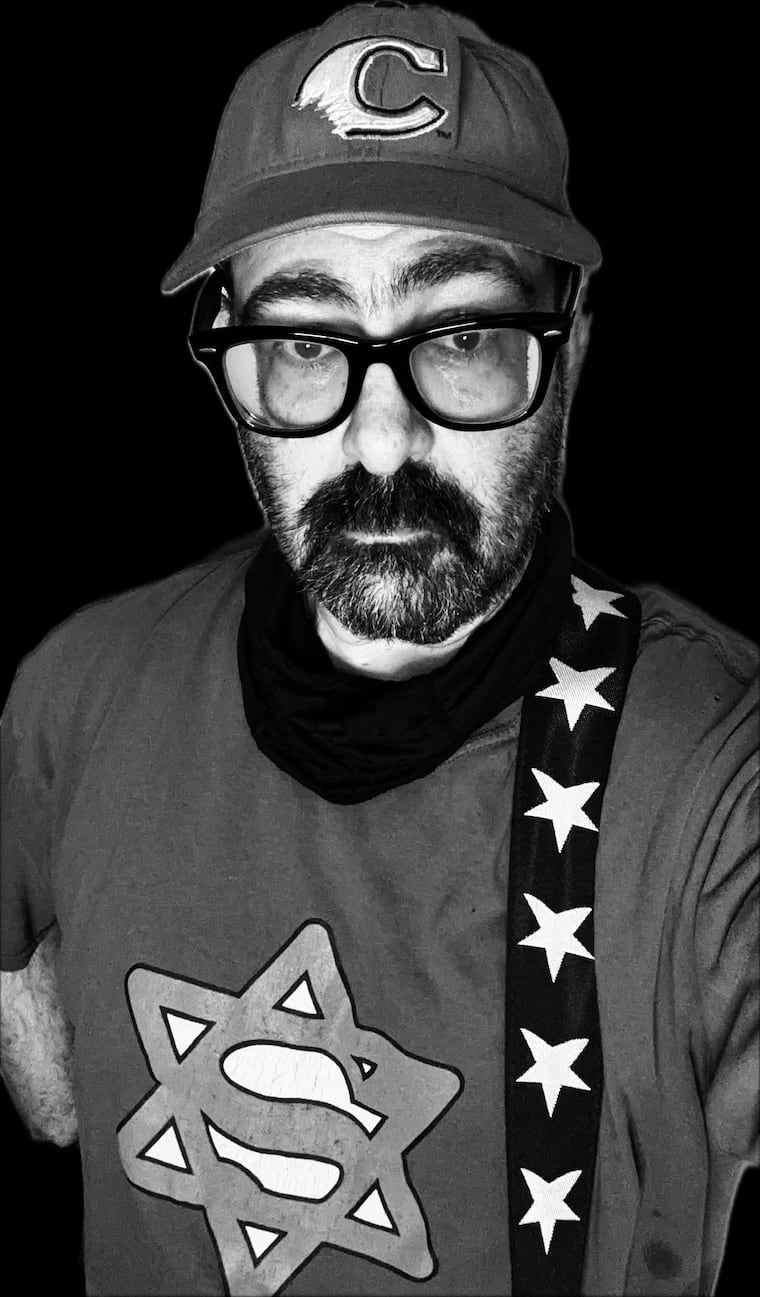
“I believe what Woody sang: ‘All you fascists bound to lose,’” Adam Brodsky sings on American Epitaph, his first album in over two decades. “But he didn’t give a time, and man that’s sure something we could use.”
Recorded at Retro City Studios in Philadelphia with producer Matt Muir, American Epitaph is a protest album divided into stripped-down tracks with Brodsky on guitar and Butch Ross on organ, and a full band presentation with backing by guitarist Jesse Lundy, drummer Alec Meltzer, and Chris Bixler on bass.
Songs like “Achy Breaky America” and “New World Order” are unapologetically confrontational in their politics, aiming to inspire a fighting spirit. A need to speak to the moment led Brodsky to return to recording and performing after a long layoff.
“Though long thought to be retired or eaten by a bear,” Brodsky writes in the liner notes, “truth is, Adam has been pried off the couch by the disappointing reemergence of fascism.”
And while Brodsky is the first to admit that his songs might not have the power to effect political change, on American Epitaph he aims to keep standing firmly in resistance to injustice and keeping faith in himself. “Singin’ songs and marching may not change my country,” he sings. “But I still do it every day, so my country don’t change me.”
— Dan DeLuca
A Philly legend on film
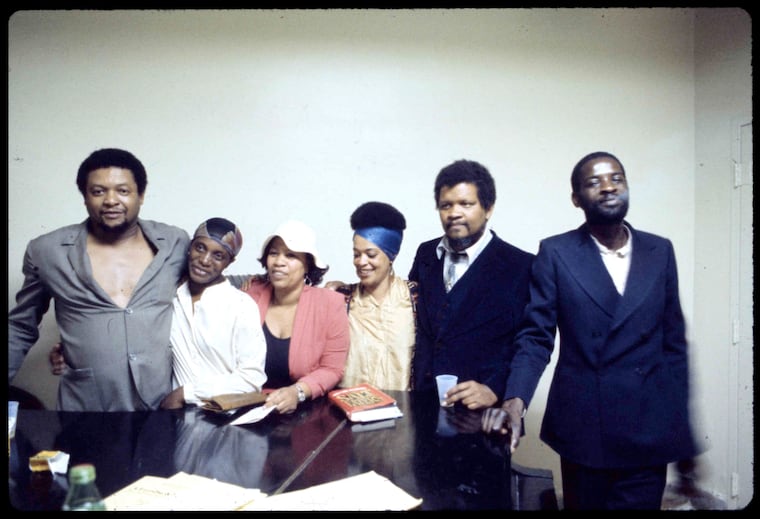
Toni Cade Bambara was a legend. But more importantly, she was a Philly legend.
Born and raised in Harlem, having studied theater in Florence and Paris, she taught in Atlanta before moving to the city in 1986. The Black Woman, an anthology she edited, published in 1970. That collection of writing is largely credited for introducing readers to the likes of Alice Walker, Audre Lorde, and Nikki Giovanni. Bambara was a filmmaker, academic, and activist but she was also a world builder; she built worlds with her ideas and then invited people to partake and wander in them. Wander and wonder.
After reading her 1980 novel Salt Eaters in college, I wrote out her words “All cocoons are temporary and disappear” on a piece of paper that I stuck above my writing desk.
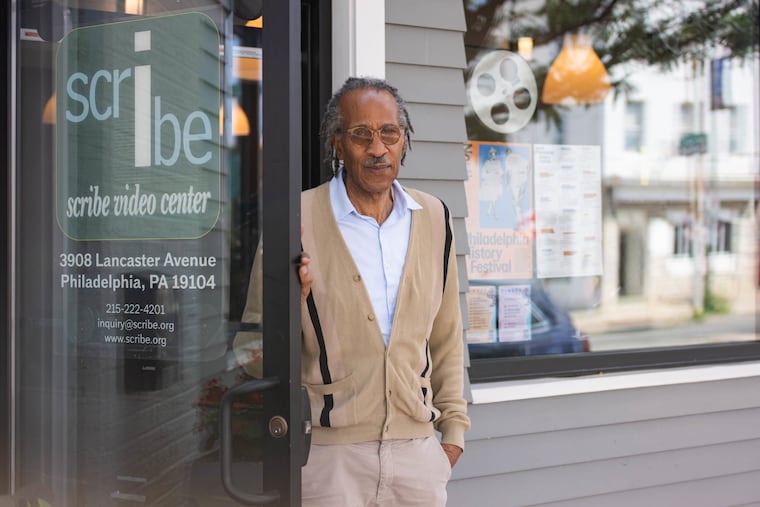
In Philadelphia, Bambara made friends with another Philly legend: Louis Massiah, the founder of West Philly’s Scribe Video Center. Together, Massiah and Bambara made the 1986 documentary, The Bombing of Osage Avenue, about the MOVE bombing, and then 1996’s W.E.B. Du Bois: A Biography in Four Voices.
Thirty years after Bambara’s death in 1995, Massiah’s film TCB — The Toni Cade Bambara School of Organizing premiered at the BlackStar Festival. The documentary is structured like a syllabus and is a lesson in organizing, creating, and living from Bambara herself. It chronicles her life, tells us what she can still teach us today, and brings together the galaxy of legends she called friends: Toni Morrison, Nikki Finney, Sonia Sánchez.
TCB plays as part of cinéSPEAK’s Under the Stars Film Festival on June 19 under the open night sky in Clark Park, not too far from Scribe, where Bambara and Massiah together wrote stories that continue to teach us about the many fault lines running through our world and lives.
“TCB — The Toni Cade Bambara School of Organizing” plays June 19, 9 p.m., at Clark Park, 4300-4398 Baltimore Ave., cinespeak.eventive.org
— Bedatri D. Choudhury
Questlove gives Earth, Wind & Fire its flowers
I learned how to do the two-step to Earth, Wind & Fire’s hits like “September,” “Groove Tonight,” and “Shining Star.” In Afro-puffs and bell-bottoms trimmed in 1970s rickrack, my dance moves were clumsy. In my family’s white tiled kitchen, I practiced as the familiar voices of lead singers Philip Bailey and Maurice White crooned from my mom’s AM radio. Earth, Wind & Fire was like McDonald’s French fries and Sesame Street. I loved them.
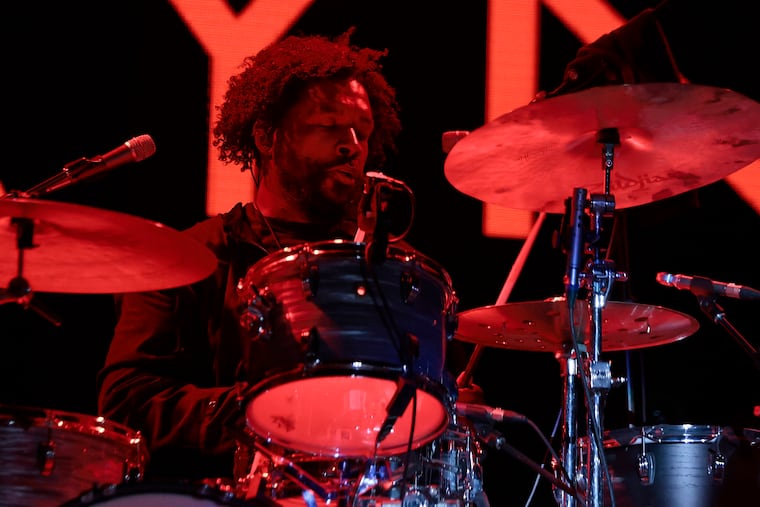
So when Ahmir “Questlove” Thompson’s trippy documentary on the R&B group that I fondly call “the elements” aired on HBO recently, I tuned in.
I was pleased with what I saw. The two-hour Earth, Wind & Fire (To Be Celestial vs That’s the Weight of the World) was more than a nostalgic look back; it was an insightful look at the life of founder Maurice White. White was anything but transparent to the world, except when he was making music. That is where he put his emotion. That is why the band’s music spoke to us.
White meditated. He had faith and mantras. He poured what he learned into the making of iconic tunes.
Through interviews with living bandmates, Thompson, who directed the film, gives us a peek into White’s childhood. We see White fall, get up, and fall again, and spend way too much money on the group’s spacey costumes. White was fearless and Earth, Wind & Fire, iconic. And my feet moved — and still do — with syncopated joy.
“Earth, Wind & Fire (To Be Celestial vs That’s the Weight of the World)” is streaming on HBO.
— Elizabeth Wellington


