See it, hear it, feel it: All the Philly art we loved this week
By Dan DeLuca, Rosa Cartagena, Elizabeth Wellington, Earl Hopkins, Bedatri D. Choudhury
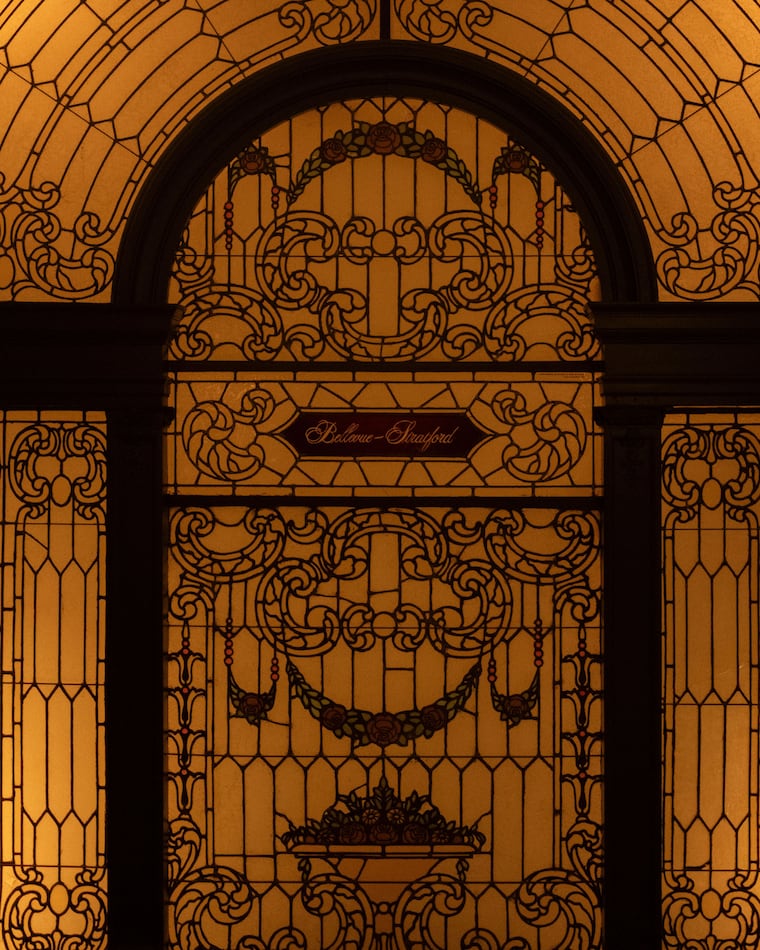
A stunning and mysterious window at the Bellevue Hotel
n a recent Thursday morning I joined a dozen Philadelphians on a history tour of the Bellevue Hotel. Our walk began in the French Renaissance building’s grand lobby, where historian-in-residence David Kurlander told the story of Bellevue founder George C. Boldt, who built this hotel and New York’s Waldorf Astoria.
Kurlander was thorough, pointing out cool details from the lobby floor’s tiles, which have been part of the Bellevue’s decor since it opened in 1904 as the Bellevue Stratford. He confirmed nearly every U.S. president from Theodore Roosevelt to John F. Kennedy to Barack Obama has given a speech at the Bellevue.
However, an 11-foot-by-10-foot stained glass window just outside the hotel’s second-floor ballroom caught my eye. I was entranced by how the midmorning sun shined through the translucent window’s floral motif. But I was more interested in the little mystery that surrounds the colorful window.
Kurlander said the window likely dates back to the early 1900s and was possibly fashioned by one of three craftsmen who worked on the turn-of-the-century hotel building: Germantown’s Nicola D’Ascenzo, Alfred Goodwin of Pittsburgh, or New York-based Louis Comfort Tiffany. The window also may have been crafted later in imitation of these pioneers.
Kurlander is on a quest to find out. Here’s the real mystery, though: He didn’t know what hotel space the stained glass was built for.
But he does know that, at some point, it was hidden in a stairway that was only used in emergencies. It stayed there, tucked away until 2000, when then-manager Bernard Guet installed it in a prominent location across from the ballroom, visible to the hotel’s elite partygoers.
“As with everything with the Bellevue, there is a deeper story that connects its history and artistry to the broader history of Philadelphia and to some degree the history of America.”
The Bellevue Hotel, 200 S. Broad St., offers free 75- to 90-minute tours at 10 a.m. and 2 p.m. on select Thursdays. Book tours here. (215) 893-1234. Kurklander writes a weekly Substack on Philadelphia history and architecture called Archiveadelphia.
— Elizabeth Wellington
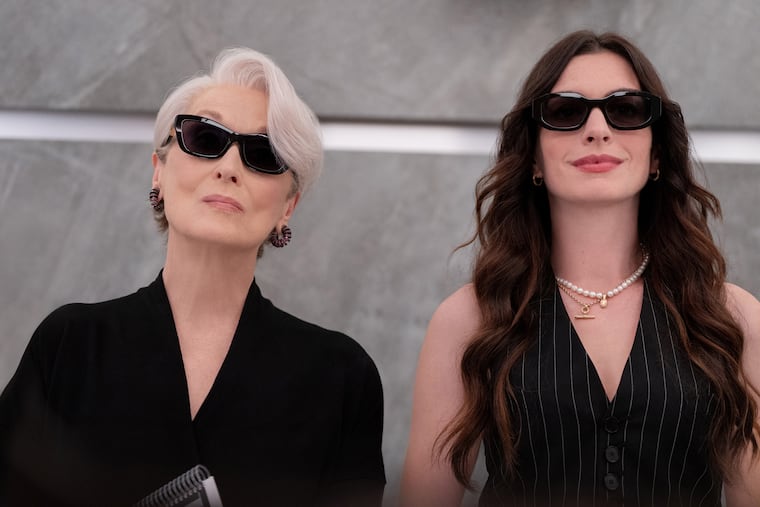
A ‘Devil Wears Prada 2′ rec. ‘Groundbreaking’
Most sequels of beloved movies from the early aughts feel like cash grabs that fail to bring any fresh energy or intrigue to the screen — but not this one.
The 2006 film has long been a comfort watch for me and I always rank it as one of my favorite unserious journalism movies (along with 27 Dresses). So I’m happy to say that I found the second installment starring Anne Hathaway and Meryl Streep — who have Philadelphia and Bucks County roots — to be really fun, touching, and, of course, glamorous, even if some of the celebrity cameos felt gratuitous.
What I didn’t quite expect was how emotional it would be to see this cheeky movie make a genuine effort to represent the challenges of journalism today. It starts with Andy (Hathaway) receiving an award for impactful reporting, just seconds after she learns that she and her colleagues were laid off. It was crushingly relatable.
That’s how she finds her way back to the fictional magazine Runway, where she’s brought in to help Miranda (Streep) recover from a PR disaster. Together, they’re a formidable force against billionaire bros who couldn’t care less about journalism or fashion. Obviously it’s still a Hollywood interpretation, but the story had me tearing up and laughing as I rooted for them; plus, seeing it at a movie theater made the experience even better. I can’t wait to watch it again.
‘Devil Wears Prada 2′ is now playing in theaters.
— Rosa Cartagena
Sixteen flags at the Spruce Street Harbor Park
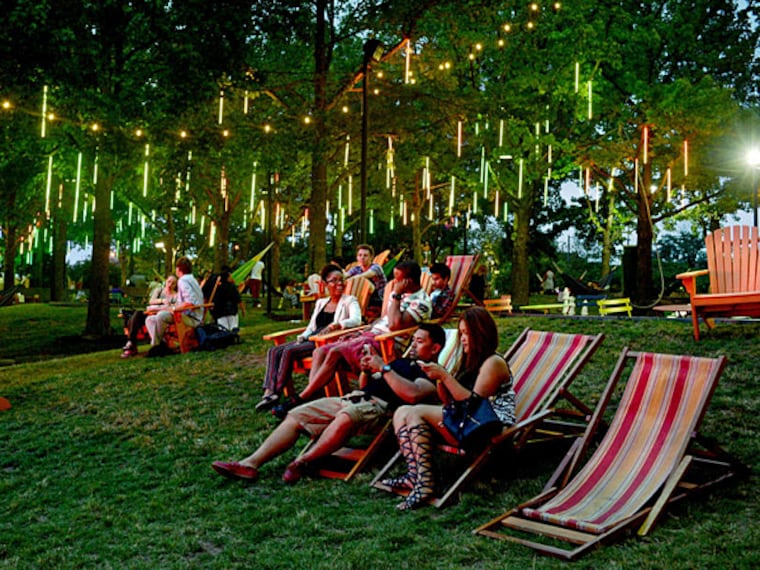
Over the years, Spruce Street Harbor Park has undergone many changes. The Delaware River Waterfront attraction started as a one-time pop-up and quickly became a seasonal tradition. It’s where residents kick their feet up on cozy hammocks, ride duck boats in the marina, sip cocktails under sizzling sunsets, and enjoy carnival-themed bites along the boardwalk.
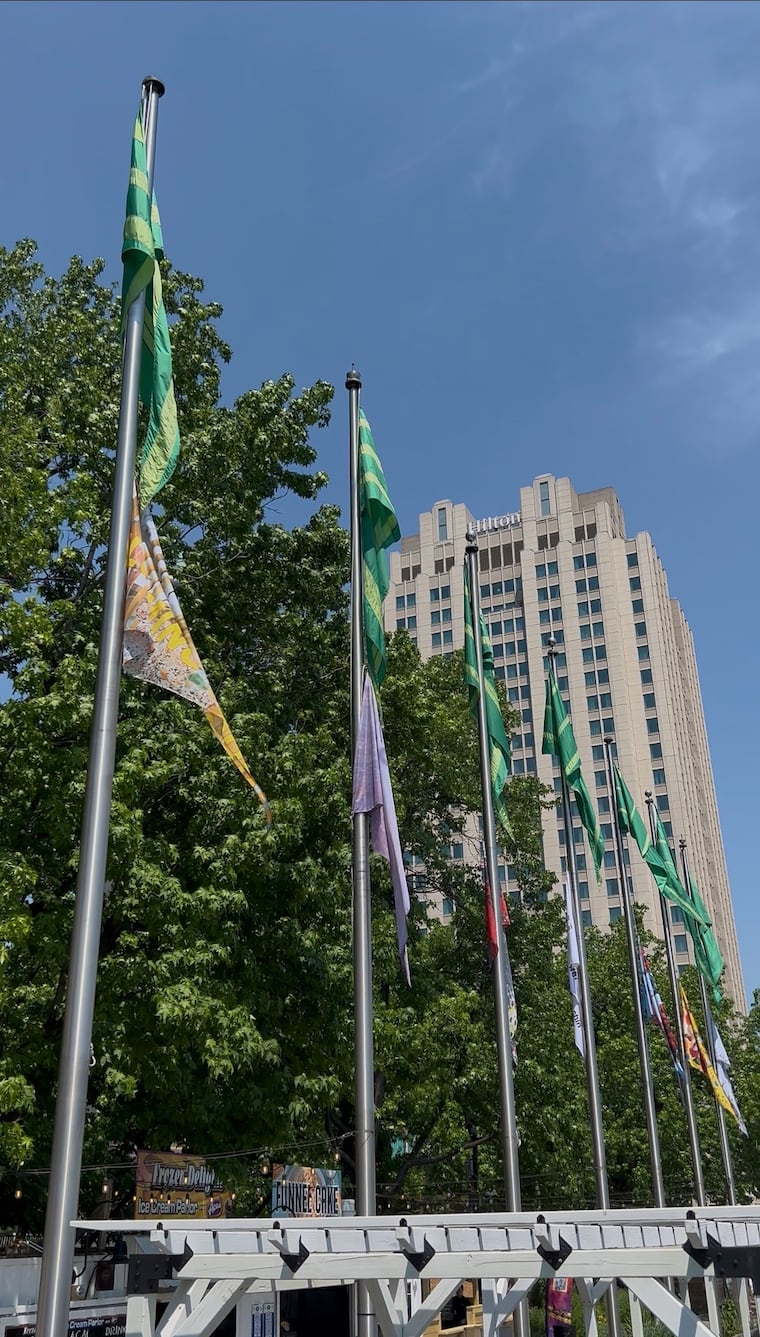
It’s an impressive urban beachfront where I hardly ever look up. But on a recent visit, I directed my eyes to the clouds and spotted 16 artist-designed flags hanging from one end of the boardwalk to the other.
What immediately stood out was the work of Venezuelan artist Martín Pintos, whose flag is an ode to South American possums and the regional varieties found on South Philly’s backstreets on trash day. Others include Keysha Rivera’s photograph of her parents, layered with the phrase, “There will be Puerto Ricans in PR in the future.”
Other standouts include Nigerian American artist Ekene Ijeoma’s all-black flag with the phrase, “A Family Survived Today,” in white all-caps text, and Joseph Carrillo’s honoring of Native American tradition and the Missing and Murdered Indigenous Women movement.
The “Roots of Resilience” installation is a part of the park’s ongoing celebration of the city’s immigrant communities and honors those who have ventured into the U.S. since its founding 250 years ago.
It’s been three years since the series launched, but the subject couldn’t be any more timely today — not only as we approach the nation’s Semiquincentennial but also as we wrestle with a political administration that vilifies naturalized citizens and immigrants.
These flags reminded me of the complexity and vastness of the American identity, and proof that without these distinct voices, viewpoints, and contributions, the story of our nation would be fragmented. And personally, who doesn’t like a possum on a flag?
“Roots of Resilience” is on display at Spruce Street Harbor Park.
— Earl Hopkins
Bob Dylan’s birthday party at Ardmore Music Hall
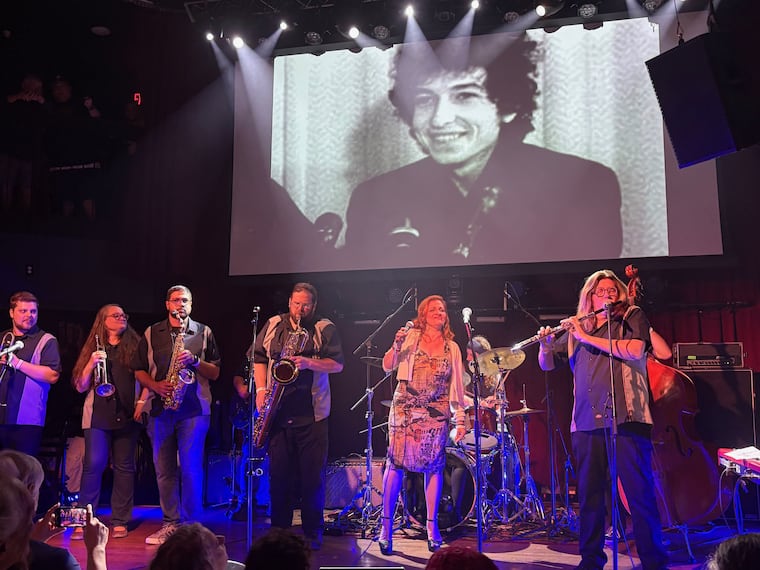
I only spent two hours at Ardmore Music Hall on Wednesday night at the Bob Dylan Birthday Bash, which means I only got to see 20 Philadelphia bands and solo acts put their interpretative skills to work in covering one song each by America’s most-celebrated songwriter, who turns 85 on Sunday.
If I had stuck around for the whole event, I would have doubled that total and been able to sample the full complement of 40 Dylanistas, in what every year is a great way to do a quick study of the state of Philly’s music scene in matters indie folk-rock, and beyond.
Highlights included Max Davey frisky take on “If Not for You,” horn-happy jump-blues band Swing That Cat singer Michele Peraino’s deliciously dark “Everything Is Broken,” Center City street singer Osiris Wildfire’s soulful “Mama You’ve Been on My Mind,” and Speeding Arrow’s ripping “Obviously Five Believers.”
Mike Mennies turned the microphones off to lead the house in a “Blowin’ in the Wind” singalong that was sweet and moving. Philadelphia Ukulele Orchestra served up a delightfully playful iteration of Dylan’s “If You Gotta Go, Go Now,” in its French language rendering — translated as “Si Tu Dois Partir” — that was recorded by Fairport Convention in 1969.
Garden Roads’ “Lay, Lady, Lay” was an unexpected treat. Brian Seymour and Rich Kaufmann had their way with the Traveling Wilburys’ “End of the Line,” and Joey Sweeney did right by “I’ll Keep It With Mine.”
The heroes of the evening — along with the Ardmore Music Hall crew that keeps the show running on time and sounding sharp — were, as always, emcee and Dylan trivia host Jon Houlon along with his co-organizer Kenn Kweder, who sat in with various players and turned in a suitably mysterious “Queen Jane Approximately.”
The next Dylan Birthday Bash won’t happen until next May, and Dylan himself plays the Highmark Mann on July 14. And all the performers mentioned herein are working musicians in Philly area. Google, and go see ‘em. Oh, and one other thing: Happy Birthday Bob!
— Dan DeLuca
Marquis de Lafayette’s strong merch game in Paris
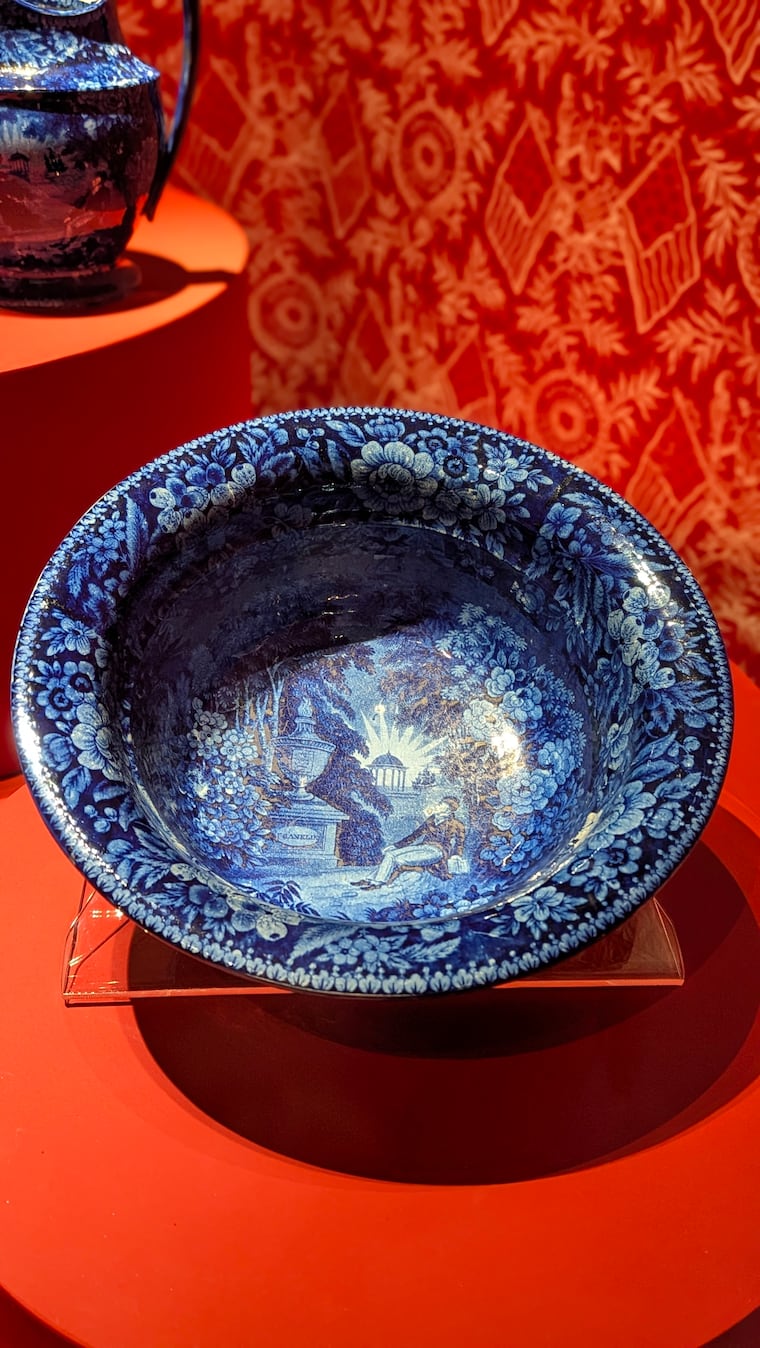
We don’t know if Marquis de Lafayette ever visited Benjamin Franklin’s tomb in Philadelphia but that didn’t stop an entire line of kitchen china to be produced by a factory in Burslem in Staffordshire, England around 1826. Commemorative plates designed by DW Jackson honoring Lafayette’s return were made in blue and white earthenware, styled like British royal commemorative plates, were extremely popular in the American market.
The items — plates, teapots, sugar bowls, jugs, basins — all carried an image of Lafayette sitting by a generic grave marked “Franklin” and were released to coincide with Lafayette’s great American return tour in 1824 on invitation from President James Monroe.
(The name on the gravestone was swapped with “Washington” in another line of similar items.)
By this time, Lafayette was a celebrated hero of the American Revolution but wasn’t in the good graces of French King Louis XVI. His return to the U.S. was a grand affair with New York, Boston, and Philadelphia trying to outdo one another in organizing events to celebrate his return. Philadelphia even hosted a Lafayette Ball in 1824.
Among other commemorative “merch” were shoe brushes, infant shoes, pitchers, all celebrating an American hero who went on to be disliked by French royalists and democrats, and eventually largely forgotten.
On a recent vacation in Paris, I chanced upon a commemorative plate in the Musée des Archives Nationales in its “Lafayette between France and America: History and Legend” exhibit held in celebration of America’s 250th anniversary.
Yes, my interest in Lafayette started with Daveed Diggs in Hamilton but they forgot to include the part where the French man raps about his extreme merch game wowing Americans back in the 1800s. Sometimes a saucer can teach you more than what a 2-hour, 45-minute musical can.
“Lafayette between France and America: History and Legend” runs through July 14 at Musée des Archives Nationales, 60, rue des Francs-Bourgeois, 75003 Paris
— Bedatri D. Choudhury


