Philadelphia is the birthplace of the nation. It’s also where the U.S. Army was founded.
The Second Continental Congress authorized the the formation of the Continental Army in Independence Hall in 1775.
The first shots of the Revolutionary War were fired in April of 1775 during the Battles of Lexington and Concord. And the colonists were victorious.
The Second Continental Congress convened at Independence Hall the following month to ignite the pioneers’ fighting spirit and in June, they authorized the formation of the Continental Army, the first branch of the American military.
“The Continental Army was established to wage war against Great Britain and to fight for the rights and liberties of Americans who still considered themselves a part of the British Empire,” explained Matthew Skic, director of collections and exhibitions at the Museum of the American Revolution.
“George Washington was appointed commander-in-chief. Nobody knows at this point the war [was] going to last eight years,” Skic said.
The Philadelphia Historic District will honor the creation of the U.S. Army this Saturday at the Museum of the American Revolution. This weekend’s fete is the latest “Firstival,” a yearlong series of weekly day parties celebrating American events, places, and things with Philadelphia roots.
The Revolutionary War escalated quickly, Skic said, and by early 1776, the Founding Fathers were debating sovereignty. In July, the colonists declared their independence. Three months later, Congress issued an official order renaming our young country from the United Colonies to the United States.
“Now, the Continental Army isn’t fighting to restore the rights and liberties of British Americans,” Skic said. “It is now fighting to secure the independence of a new nation.”
The Continental Army was originally made up of troops from New York, New Hampshire, and Rhode Island. Pennsylvania, Maryland, and Delaware men quickly joined the fray, marching north and strengthening the Army’s force.
Some soldiers from Pennsylvania had previously served in the volunteer militia, the Philadelphia Associators, founded by Ben Franklin in 1747 to defend the city against foreign invasion. The seasoned vets would go on to become leaders in the Continental Army.
The Redcoats tried to capture Philadelphia in 1776, but Pennsylvania army men, led by Washington, held them off.
The next year, Pennsylvania troops fiercely defended Philadelphia during the Battle of Brandywine in Chadds Ford but lost. The British occupied Philadelphia for nine months, through June of 1778, when they evacuated and reassigned troops to New York. Earlier that year, France formed an alliance with the United States and the British military decided to use its resources to protect New York.
“The British leave Philadelphia and they don’t come back,” Skic explained. “The Continental Congress moves back in [to Independence Hall] and Philly becomes the capital of the revolution again.”
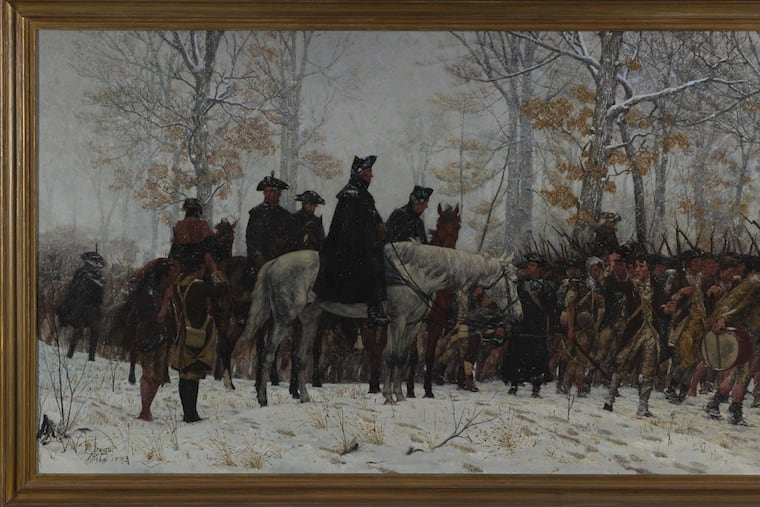
In the winter of 1778, the Continental Army retreated to Valley Forge and under the command of Prussian military officer Baron von Steuben, the Continental Army became a lean, mean fighting machine.
Realizing that the Union’s alliance with France, combined with its improved military prowess, would likely mean they would lose the war, Britain began to retreat. On Sept. 3, 1783, officials signed the Treaty of Paris, formally recognizing the United States as an independent sovereign nation.
The American Army fought valiantly during the Revolution, Skic said. Still, it’s important to note the conflict just didn’t impact America, a lesson our military would apply to subsequent wars.
The American Army was strong, Skic said. “But the global element of the war had an important impact on securing the independence of the United States,” he said.
This week’s Firstival is Saturday, June 13, 11 a.m.-1 p.m. at the Museum of the American Revolution, 101 S. Third St.
The Inquirer is highlighting a “first” from the Philadelphia Historic District’s 52 Weeks of Firsts program each week. A “52 Weeks of Firsts” podcast, produced by All That’s Good Productions, drops every Tuesday.