
See it, hear it, feel it: All the Philly art we loved this week
By Elizabeth Wellington, Emily Bloch, Rosa Cartagena
This best-selling historical novel has Philadelphia in its DNA
magine my surprise when I learned Marie Benedict, who co-authored The Personal Librarian with Victoria Christopher Murray — a fascinating work of historical fiction centering the clandestine life of J.P. Morgan’s research assistant Belle da Costa Greene — was a Pennsylvanian from Pittsburgh.
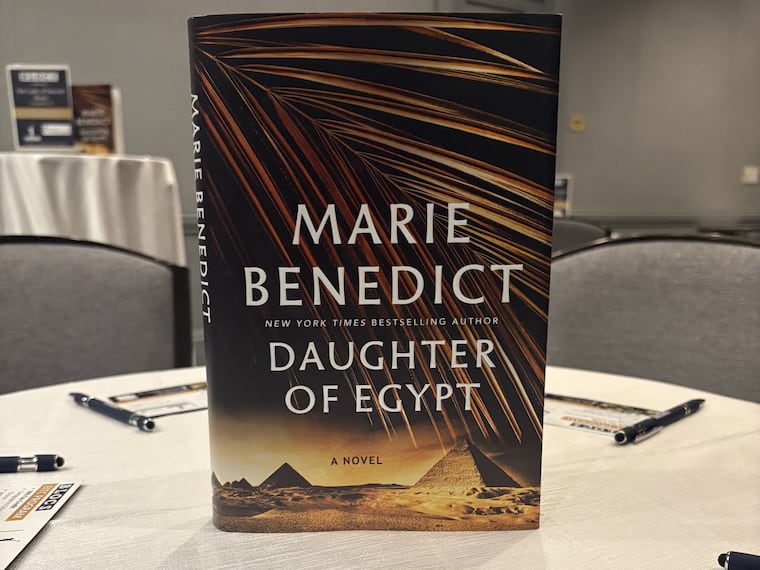
Then imagine my excitement when I saw Benedict at the Rittenhouse Hotel a few weeks ago signing her New York Times best-seller Daughter of Egypt for BLOCS. BLOCS is a Pennsylvania-based charitable organization that gives thousands of need-based scholarships to pre-K through 12th-grade students across the state, the majority in Philadelphia.
And imagine my curiosity when Benedict told me JJ Shirley, the Egyptologist who helped her research Hatshepsut, the mightiest woman pharaoh to rule in Egypt, circa 1450 B.C., and the central figure in Daughter of Egypt, lives in Philly and is a visiting assistant professor at Bryn Mawr College. The two women spent hours together looking up juicy facts about ancient Egypt at the Penn Museum.
“This book has Philadelphia in her bones,” Benedict said.
BLOC’s Daughter of Egypt event was special because students, parents, and media executives mingled over pigs in a blanket, Shirley Temples, and chardonnay. Benedict networked with dozens of students from the city’s all-girls Catholic schools, who were as excited about meeting a celebrity as they were about learning history.
Daughter of Egypt is one of two books Benedict is publishing this year. On June 2, Berkley, an imprint of Penguin Publishing Group, will release Benedict and Murray’s second collaboration, A Pair of Aces. Also centered on women in history, the novel follows the 1930s alliance between prosecutor Eunice Carter and madam Polly Adler as they build their case against mobster Lucky Luciano.
“Daughter of Egypt” is now available in bookstores.
— Elizabeth Wellington
Get Up With It and Superheaven
My concert consumption last week was a beautiful dichotomy: some of the greatest jazz imaginable on Friday over a glass of frizzante, followed by a pop-punk/shoegaze show with a can of beer the next day.
Charlie Hall’s Get Up With It, the War on Drugs drummer’s Miles Davis tribute act, played three consecutive nights of three different Davis albums to celebrate the legendary musician and his legacy. The group played in the tiny back room of Solar Myth. My partner and I caught the group’s cover-to-cover rendition of Bitches Brew. It was an incredible tribute. A day later, we headed to Union Transfer to catch Superheaven of Doylestown playing an 11-year anniversary tribute to their sophomore album, Ours is Chrome. The hometown show was special, with friends and kids crowding sidestage. A favorite of mine, Rozwell Kid, played a one-night-only opening set for the band in recognition of opening for Superheaven on the initial tour promoting Ours is Chrome all those years ago.
It was pretty wild seeing how Superheaven has transcended time. Elder millennials like me watched comfortably from the balcony, while a new generation of underage push-pitters raged on the floor below.
Superheaven has enjoyed a recent spike in popularity thanks to a 2013 song, “Youngest Daughter,” going viral on TikTok. The band mocked the phenomenon, calling it “not even one of their top songs.” Still, they played “the TikTok song” and the crowd went wild. The band continues its tour through Canada and the Midwest this week.
— Emily Bloch
A powerful walk along the Delaware
On a bright, windy day, I walked with a group of mostly strangers from the President’s House to the Delaware River, retracing the steps Ona Judge took 230 years ago, when the seamstress escaped from slavery under George and Martha Washington to seize her freedom.
The procession was a performance work from artist indira allegra, linking Judge’s fight for freedom to that of fashion designer Dominique Rem’mie Fells, a Black trans woman murdered in 2020, through the bodies of water that surround our city: the Delaware was a conduit for Judge’s freedom, and the Schuylkill was where Fells’ body was found and her freedom ended.
“This is the freedom which is the power to transform. This is the freedom which is the power to heal. This is the freedom to go from being enslaved to being free, to being whatever gender you choose,” allegra told the crowd before we began.
Led by the drums of the Karen Smith ensemble, the walk featured multiple stops for musical moments and reflection, from the Transcendent Choir of Philadelphia, Voices of Philadelphia Choir, and Opus Four quartet, among other classical musicians who performed African spirituals like “Go Down Moses.”
It was profoundly touching that Fells’ family was present as well.
Along the journey, I couldn’t stop thinking, for both Judge and Fells, how scared she must have felt, how scared she must have felt. When we arrived at the waterfront, I reflected on what thoughts Judge may have had when she saw the river, what rapturous joy she must have felt as she pursued real, tangible freedom. For Fells, I like to think she felt similar happiness wearing her designs in local fashion shows, like the William Way LGBT Community Center’s “Rock the Runway — A Trans Empowerment Fashion Show.”
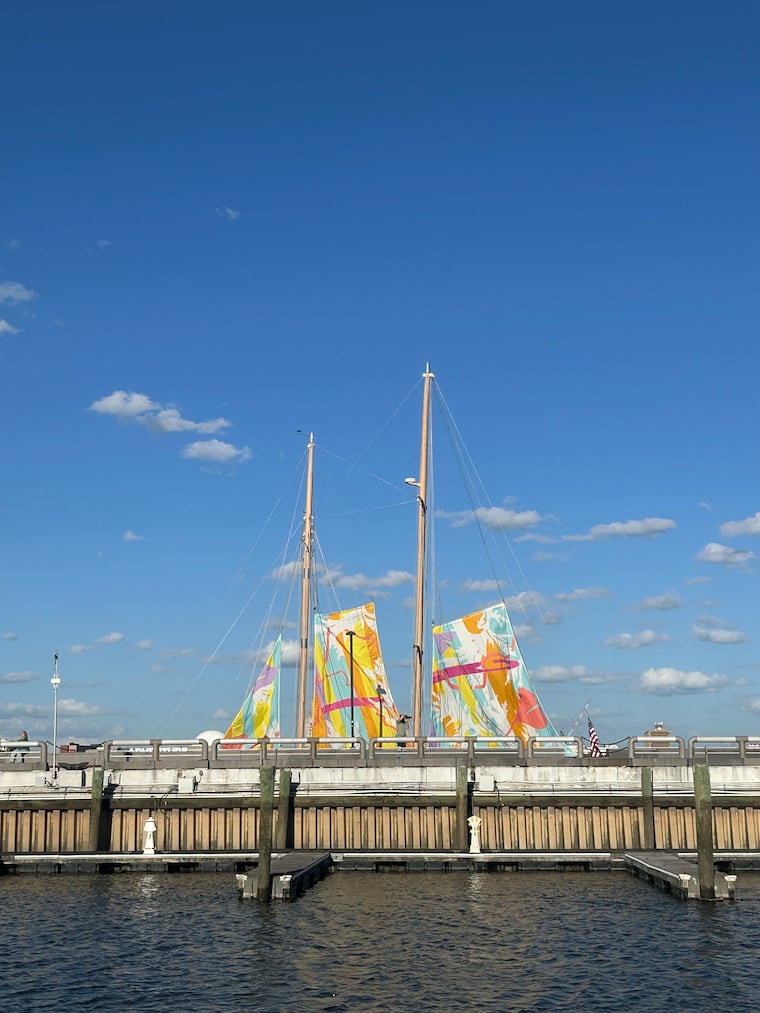
At the conclusion of the procession at Spruce Street Harbor Park, we were greeted by the colorful patterned sails that allegra designed — inspired by Fells’ fashion — and installed on the North Wind Schooner. The artist will host other events for this series over the coming weeks, including a poetry sail, choral concert, and guided meditation, all onboard the ship. It’s a project from ArtPhilly’s What Now festival, which runs through July 4.
— Rosa Cartagena


