Human reporters explain why AI data centers are so controversial in the Philly suburbs and beyond
What really is an AI data center? Here’s everything you need to know about the proposed sites in the Philadelphia area.
Every day, millions of people across the U.S. turn to ChatGPT and other AI tools, searching for answers.
Some of their questions are mundane: What should they make for dinner with these four ingredients? What other movies was this actor in? Where could they go on a weekend getaway for under $1,000?
Others use AI in life-saving research and for society-changing innovations.
How these tools work — and at what cost — is at the heart of the ongoing debate over the rapid construction of data centers.
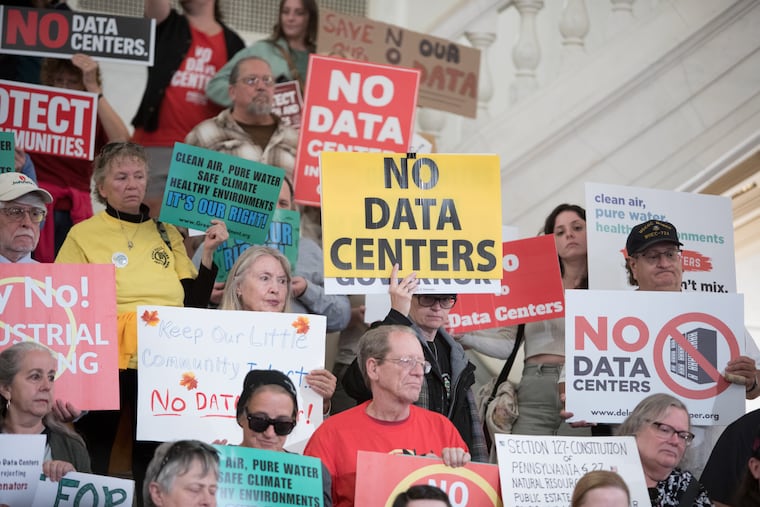
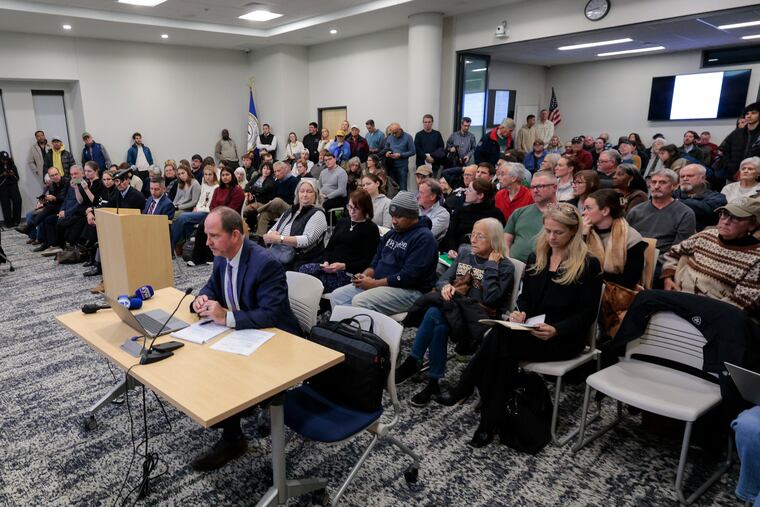
At some proposed sites in the Philadelphia region, neighbors are rallying in opposition, saying the community’s health, safety, and quality of life are at stake. Meanwhile, developers, elected officials, and other proponents tout economic benefits.
If you’re trying to make sense of all the buzz about AI data centers, here’s what three human reporters think you should know.
What is a data center?
A data center is a building or campus that handles cloud-storage and computing needs of Amazon, Google, Microsoft, Meta, and the like. People, hospitals, banks, businesses, and governments rely on the cloud to store and retrieve vast troves of records, videos, and pictures.
Generative artificial intelligence (AI) has exponentially increased demand for specialized data centers powerful enough to execute ever more complex requests in the form of text, code, images, audio, or video.
A single AI query consumes multiple times the power of an ordinary search engine query, resulting in the need for additional servers to handle the load when multiplied across millions of queries.
Newer hyperscale data centers can reach 1 million square feet or larger. For comparison, the Cherry Hall Mall is 1.3 million square feet.
Where are data centers in Pennsylvania and New Jersey?
More than 150 data centers already exist in Pennsylvania and New Jersey, according to Data Center Map, a private company that tracks the facilities nationwide. The Philadelphia area has dozens of data centers, operated by an array of companies from telecom giants like Comcast to digital-services companies like Lumen and DāSTOR.
Not all of these properties are AI data centers: Comcast’s facilities, for example, connect thousands of local customers to internet, cable, and phone services, and have been doing so for decades.
Where are new data centers being built in Pa. and N.J.?
Hot spots for new AI data centers include North Jersey and the Scranton and Pittsburgh areas in Pennsylvania.
Three recent proposals in the Philadelphia suburbs have made headlines:
In Falls Township, Bucks County, Amazon is building a 2-million-square-foot “digital infrastructure campus” at the Keystone Trade Center, an 1,800-acre property that was once a steel mill. Amazon is expected to spend $20 billion to build that data center and another in Salem Township, Pa., near Wilkes-Barre.
In East Vincent Township, Chester County, a 1.3-million-square-foot data center is proposed at the former Pennhurst State School and Hospital, now a popular Halloween attraction.
Less than a mile from downtown Conshohocken, Main Line developer Brian O’Neill wants to build a 2-million-square-foot data center at a shuttered steel mill. Last week, O’Neill’s team was forced to withdraw the application due to legal issues. However, they can resubmit another proposal at any time.
Why do some communities want a data center?
A data center can bring in significant tax revenue, create jobs, attract other businesses to the region, and put the area on the cutting edge of a rapidly growing industry, proponents and developers say.
In Loudoun County, Va., data centers accounted for nearly half of the property tax revenue in 2024, according to the county’s website, with the county getting $26 for every $1 spent on data center services. Nearby Prince William County reported that its 44 data centers generated more than $293 million in total tax revenue (though some industry stakeholders debate whether tax breaks offset these gains).
Unlike residential redevelopment, data centers don’t increase demands on local schools or EMS services, data center proponents say. Nor do they bring in added traffic like fulfillment warehouses or other industrial uses.
Data centers are seen by some as a good reuse of formerly industrial land, such as proposals in Bucks County on a former U.S. Steel site; in Chester County on a remediated Superfund site; and in Montgomery County on the former Cleveland-Cliffs steel mill.
Why are some communities opposing data centers?
Opponents of data centers worry about pollution, noise, power and water use, and the impact another data center could have on their electric bills. In some areas, they decry the loss of open space and express broader concerns about whether the AI boom is a bubble that could burst before all this data-center investment pays off.
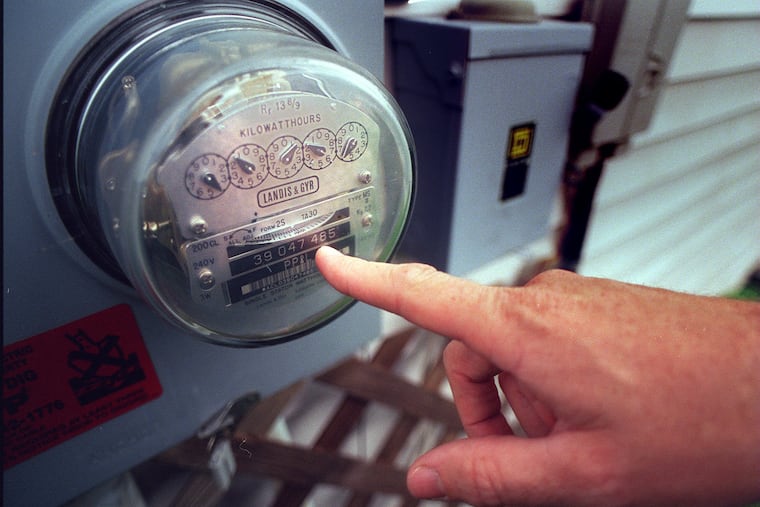
How are data centers impacting my electric bill?
Generative AI tools like ChatGPT and DALL-E are major drivers behind the dramatic increase in energy demand. Every ChatGPT query, for example, is estimated to use five times more electricity than a simple web search.
An average query uses about the power that an oven would use in a little over one second or a high-efficiency light bulb would use in a couple of minutes, according to Sam Altman, CEO of OpenAI, the company behind ChatGPT.
In 2023, U.S. data centers consumed about 4.4% of total U.S. electricity, compared to 15% for all residential use. Data center demand is expected to rise, potentially consuming 6% to 12% of total U.S. electricity by 2028, according to a 2024 report by Lawrence Berkeley National Laboratory.
When energy demand rises without a proportional increase in supply and capacity, experts say, consumers see higher bills. Although it’s possible prices would lower with increased demand as long as there is sufficient existing capacity in place, say some experts.
“There’s a variety of factors, but it isn’t really transparent when you look at your electricity bill,” said John Quigley, senior fellow at the University of Pennsylvania’s Kleinman Center for Energy Policy.
Several recent reports have tried to quantify the impact data centers are having on consumer bills. According to a recent Bloomberg News analysis, the monthly electric bills of customers who lived near significant data center activity have increased 267% in the past five years.
What are some environmental concerns regarding data centers?
Water: Data centers require significant amounts of water to cool servers and IT equipment. Some cooling systems are more efficient than others.
A Virginia legislative audit report said 11 data center buildings each used over 50 million gallons, including one building that used 243 million gallons in 2023. While some data centers use substantial amounts of water, most use similar or less than other large commercial and industrial water users, Virginia found.
Based on available data, most data centers use about 6.7 million gallons of water a year, about the same as an average large office building.
Land use: Some proposals would require substantial clearing for forested or unused land, as in a 1,000-acre proposal in Covington and Clifton Townships in the Poconos. Residents in East Vincent Township in Chester County have mobilized to save the rolling hills, farms, and rural character near the proposed Pennhurst site.
Air pollution: The electricity that powers data centers comes from a grid powered by plants that run on natural gas, a fossil fuel that emits pollutants such as nitrogen oxides, fine particulate matter, and a precursor to smog. The plants also release carbon dioxide, a greenhouse gas. Backup generators are often fired by diesel. Amazon and Microsoft have plans to tap nuclear power, which does not produce air pollutants, though it does produce toxic waste.
Noise: Data centers sometimes emit hums and vibrations produced by servers, whirring fans, HVAC systems, and other sources.
What kinds of jobs do data centers create?
Construction of a data center requires hundreds of temporary tradespeople, such as masons, electricians, plumbers, and HVAC technicians.
Once open, data centers typically need very few full-time employees. Even the largest usually employ fewer than 150 people, sometimes as few as 25. Permanent positions can include IT specialists, data analysts, electricians, maintenance workers, and security personnel. Sometimes certain employees can work remotely.
Developers of some data centers currently proposed in Pennsylvania estimate hiring between 30 and 70 permanent workers. Data center technician jobs at Amazon’s Salem Township facility come with starting salaries between $50,000 and $152,000 a year, according to job listings on Indeed.com.