Amid college basketball’s gambling scandal, concerns that mid-major players could be vulnerable
La Salle was among the teams named in a sweeping criminal indictment last week. A former prosecutor says players at mid-major schools could be more susceptible to bribes.
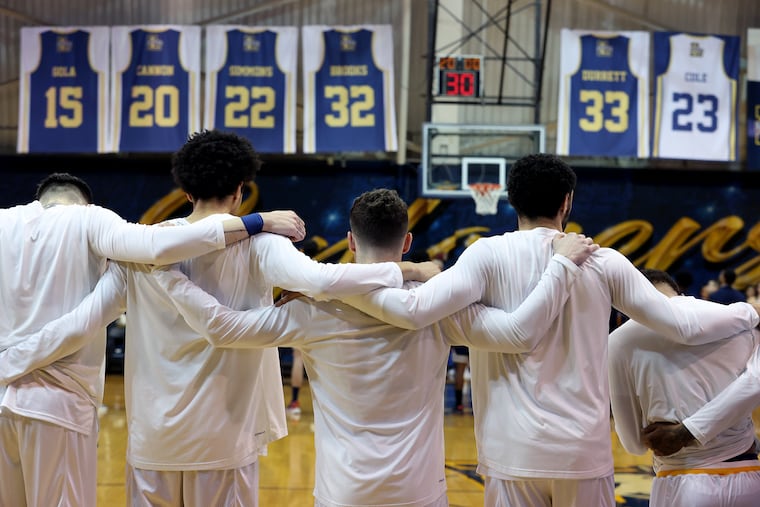
Rollie Massimino “did not mess around” when it came to drawing up defensive schemes against Patrick Ewing … or warding off gambling temptations that might filter through to his Villanova players.
“When we were playing, we had an FBI agent who was a former ’Nova basketball player give talks about gambling,” said Chuck Everson, a member of Massimino’s 1985 Wildcats title team that took down heavily favored Georgetown.
“Rollie did not mess around with that stuff. It wasn’t that far removed from the Boston College [point-shaving] scandal. Rollie brought in the FBI to talk to us. Coach Mass did a great job of teaching us, and it wasn’t all basketball; it was life lessons. And with gambling, it was, ‘Don’t do that.’
“To this day, I have never called DraftKings, or anything like that. I attribute that to being scared straight with Coach Mass.”
Everson, 61, played in an era when sports betting wasn’t legal in most of the country. These days, things are quite different. College athletes are compensated by their schools or through lucrative name, image, and likeness deals, and the legal/illegal gambling culture infiltrates every level of sports.
Last Thursday in Philadelphia, federal authorities announced a sweeping criminal indictment and related filings against 26 people on charges related to manipulating NCAA games and Chinese professional games through bribes, some as high as five figures.
It is the fourth federal criminal indictment that involves gambling and sports unsealed in the last six months, and the latest alleged gambling scheme involves one of the storied Big 5 programs: La Salle.
According to the indictment, at least one of the purported rigged games took place in 2024 in Philadelphia between La Salle and St. Bonaventure.
There are at least 39 players from 17 NCAA Division I schools who are alleged to have been involved in the scheme, but the indictment may underscore other, more troubling concerns.
Players at mid-major or smaller Division I programs might earn a fraction in NIL money compared to what their counterparts at elite programs take in, and therefore might be more susceptible to the temptations of illicit paydays. As one former federal prosecutor put it, this alleged scheme might be one of many dominoes waiting to fall.
“Anything that interferes with the integrity of sporting events, you’re going to get action by prosecutors,” said Edward McDonald, who prosecuted those involved in the Boston College point-shaving case in the late ’70s. McDonald, now senior counsel at the Dechert law firm, thinks that mid-major schools, like La Salle and some others in the Big 5, could be particularly vulnerable to gambling and bribery schemes.
“These smaller schools, the compensation to players is not as great [compared to larger programs], even for the better players on the team,” said McDonald, who learned of the Boston College scam through his investigations of organized crime family members with the Justice Department (and played himself in the Martin Scorsese-directed mob film Goodfellas).
“Players going to big-time schools are making 10 times more. A player [at a smaller program] might not be having a good season or might think they’re not going to play in the NBA or professionally, and they might say, ‘What the hell, I might as well cash in now.’”
“A player [at a smaller program] might not be having a good season or might think they’re not going to play in the NBA or professionally, and they might say, ‘What the hell, I might as well cash in now.’”
Prop bets on a La Salle game
According to the court filings, one of the defendants, Jalen Smith, and former LSU and NBA player Antonio Blakeney (who is “charged elsewhere,” according to the indictment), attempted to recruit players on the La Salle men’s basketball team for the point-shaving scheme.
The fixers offered the La Salle players payments to underperform and influence the first half of a game against St. Bonaventure on Feb. 21, 2024, according to the filings.
Prosecutors allege that before the game at Tom Gola Arena, defendants who acted as fixers placed bets totaling approximately $247,000 on the Bonnies to cover the first-half spread. A $30,000 wager was made in Philadelphia at a FanDuel sportsbook, according to the indictment. But those bets failed after La Salle covered the spread.
“Neither the university, current student-athletes, or staff are subjects of the indictment,” La Salle wrote in a statement. “We will fully cooperate as needed with officials and investigations.”
Ohio Gov. Mike DeWine told The Inquirer that several years ago he received complaints from a number of college coaches in his state about online abuse directed at players and threatening calls from gamblers who had lost big.
“I called up [NCAA president] Charlie Baker, and asked him, ‘What do you think of prop betting?’” DeWine said. “He said, ‘We don’t like it.’ And I said, ‘Give me a letter that says that.’
“Under Ohio law, if I can get a letter from a league saying, ‘Don’t bet on certain things,’ that gives me the ability to go to my Casino Commission and they can [enact rules] without any legislation. Charlie sent the letter, I took that to the commission, and that stopped collegiate prop betting.”
The Ohio Casino Control Commission granted the NCAA’s request to prohibit proposition bets on collegiate sports in February 2024, but the decision affected only Ohio.
“It doesn’t really eliminate the problem,” DeWine said.
» READ MORE: How a Philly ‘betfluencer’ wound up at the center of an NBA gambling scandal
The ban in Ohio is only a drop in the bucket against a sea of pro-gambling momentum, legislation, and, most significantly, lucrative revenue streams.
CJ Hines, a guard who was dismissed from Temple’s basketball team on Jan. 16, allegedly participated in a point-shaving scheme during the 2024-25 season while playing for Alabama State, according to the indictment. Hines transferred to Temple in May but didn’t play this season after the university announced that he was under investigation for eligibility concerns before his enrollment.
The Atlantic 10 Conference — which includes La Salle and St. Joseph’s — weighed in on the latest gambling indictment.
“Any activity that undermines the integrity of competition has no place in college athletics,” commissioner Bernadette V. McGlade said in a release. “The Atlantic 10 and its member institutions will continue to work closely with the proper authorities to combat illegal activities.”
A St. Joe’s spokesperson added: “St. Joseph’s University has not been approached by federal investigators or any other entity about suspicious sports wagering activity involving St. Joe’s student-athletes or team.”
» READ MORE: Fran Dunphy speaks for the first time about how the NCAA point-shaving scandal touched La Salle
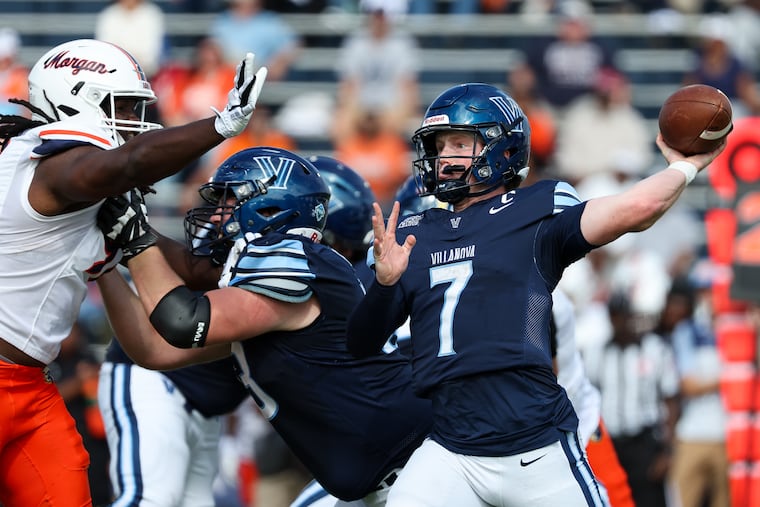
Villanova, which plays in the powerful Big East Conference, has numerous resources and protocols in place to address the sports wagering issue.
Handbooks, which include NCAA rules on gambling, are distributed annually to athletes, who also must sign a sports wagering document before being declared eligible. The athlete must acknowledge he or she won’t engage in activities that influence the outcome or win-loss margins of any game.
In 2021, 2023, and 2025, Villanova brought in speakers who have a history with sports gambling to talk with athletes about the risks and dangers associated with it. Villanova’s athletic compliance office meets twice annually with every athlete to review NCAA compliance standards, including its rules on sports wagering.
Former Villanova basketball star Maddy Siegrist told The Inquirer last year that her college alma mater ingrained in her mind the potential devastating consequences of gambling, values that she continues to adhere to as a WNBA player.
‘The integrity of sports is at risk’
Even after the 2018 Supreme Court ruling that legalized sports wagering state to state, the honesty and integrity component still comes into question when so much is riding on any sports wager.
» READ MORE: NBA sports betting bust: What to know about Terry Rozier, Chauncey Billups, and cash handoffs in Philly
DeWine, the Ohio governor, is taking a proactive role in trying to address malfeasance in the gaming culture.
“I’m writing letters to all other major [sports] leagues,” DeWine said. “They need to get on this. If they sit back, they’re making a huge mistake. I think the integrity of sports is at risk. I’m continuing to urge these leagues to take care of business, because they’re the ones that are going to get hurt.”
But McDonald said that with the flurry of recent indictments involving sports and gambling, “you have to wonder how pervasive [the illegal gambling problem] really is.”
“This could very well be the tip of the iceberg,” McDonald said.