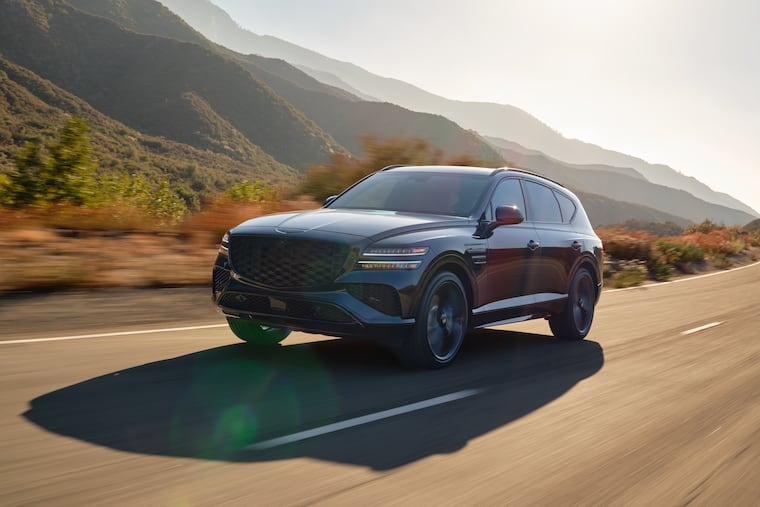
2026 Hyundai Palisade: Slow ride, tough controls, and a stop-sale recall
The big brother to last week’s Santa Fe does have a personality all its own, most of it pleasant. But don’t buy it if you’re in a hurry.
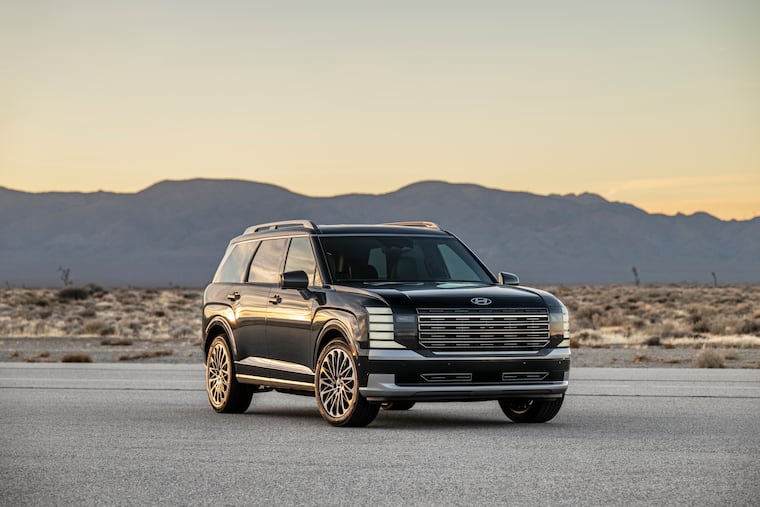
2026 Hyundai Santa Fe Calligraphy vs. 2026 Hyundai Palisade XRT Pro vs. 2026 Mazda CX-90 Premium Plus: Battle of the barely bigs (or monster mediums).
Price: This trim level starts at $49,870.
Conventional wisdom: “Highs: Appealing exterior design, premium cabin, plenty of convenient features come standard. Lows: Snug third row, merely adequate acceleration performance, muted driving demeanor,” says Car and Driver.
Marketer’s pitch: “More premium. More capable. It’s more PALISADE than ever.”
Reality: Careful when something becomes more it than it was before. This is not Dr. Seuss celebrating “there is no one alive that is youer than you.”
What’s new: The trim level is new to the Palisade. Of course it’s more luxurious and offroady than before, because who’s going to make any money serving the middle class.
I’ve never been a huge fan of the Palisade, but I hoped this new version would provide the kind of experience that I think would serve buyers better. Let’s see how that worked out.
Competition: In addition to the Santa Fe and the CX-90, you can pick from models like the Buick Enclave, Honda Pilot, Kia Telluride, Nissan Pathfinder, Toyota Highlander, Toyota Grand Highlander, and Volkswagen Atlas.
Up to speed: I figured I never found my groove with the Palisade, as I wasn’t that excited about the acceleration. Must be me.
But, oh no, not so fast. (Literally.) The 3.5-liter V-6 engine produces 287 horses, but 0-60 still takes 8.1 seconds, according to Car and Driver. And XRT Pro or no, that’s the engine you get, unless you go for the hybrid.
To add insult to injury, the Palisade tested was hampered by rough acceleration at a few points. It happened when the vehicle was cold — and the temperature had also turned colder as well — and seemed more noticeable in Normal mode but I felt it in Sport as well.
Shifty: The Palisade inherits the twisty stalk Hyundai developed for the Ioniq 5. Flat grabbable shape, clear markings, and simple movements make this a nice setup; Volkswagen’s version pales in comparison. The Start button is on there as well, so it’s big.
The eight-speed automatic transmission is shiftable via steering wheel paddles.
On the road: Handling in the Palisade took some getting used to. At first I despised the huge square hood hampering my ability to see around the driveway, and I found it hard to keep inside the lines, especially on narrow country roads.
By the end of the week the vehicle morphed into a fairly nice companion in most situations, and I was back to my usual speeds tooling around the Chester County countryside. But fun it was not.
Driver’s Seat: The Driver’s Seat is definitely upscale and comfortable. I set it up fairly high because of the hood thing and got a commanding view.
Friends and stuff: The middle row features captains chairs that are as large and in-charge as the front, and comfortable as well. The rear seat sits low to the floor but you can make adequate legroom by scooching the middle seats forward. There’s a third seat belt in the middle but you all better have some scrawny offspring if you plan to use it.
Overall these accommodations leave the Santa Fe in the dust.
Cargo space is 86.7 cubic feet when it’s all folded, 46.3 behind the second row, and 19.1 in the back. About five cubes larger than the Santa Fe on all counts.
A stop-sale recall was issued this month after a child died in the power-folding rear seat, according to Consumer Reports. Unlike this model, many power folding seats require holding the button or the mechanism will stop; sadly, now we know why that’s a good idea.
In and out: It’s a bit of a step up to the Palisade. Having the seat up and forward as I wanted meant my entry-exit was hampered because it was too close to the front of the door frame, so I eased back a bit.
Play some tunes: The large, wide infotainment touchscreen is standard Hyundai issue, and the home screen is easy to follow with its six icons. Buttons along the bottom and dials help ease things up.
Sound from the system is disappointing though, about a B.
Keeping warm and cool: The HVAC controls look like they’re a set of buttons but they’re actually a black touchpad with faux electronic buttons. They’re a pain in several ways.
First, the screen isn’t available until the vehicle is on for a second or three, leaving the Lovely Mrs. Passenger Seat halfway to apoplectic before she can get the seat heater switched on in the frigid 40-degree temperatures. (Don’t worry; I chiseled off the icicles that formed.)
Second, the touchpad offers zero haptics. If you try to run your fingers over it on your way to the function you want, you’re going to activate everything you touch along the way.
And finally these buttons are really small.
All those troubling aspects came together during one back-country trip into Delaware.
In our first episode, the vehicle warmed up as we cruised through a narrow mountain pass, and I wanted to turn down the blower. The fan buttons are really small, and I activated a lot of things before I hit the right thing. Eyes off the road every time.
Later we crossed back into Pennsylvania and entered beautiful downtown Toughkenamon, which was so ripe with mushroom soil off gassing that night I literally almost could not breathe. I managed to turn on the defroster and change the blower location several times before activating the recirc button.
At least the temperature is operated by big dials.
Fuel economy: The Palisade averaged 17.5 mpg for my post-refill 85 miles; its fuel economy for my whole test is lost. It averaged 19.4 mpg over nearly 5,000 miles of various users who drive in a less spirited manner than I.
Where it’s built: Ulsan, South Korea. 90% Korean parts; less than 1% U.S. and Canada.
How it’s built: Consumer Reports predicts the Palisade reliability to be a 2 out of 5.
In the end: That’s a piggish Palisade, and opting for the hybrid may not be much better; Hyundai hybrids are not always that impressive at saving fuel.
Next week: Mazda CX-90.