2026 Volkswagen ID.4: Large and in charge?
The EV from Volkswagen has more space than most of the competition. But bigger isn’t always better.
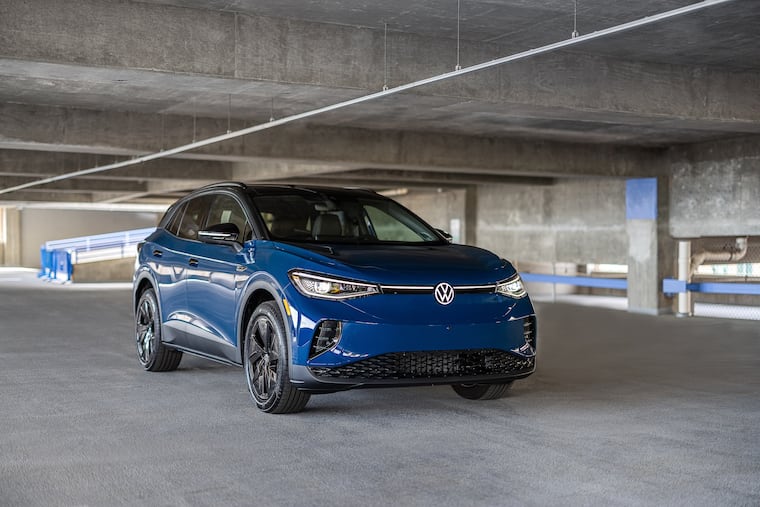
2026 Volkswagen ID.4 AWD Pro S: Bigger is better?
Price: It starts at $54,095 for this higher-end model tested.
Conventional wisdom: Car and Driver likes the ID.4’s “good price, good range, good space.” They complained that the “infotainment system is still wonky, base model lacking in range, it’s not the GTI of EVs.”
Marketer’s pitch: “The future of driving is here. And it’s electric.”
Reality: The driving experience can be awkward, but there may be another big reason to avoid ID.4.
Catching up: So we’ve already tested a bargain-priced Chevrolet Equinox, and a Hyundai Ioniq 5 that’s a fairly nice price match for the ID.4.
What’s new: After upgrades in performance for 2024, the ID.4 only gets an adapter for Tesla Superchargers for the 2026 model year.
Competition: In addition to the above models, there are the Ford Mustang Mach-E, Honda Prologue, Kia EV6, Mini Countryman EV, Subaru Solterra, and Tesla Model Y.
Up to speed: Like most EVs, the ID.4 makes quick work of getting on the move. I could pull in front of cars I would never consider when driving most gasoline-engine vehicles, and passing could be a real treat.
The 335 horses available in the all-wheel-drive version tested get the EV SUV to 60 in a quick 4.8 seconds, according to Car and Driver.
Rear-drive models offer 282 horses and a 0-60 time of 7.3 seconds.
Back down again: The ID.4 has a one-pedal feature, which allows for driving without using the brake much at all. Unfortunately, it required so much foot pressure to get moving that it made me nervous in parking lots, worried I would overcompensate and smash into something. Without that feature on, pulling out is easier, but when it’s time to slow down, the brakes are exposed as the indifferent bastards that they are.
Shifty: The twisty stalk gear selector in last week’s Hyundai Ioniq 5 impresses, but a similar setup in the ID.4 irked me. The type on the ID.4 is subtle and easy to misunderstand; Hyundai makes it obvious what to do with theirs.
On the road: Drive mode control is tucked away in the touchscreen, but it’s easy to get to and to follow. Sport mode did tighten up the steering and boost the acceleration but the suspension became so firm I felt like I was driving a brick, and the ID.4 hit potholes with a thud.
Because the ID.4 is larger, the drive experience had a Jeep feel without any of the retro touches or quirky handling that add a sense of fun. Even the ID.Buzz minivan is a better drive.
Driver’s Seat: The speedometer and gauges also disappoint. The diminutive through-the-steering-wheel display can be difficult to inform at a glance. The long-ago Chevrolet Spark and Sonic sported a similar motorcycle-esque unit, but those were easy to read.
Seat comfort is also lacking; the Driver’s Seat is almost rock hard without wings or bolsters to hold you in place.
Later that day I became even more annoyed when the seat lumbar support seemed to be knuckling my kidneys. Try as I might I couldn’t release the pressure. Soon I realized that the massage feature somehow activated itself and proceeded to give me the saddest massage I have gotten in a long time.
Friends and stuff: The rear seat offers plenty of legroom and foot room. Headroom is not bad but I expected more from this tall vehicle.
The rear seat seems angled a little far back for me and matches the front for comfort, or lack thereof.
Cargo space is 30.2 cubic feet behind the rear seat and 64.2 with the seat folded, the giant among the three EVs tested, and similar to a Volkswagen Tiguan.
In and out: It’s only a tiny step up into the ID.4.
Play some tunes: The giant 12.9-inch touchscreen offers quick access to most of the usual functions, and the home screen features big, clear icons for all the choices.
The touchscreen’s stand-up iPad-like configuration provides a nice way to hold your hand in place while selecting functions, and that makes operation easier.
I neglected to note the sound from the Harman Kardon stereo system. It’s scored an A- in other VW SUVs and an A+ in the EV ID.Buzz minivan. I’d lean toward the lower score; Mr. Driver’s Seat would have been typing furiously about the sound if it were an A+.
Keeping warm and cool: The ID.4 continues with the tiny touchslider thingies to adjust the temperature, and also activate the HVAC screen controls. These were the most cumbersome part of the screen, not quite user-friendly for adjustment on the fly.
The required buttons for front and rear defroster are on the left with the light control. It works in the sense that we’re supposed to use the lights when the wipers are on, but not in the sense of being away from the touchscreen where the rest of the HVAC controls are.
The big touchscreen means the center vents have been pushed disappointingly far down on the dashboard. It made cooling down difficult after one humid post-YMCA adventure, and the ambient temperature may have only been about 70 degrees.
Fuel economy: The range advertised in the vehicle was about 260 miles, but it seemed to exceed that more than a few times.
Where it’s built: Chattanooga, Tenn.
How it’s built: The ID.4 gets a 2 out of 5 reliability rating from Consumer Reports.
I don’t usually delve into recalls too deeply — the Sturgis family Kia Soul has been recalled nearly half a dozen times, but has never shown any of the potential problems so it’s just another inconvenience.
But Do Not Drive orders have been issued for the ID.4 for the second time, this time for wheels that could fall off — the first was for potential fire hazards in 2023. And I’ve collected anecdotal information on ID.4 troubles.
In the end: Hyundai has proven themselves over and over again in the EV world, and the Chevrolet might be worth a look. But I’d leave the ID.4 alone.
