Philly teacher charged with killing foster daughter Malayshia Alford had a history of severe abuse, lawsuit says
Years before Malayshia was in her care, state officials had recommended Carprice Williams never again be a foster parent.
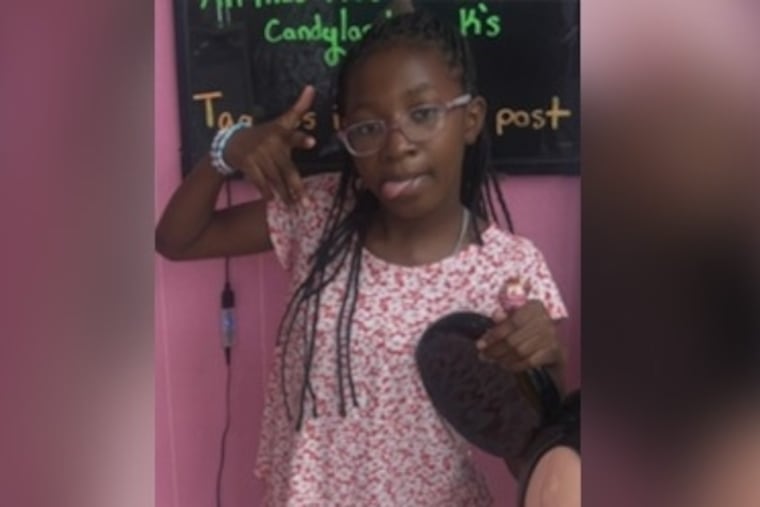
Carprice Williams — the 34-year-old foster mother and Philadelphia public schoolteacher charged Thursday with killing a 10-year-old girl in her care — previously abused a different child so severely that state officials recommended she never again be a foster parent, according to a lawsuit settled out of court this year.
In the previous incident, a 4-year-old girl who lived in her West Philadelphia home for six months was hospitalized and nearly died from bleeding to her brain and severe malnourishment, court records show. That was in 2021, just four years before Malayshia Alford was placed in Williams’ care.
Law enforcement sources say Williams similarly abused Malayshia, before killing her last week and leaving her body in the trunk of a car later found in Lindenwold, N.J. Her death marked a tragic end to a 10-day search that drew dozens of local police, FBI agents, and community members desperate to find the child, and that has drawn concerns about the city’s child welfare system. .
Now, newly uncovered court records raise questions as to why Malayshia was ever in Williams’ care in the first place.
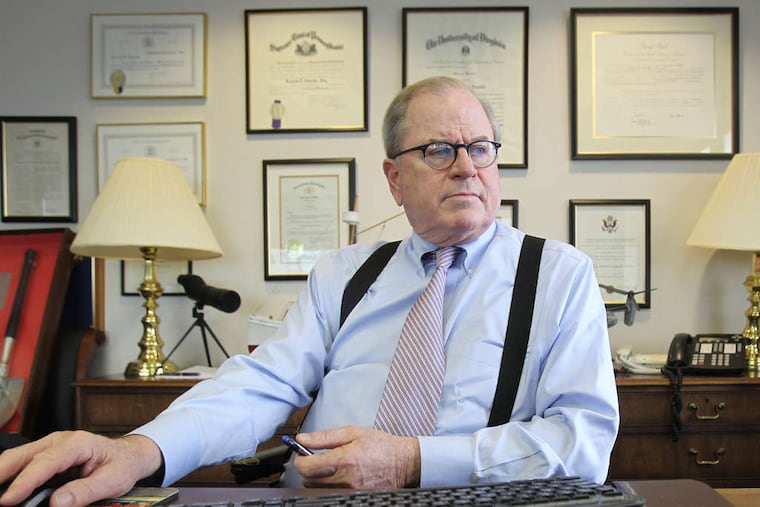
“We are trying to understand how this could have happened,” said Nadeem Bezar, a lawyer with Kline & Specter, who is representing Malayshia’s estate.
Malayshia’s care had been overseen by Catholic Community Services, a social work agency contracted by the city’s child welfare agency, according to a spokesperson for the state.
Bezar, in an interview Friday, said he’d been investigating the circumstances of Malayshia’s care before her death after it was found she had been physically and sexually abused in an earlier foster home in Philadelphia. It was that earlier abuse, he said, that led her to be placed in Williams’ care.
Philadelphia’s Department of Human Services declined to comment Friday.
A community liaison for Catholic Community Services did not return messages.
Williams had a documented history of problems with children, according to the lawsuit filed by Bezar’s firm in 2024 against Tabor Children’s Services, a different contracted social work group.
Filings in the case detailed the treatment of two sisters who had been placed in a foster home at 547 N. Simpson St., Williams’ address. The suit, filed on behalf of the younger girl who was 4 at the time of the abuse, does not name Williams directly, but Bezar confirmed she was the foster mother involved.
Attempts to reach Tabor Children’s Services were not successful late Friday.
Even before the 2021 incident, according to the lawsuit, the city’s Department of Human Services was aware of serious red flags in Williams’ history, including mental health issues “and concerns raised to DHS about the care of her own children, previously requiring ongoing monitoring of her home.”
The then-4-year-old and her sister were placed in Williams’ care in June 2020, the suit says.
Then, in January 2021, Williams brought the 4-year-old to the Children’s Hospital of Philadelphia, saying she heard a loud noise and found the girl collapsed on the floor upstairs.
The treating physician diagnosed the girl with malnourishment, a traumatic brain injury, scrapes on her face, and marks indicative of being struck with an object.
The doctor deemed the incident a “near fatality,” a certification that triggers state and city officials to review the matter.
The girl later disclosed the foster mother had grabbed her braids and slammed her head into the kitchen floor, beat her with a belt, and smacked her in the face until her mouth bled, according to the lawsuit. The complaint also described other types of torment, such as forcing the girl to squat against a wall for long periods of time, and said that the foster mother had tried to prevent the girl’s sibling from revealing the abuse.
Pennsylvania’s Department of Human Services later found the foster mother had abused the girl and her sibling, the lawsuit said. A panel of city and state officials reviewed the case, according to the complaint, and recommended that Williams “never be used as a foster parent for other children in the future.”
Both Catholic Social Services and Tabor were operating as Community Umbrella Agencies (CUA), contracted by Philadelphia’s child welfare agency to ensure the safety of children in care.
Cathleen Palm, who leads the advocacy group Center for Children’s Justice, said that if Malayshia was placed in the home of a woman with a documented history of child abuse, that raised questions about DHS’ safeguards.
“If [the near-fatality review panel] walked away with a recommendation that she should never be a foster parent, it’s hard to understand how she then was a foster parent again,” she said.
She also questioned whether any of the information was shared with the Philadelphia School District, where Williams worked as a teacher.
A school district spokesperson declined to comment on personnel matters, but said the district was heartbroken by Malayshia’s death.
Malayshia was placed with Williams last summer, a year after the lawsuit was filed. According to a law enforcement source, she was the only foster child in the home, which she shared with Williams’ 4-year-old biological son.
On Oct. 26, Williams reported Malayshia missing. She gave her relatives conflicting accounts about the child’s last known whereabouts, officials said, and police later found the girl had not attended school in the days before. Her body was found 10 days later, in the trunk of a car in Lindenwold, N.J., Wednesday night.
Police recovered video that appeared to show that, in the early morning hours of Oct. 26, a man carried Malayshia’s body out of the back of Williams’ house in a large bag that had been used to hold a Christmas tree, a law enforcement source said.
Williams has been charged with murder, abuse or corpse, endangering the welfare of children, and related crimes.
The Defender Association of Philadelphia, which is representing Williams, declined to comment Friday.
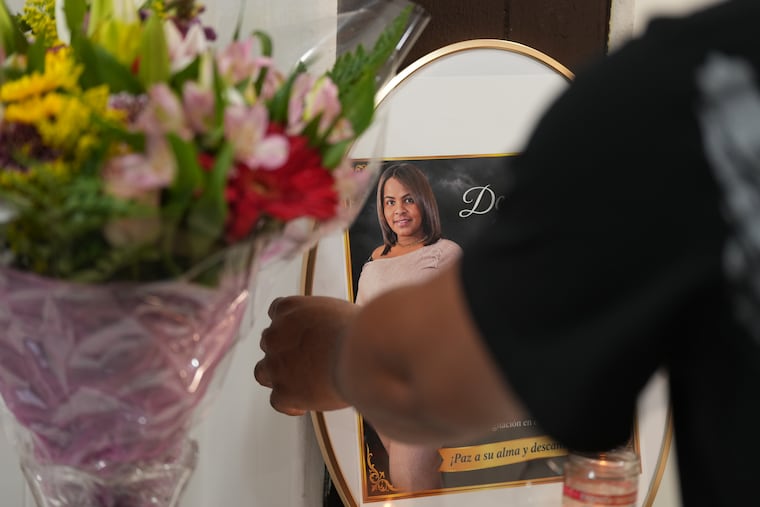
Pink and purple balloons, teddy bears, and prayer candles covered the lawn outside the West Philadelphia rowhouse on Friday morning.
Mourners arrived in cars, quickly placing a token of remembrance outside the North Simpson Street house before speeding off. Others stood in the rain, clutching umbrellas and gazing on in disbelief.
“The Department of Human Services need to take accountability,” said Daneika Overby, one of Malayshia’s relatives. “What happened here was a tragedy.”
Overby’s voice swelled with frustration as she listed the family members who would have been willing to take Malayshia in and keep her safe. “There’s other people in that family. That is a loving family.”
Mayor Cherelle L. Parker, at an unrelated news conference Friday, declined to comment on the details of the case, but said Malayshia’s death had “shaken our city at its core.”
Gabriel Li, the secretary-treasurer of AFSCME Local 2187 DC47, which represents Philadelphia DHS workers, said there were many unanswered questions about the supervision that had been provided. “You’re supposed to be seeing a 10-year-old at minimum once a month, so how do you not know what’s going on?”
Li said he was the city caseworker that first removed Malayshia from her parents homein 2021. He said the fact that she was in care for so many years is another sign of system dysfunction.
City Councilmember Nina Ahmad, who has been working on a ballot measure to create a child-welfare oversight board, said the case raises questions about the city’s patchwork of CUA services.
“We need to look at this whole CUA system and how it’s operating,” she said. “We need a lot more oversight.”