A West Philly teen was convicted of attempting to build bombs in support of Syrian extremist groups
Muhyyee-Ud-din Abdul-Rahman, 19, was found guilty of charges including attempting to possess weapons of mass destruction and risking a catastrophe

A West Philadelphia teenager was convicted Wednesday of seeking to build bombs in support of extremist groups he was communicating with online, capping a unique case in which authorities said they had effectively prevented the teen from unleashing a terrorist attack on the region.
Muhyyee-Ud-din Abdul-Rahman, 19, was found guilty of charges including attempting to possess weapons of mass destruction and risking a catastrophe after a weeklong jury trial.
Jurors found him not guilty of the lead charge of possessing a weapon of mass destruction, as well as a secondary count of possessing an instrument of crime — suggesting they believed he was intending to build a bomb but had not actually done so.
Two years ago, prosecutors said, the FBI uncovered a host of evidence proving that Abdul-Rahman was communicating with Syrian extremists on Instagram, and had taken steps to test and build explosives near his family’s home in the Wynnefield section of the city — including one mix called TATP, also known as “the mother of Satan.”
“He had decided he wanted to become a bomb maker, and he was experimenting,” Assistant District Attorney Robert Listenbee told jurors during closing arguments in the case.
Abdul-Rahman’s attorneys said that he never actually had the capacity to build a working explosive device, and that prosecutors had not shown he had taken significant steps to do so. And although he was a rising high school senior with a college wrestling scholarship and a well-known father in the legal community — Qawi Abdul-Rahman, a criminal defense attorney and former judicial candidate — they said the younger Abdul-Rahman was simply an immature teen who had fallen down the “rabbit hole” of internet propaganda.
“They want to make him out to be this genius,” one of his lawyers, Donald Chisholm, said Tuesday. “We don’t know if he was really ever successful.”
The panel also convicted Abdul-Rahman of charges of possessing explosive materials and risking a catastrophe. Common Pleas Court Judge Michele Hangley threw out a count of conspiracy during the trial after ruling that prosecutors had not presented evidence to prove Abdul-Rahman had acted with anyone else.
Abdul-Rahman told Hangley after the verdict that he has grown in maturity and his understanding of Islam since his arrest, and said he now rejects the radical beliefs he once embraced.
“One of the best forms of apology is change, and I have changed,” he said.
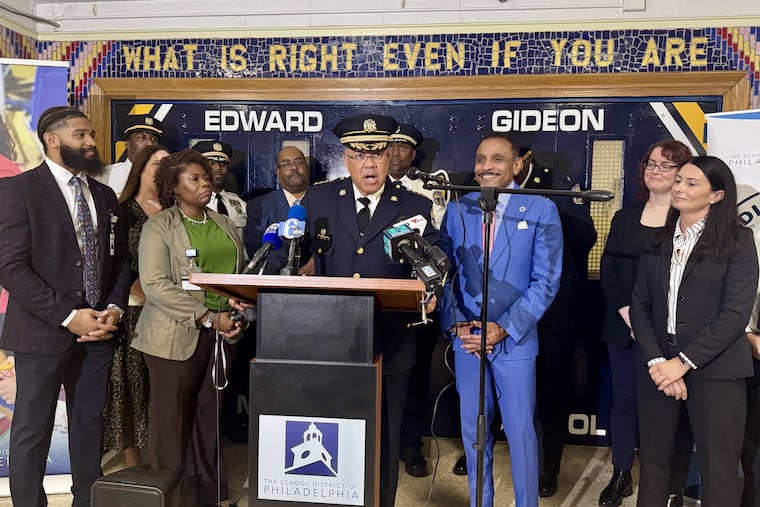
District Attorney Larry Krasner, however, said at a news conference that his office had achieved “a successful verdict in the prosecution of a terrorist.”
Hangley had initially said after the verdict that she was going to allow Abdul-Rahman to be released on house arrest until a future sentencing hearing because he has already spent two years in custody. But after prosecutors objected, she scheduled a bail hearing for Sept. 29 to decide how or whether he should be released until his sentence is imposed.
The case was a rare example of an international terrorist plot being weighed in Philadelphia’s criminal courthouse. Federal counterterrorism agents were heavily involved in the investigation, but juveniles are rarely charged in federal courts.
Abdul-Rahman was initially charged in Philadelphia’s juvenile system, but the district attorney’s office last year persuaded a judge to transfer the case to adult court, which they said was better suited to handle the gravity of the allegations and the need for consequences.
Much of the evidence during the trial, which began last week, centered on internet activity that federal authorities linked to Abdul-Rahman through his phone. But Listenbee told jurors that Abdul-Rahman was not being prosecuted for his suspicious behavior online. His crimes, Listenbee said, were the result of his stockpiling explosive materials, including various chemicals and devices that can initiate detonations.
“He was trying to create the bomb,” Listenbee said. “There’s no question about that.”
The investigation began in 2023, FBI Special Agent David Cunningham testified this week. He was tasked with looking into Instagram accounts linked to key propagandists from Katibat al Tawhid wal Jihad, or KTJ. And he found that Abdul-Rahman was the only person in the United States exchanging messages with those accounts.
When authorities began looking into who Abdul-Rahman was, Cunningham said, they noticed he used an ISIS flag as a profile picture on social media.
And Cunningham said he went on to discover other troubling signs, including Abdul-Rahman applying for his first passport, attempting to reach out to a Syrian border-crossing office, and having Instagram messages that included photos of bombs or videos espousing martyrdom. Federal records also indicated that Abdul-Rahman’s father had legally purchased dozens of guns over the years, Cunningham said.
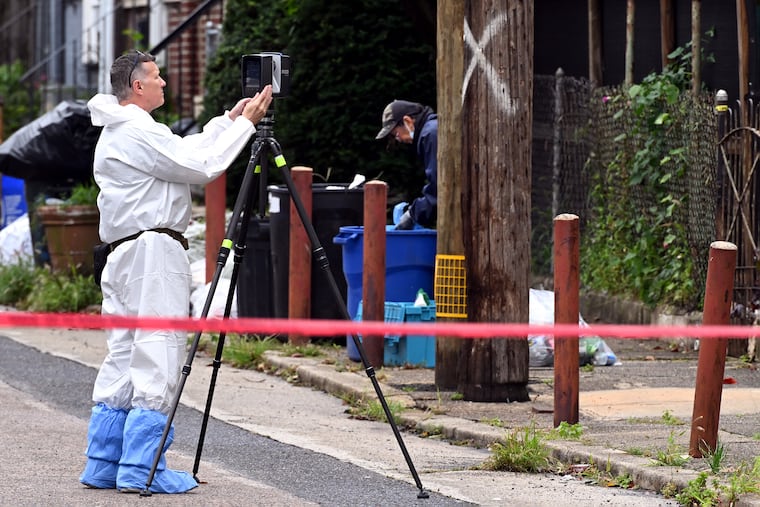
In August 2023, Cunningham said, agents searched the trash cans outside Abdul-Rahman’s family home and discovered wires typically used in the construction of homemade bombs. Then, after increasing surveillance of Abdul-Rahman’s house, Cunningham said, they saw him make a trip to a Lowe’s store with his mother, where he bought muriatic acid, which is needed to construct TATP.
Another FBI intelligence analyst, Janel Gale, testified that Abdul-Rahman’s internet search history around that time showed he had been looking up Philadelphia parade routes, trash can bombs, and nuclear power plants — something Gale said was consistent with “target and tactic” research.
By mid-August, Cunningham testified, agents served a search warrant on Abdul-Rahman’s house and found additional chemicals and devices that could be used for remote ignition.
Federal agents questioned Abdul-Rahman inside a police station, Cunningham said, and Abdul-Rahman admitted he wanted to become a “bomb guy” for KTJ in Syria, that he had conducted some bomb tests near his house and wanted to perform more, and that he had unsuccessfully sought to recruit high school classmates to join him.
On Aug. 14, 2023, authorities announced Abdul-Rahman’s arrest. Krasner said at the time that the teen “presented a grave danger to everyone — himself, his family, the block where he lives, and frankly, people everywhere in Philadelphia and potentially people around the country or even overseas.”
His attorneys said at trial that there was no evidence that Abdul-Rahman ever successfully built an explosive device, or that he had ever seriously considered taking action to advance the views he was expressing online.
“Do not convict a 17-year-old for his immature thoughts on society,” Chisholm said.
Listenbee, however, told jurors that law enforcement had prevented Abdul-Rahman from progressing further down a dangerous path — and that he deserved to be convicted of the crimes he committed along the way.
“Mr. Rahman,” Listenbee said, “had become almost a terrorist here in the United States.”