A.J. Brown, the social-media age, and another weird week for the Eagles
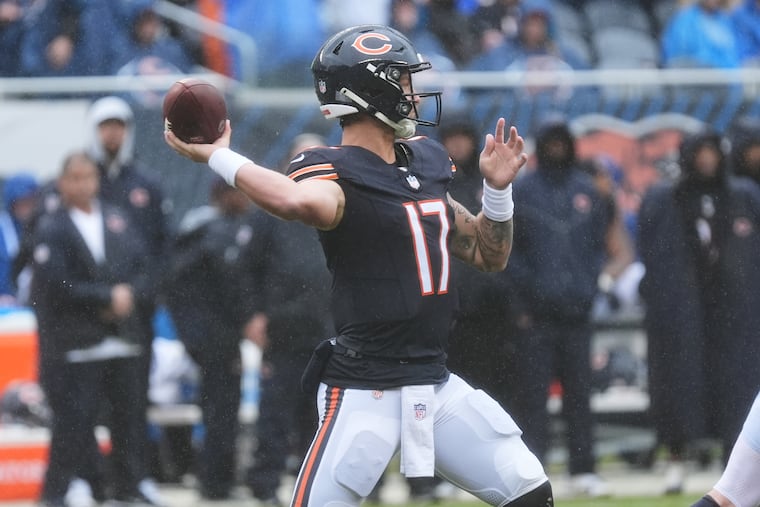
If the Eagles were 2-2, panic and a sense of urgency would already have set in. But they’re not, so Brown made certain one did.

There’s a lot to A.J. Brown.
A.J. Brown is a lot.
The first connotes something positive about him: that he is thoughtful, smart, complex. The second connotes something else: that he can be a handful for the Eagles to deal with, that he often takes to social media and that when he does he sometimes ignites a brushfire. This past week reflects the reality of both of those sentences: that several things can be true at the same time, and when it comes to Brown and his postgame posts on Twitter/X last Sunday, several things are. Here are a few of them:
» READ MORE: Saquon Barkley has started slow, but his ‘faith never wavers’ in the Eagles’ offensive line
Being A.J.
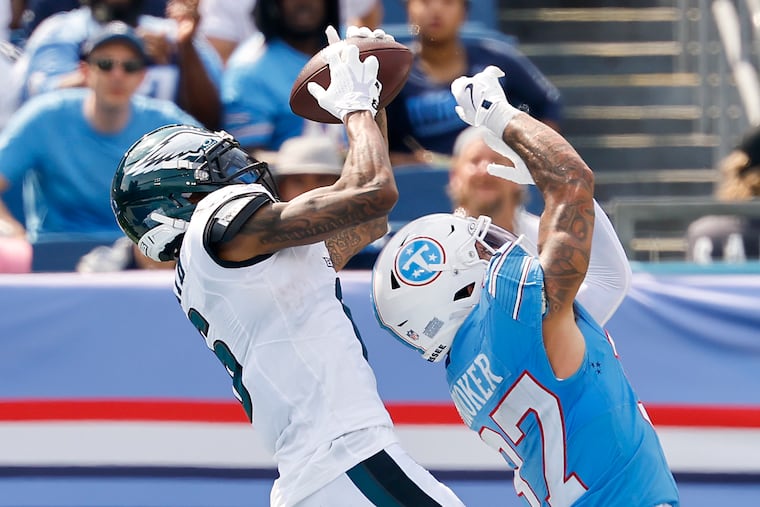
Brown is indeed damn smart. It’s safe to say that he knew his posts, following the Eagles’ 31-25 victory over the Buccaneers, would cause a commotion. It’s also safe to say that, because the Eagles are 4-0, Brown probably believed he had to do something fairly drastic to bring added attention to two problems — the offense’s struggles and his relative lack of production — and, in turn, to get the Eagles on the way to fixing those problems. If the Eagles were 2-2, panic would already have set in. But they’re not, so instead of taking the chance that a sense of urgency hadn’t yet developed within the locker room and coaches’ offices, Brown made certain one did.
Some necessary self-control
There are just a couple of other Eagles players who could get away with declining to answer questions after a game, then putting up a couple of passive-aggressive posts on Twitter. Brown is one of them. He is respected and well liked among his teammates. They trust that his intentions are good even if they might question his methods.
That said, there is a line separating the savvy, productive use of social media from the kind of impulsive, insecure conduct that can get an athlete, or anyone else, in trouble. After former Eagles linebacker Seth Joyner criticized him, for instance, Brown responded with an angry post Thursday, then deleted it. He’s a sensitive guy, someone who has grappled with mental-health issues in the past, and it’s appropriate to give him some grace. But he should have holstered his Twitter finger on that one, and he would do well in the future to fight the urge to fire back at his critics.
“The main thing is feeling like you’re on a reality TV show the entire time,” said running back AJ Dillon, who has more than half a million followers on his Instagram and Twitter/X accounts. “There are no days off or time off or, ‘Oh, I’m going to go back at this guy and talk s—- or whatever.’ You don’t gain anything from it. You don’t gain anything from ‘winning.’ You’re not going to win. You’re never going to win. It’s just being mature.”
The modern reality
Some of the backlash to Brown’s posts was a bit rich. Professional athletes aren’t the only ones living most of their lives online. Most of us live most of our lives online now, and there isn’t necessarily a predictable pattern of internet behavior based on a person’s age or profession or upbringing. I shake my head daily at Baby Boomers and GenXers who type out and post one-sided political screeds or fill their feeds with cryptic aphorisms and quotes, as if their need for reaffirmation or validation is so great that it can only be quenched by a hundred thumbs-up emojis. These are presumably the wisest, most self-assured members of our society, people who remember what life was like before we all spent it staring at our smartphones and who, one would think, would be mindful of the value of an unexpressed thought. Nope.
» READ MORE: Eagles vs. Broncos predictions: Rounding up the experts’ picks for Week 5 at the Linc
At least these generations can look back fondly at a time when they didn’t have a choice whether to use social media or not — because they were around before social media existed. Brown is 28. He, his peers, and those younger have never known a day without a stream of content flowing across their fingertips. The easiest thing in the world is to tell them, Put the phone down. Get off Twitter. It’s harder — much, much harder — to have them follow through on such a self-imposed ban. They don’t just live on their phones. They live through their phones. They use their phones to order food, to entertain themselves, to socialize, to date and mate. Lament it all you want, but no one is turning back that worldwide tide before the end of the NFL regular season.
“It’s not anything that’s going to be solved,” Dillon said. “It’s just the way it is.”

The Eagles survived -- again. This time, instead of holding on for dear life as they did in their opener against Washington, the Eagles came from behind in the final minutes to pull out a gutsy win at Tennessee, with their quarterback leading the way. With the Eagles 2-0, The Philadelphia Inquirer’s Jeff McLane and Mike Sielski examine Jalen Hurts’ promising performance through two games, and dig into the uneven play of the defense. Listen here.
Listen to all episodes here or wherever you get your podcasts.