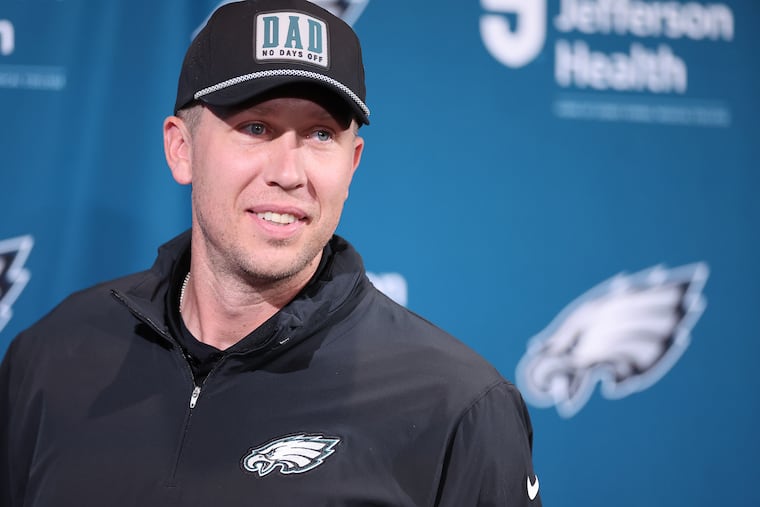
Howie Roseman claimed to know how to keep the Eagles great. Seems he forgot the secret.
From the offseason hires of Sean Mannion and Chris Kuper to the departure of Jeff Stoutland, the Eagles got away from the philosophy that helped them win big.
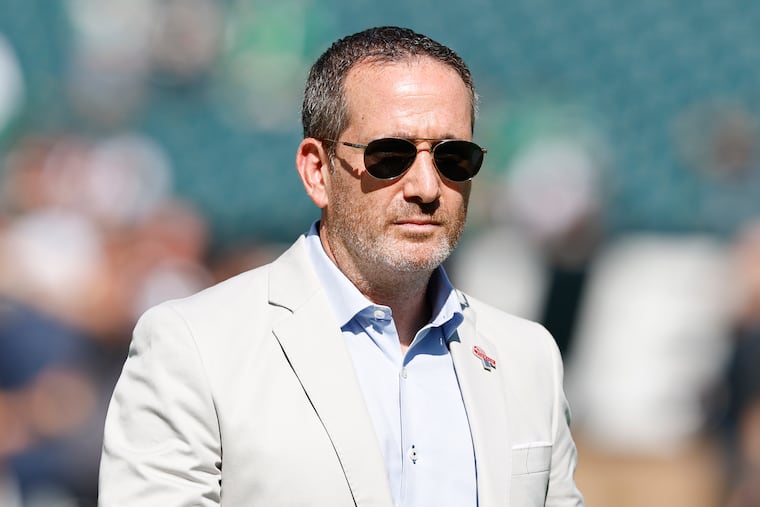
In the afterglow of Super Bowl LIX, with a second NFL championship to tout and his reputation as the league’s newest, smartest genius now solidified, with an Eagles season like this one impossible to envision, Howie Roseman made the scene among the sport’s national pundits and podcasters at the 2025 draft combine.
One of the stops on his media tour inside Lucas Oil Stadium was an interview with analyst Todd McShay, and it was a rare public exchange for Roseman in that it revealed something real about who he is and how he does his job. He told a story about a train ride with one of his idols in the player-personnel business: longtime San Antonio Spurs president R.C. Buford.

Mike Sielski alerts
He and Buford were at a conference together in London, in the midst of Roseman’s exile from the Eagles’ front office during Chip Kelly’s misbegotten final season with the franchise. On the train, Roseman took out a notebook and prepared himself to fill it with Buford’s insight on how he had built the Spurs into the NBA’s model for sustained excellence. He asked Buford what qualities he sought in the players the Spurs tried to acquire, and Buford instead shared some wisdom that he had learned, as a new general manager, from San Antonio’s Hall of Fame coach and executive, Gregg Popovich.
The first thing we’re going to do, Popovich had told Buford, is we’re going to hire people who are really good at their jobs, who we love being around, and who are good people. That’s it.
“And my heart stopped,” Roseman told McShay, “and I went, ‘That’s it. That’s. It. It’s not that hard.’”
It’s incredibly hard, based on the Eagles’ performance less than two years later. They’re 2-6, on their fourth quarterback, about to face the first-place New York Giants this Sunday, and most of those problems pale when compared to the clear and present issues with their offseason coaching hires and the way Roseman, his staff, and Nick Sirianni went about them.
For a guy who supposedly had cracked the code to keeping the Eagles among the best teams in the NFL, Roseman didn’t waste time in forgetting the very lesson that Buford had taught him. He, Sirianni, and the other power people in the organization had every right and reason to try to fix the team’s offense after last season’s sluggishness under Kevin Patullo. They wanted something different, something more dynamic, and they settled on Sean Mannion: a twig on the Sean McVay coaching tree. And that shift in direction led to the decision to replace Jeff Stoutland, their respected and accomplished offensive line coach, with Chris Kuper.
Now, the offense has somehow been worse under Mannion than it was when Patullo oversaw it. And with Kuper in charge, the O-line is missing blocks and allowing blitzers free runs and shots at whoever happens to be at quarterback each week. And it’s becoming clear that Roseman and the Eagles were so focused on implementing a new system and improving their offensive strategy that they failed to find people who, by Buford’s standard, were really good at their jobs.
When the Eagles hired him, Mannion was 33, a young coach who had never called plays or been a coordinator before. A succession of more experienced candidates had said no to the opening, which raises the question: For all the winning that the Eagles have done in the last decade, are they perceived around the league as they perceive themselves — as a place where good people are empowered to do good work?
So they took a risk on Mannion, then took another. Kuper was coming off four seasons as the Minnesota Vikings’ offensive line coach — four seasons in which the Vikings’ line was average to below average. The two of them had overlapped one year in Minnesota, when Mannion was a quarterback there, and once the Eagles committed to moving on from Patullo and putting the offense in Mannion’s hands, Stoutland’s time here was bound to end. The techniques he coaches don’t align with the West Coast-style, zone-blocking schemes that the Eagles were going to run — or, to put it better, attempt to run.
So they decided to say goodbye to the best O-line coach in franchise history and to a father figure within the locker room. Even if some of the linemen themselves thought last season that something needed to change, good luck finding any of them who would have been willing to sacrifice Stoutland for the sake of that improvement.
“I take great offense to somebody alluding to players not fighting really hard for Jeff,” Jason Kelce said Thursday morning on 94.1 FM WIP.
Stoutland embodied the good-person, good-at-his-job ethos by which Roseman and the Eagles claimed to operate, and his absence is a symbol of this entire bus crash of a season, of the decisions that led to the Eagles’ careening off the road. They put their plan ahead of their people, and here they are, back near the bottom for the first time in years, with no choice but to re-learn just how hard being great and staying great can be.

The Eagles have problems. Eight games into the season, that much is sure. But which ones are symptomatic, versus the ones that are systemic? From the head coach to the personnel, from coordinators to the front office, The Inquirer’s Jeff McLane and David Murphy scrutinize the micro issues that point to some of the larger dilemmas the Eagles now face: should they start to pack it in, and who will be held accountable for the team’s shortcomings? Listen here.
Listen to all episodes here or wherever you get your podcasts.