Philly school closure plan, through the eyes of an economist | Expert Opinion
It’s key to understand the underlying economic factors that have helped put the school district in its current predicament, writes Joel Naroff.
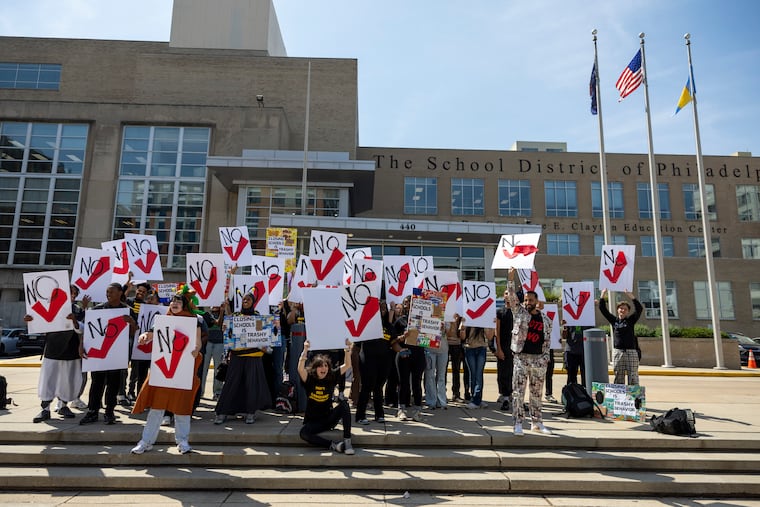
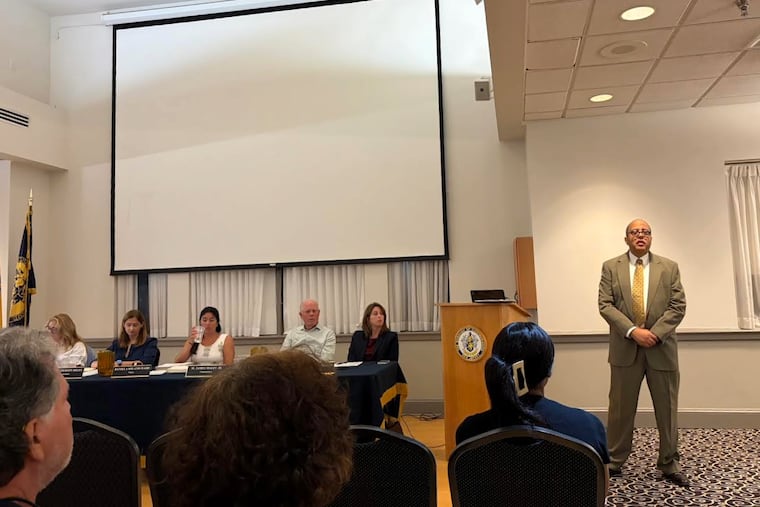
Philadelphia is in the middle of a major battle over the future of the school district. The school board voted to close 17 schools, relocate some programs, and spend $3 billion over the next decade to modernize the remaining facilities and close a $300 million deficit.
Is this a good plan? The answer to that question requires understanding the underlying economic factors that have contributed to the school district’s current predicament.
Root causes
Philadelphia’s school infrastructure is a disaster that has already happened.
The average age of a school building is about 75 years, and many suffer from environmental hazards and poor HVAC systems. Some were constructed in the 19th century.
The children attending the schools are being shortchanged, especially when it comes to training for a world where technology is evolving rapidly.
The question is, how do you upgrade a massive school system?
While past planning and financial decisions have created some of the district’s issues, the depth of the school district’s problems derive from the decline in the city’s population and economic base.
The City of Philadelphia grew rapidly until 1950, when its population peaked at about 2.1 million people. With further growth taken as a given, the city structured itself to be able to support a residential population in excess of 2.5 million.
Since the coming baby boomer generation had to be educated, Philadelphia prepared for the expected onslaught by building new schools.
But then, suburbanization took hold.
Over the next five decades, while the metropolitan area’s population expanded, middle-class families abandoned the city in droves. By 2000, Philadelphia’s population had fallen to 1.5 million.
The result is we now have an infrastructure built for over 2.5 million people but a population of only about 1.5 million.
Critically, the dramatic outflow of middle-class households changed the makeup of the city. Household income growth lagged, pressuring the tax base, while the number of school-age children declined. Shrinking enrollments are never a positive for the health of a school district.
Haphazard population decline
While the population declined, it did so in a helter-skelter manner.
That created abandoned housing, empty lots, and homes and businesses randomly distributed across neighborhoods.
That is a nightmare for city planners and school districts. Decisions that were made assuming a certain distribution and density of children turned out to be faulty.
Put simply, Philadelphia is using its land inefficiently, raising costs of providing all services, education included.
This also meant income and property value growth, the bases for revenues, has been restricted.
It created a vicious cycle of falling population and infrastructure deterioration.
As enrollments declined and the tax base shrank, investment in infrastructure was curtailed, leading to deteriorating school buildings.
And deteriorating schools intensified the population decline.
Since some neighborhoods experienced significant school-age population losses, a new problem arose: Schools became underutilized.
Impact of politics
It would be difficult enough for the school district to operate efficiently if it “only” had to face shrinking enrollments, deteriorating infrastructure, financial restraints, and the mismatch between school locations and school-age children’s housing locations.
It also has to face the realities of educational politics.
Politicians really do care about what happens to schools in their district.
Why? Because nothing is more important to parents — voters — than the education of their children.
Parents will go to war to ensure their kids are well educated, and they do.
And when parents get up in arms, politicians listen. The fight for schools becomes local and systemic solutions take second place.
Profits and losses
Facing all these issues, if the Philadelphia School District was a business, management would propose a massive downsizing restructuring plan. It would close inefficient plants or stores, cut back on services that are not profitable, lay off workers, and focus on future demand.
But education is not a business.
Some things, such as special education, are necessary regardless of costs.
Some programs, such as music, art, and sports, are coveted because they provide value to individuals and society as a whole.
Certain academics, such as science, technology, engineering, and math, are necessary to prepare students for the future economy.
And some parts of the educational system are needed simply because schools provide a safe place.
This imposes costs that are not readily reduced.
Massive challenges, limited options
The school district faces a mismatch between the number and location of schools and the number and location of students due to the random depopulation of the city.
But the school district cannot change student residential locations or move schools. It can only build new ones, renovate usable ones, or close inefficient ones.
During much of the last 50 years, the source of the district’s funding, the city’s tax base, either deteriorated or expanded slowly.
But the school district cannot change Philadelphia’s income level or property values from which it derives its revenues.
When the school district tries to rationalize a totally irrational school and population structure, it faces politicians who approach a systemic problem with their usual “not in my district” attitude.
But the school district cannot change the political environment.
The school district cannot change the charter school law that siphons off funds (sometimes for better, but often for worse).
The school district cannot change statewide educational requirements.
What should the school district do?
To operate more efficiently and improve educational outcomes, the school district needs a sweeping plan to address those challenges.
They have proposed one.
Given what must be done, $3 billion may not be enough.
The public needs to evaluate the current proposal in that light.