Philly school closings: What to know about the board vote, affected schools, and what’s next
Approved on a 6-3 vote during a raucous meeting, the plan to close 17 Philadelphia schools is expected to cost about $3 billion.
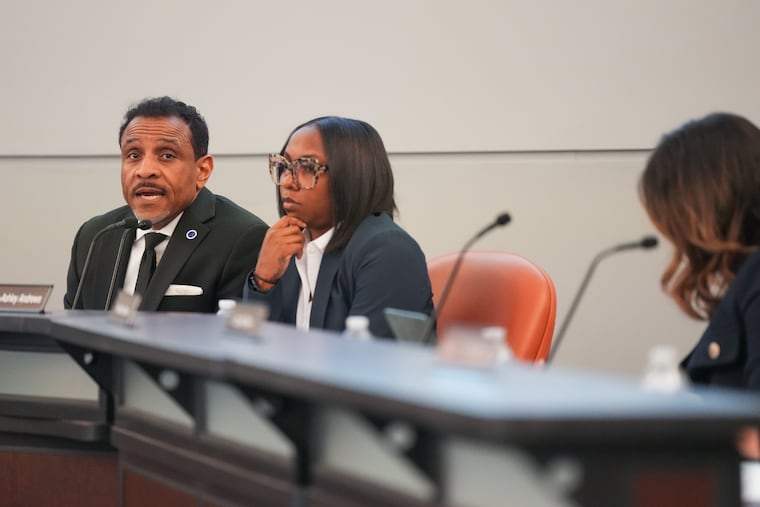
Philadelphia school board members on Thursday voted to approve the district’s facilities master plan, which seeks to close 17 schools and modernize 169 other buildings, marking a step forward for a blueprint that is expected to reshape the school system over the next decade.
Approved on a 6-3 vote during a raucous meeting, the plan is expected to cost about $3 billion, with two-thirds of that total coming from as-yet-unsecured state and philanthropic sources. The approval vote came following a contentious meeting that members of City Council shut down twice.
The plan is approved, but no school closures are planned until at least 2027 — and the blueprint could change between now and then.
Here is what we know:
What is happening to most of the district’s buildings?
A majority of district school buildings will be modernized — essentially fixed up — under the plan. In total, 169 buildings will see improvements, marking an increase from the previous targeted group of 159 buildings.
A number of other buildings are slated to fall into a “maintain” category, which involves giving them services for regular upkeep. A limited number of facilities would be co-located, meaning two schools would be housed under one roof, each with its own principal and team.
A previous proposal to give eight school buildings to the city for affordable housing and workforce development is now on hold.
» READ MORE: Philadelphia school board votes to close 17 schools
Which schools are closing?
The 17 schools targeted for closure are:
Blankenburg Elementary School
Fitler Elementary School
Morris Elementary School
Overbrook Elementary School
Pennypacker Elementary School
Welsh Elementary School
Waring Elementary School
AMY Northwest Middle School
Harding Middle School
Stetson Middle School
Tilden Middle School
Wagner Middle School
Lankenau High School
Parkway Northwest High School
Parkway West High School
Penn Treaty High School
Robeson High School
No school, however, will be closed before the 2027-28 school year. And despite the planned closures, no job losses are expected, Superintendent Tony B. Watlington Sr. said earlier this year.
The number of schools targeted for closure is lower than the figure initially proposed. Conwell Middle School in Kensington and Motivation High School in Southwest Philadelphia were spared, as was Ludlow Elementary School in North Philadelphia.
What still needs to happen?
Despite Thursday’s approval, the final word has not been issued. School closings call for specific hearings and processes under the Pennsylvania school code, all of which must play out before any closures actually happen.
The district said it will put up $1 billion of the total price tag for the approved changes. The source of the additional $2 billion in funding for the plan has not yet been announced, although officials expect it to come from state and philanthropic sources.
What happens to students who attend schools slated to close?
Affected students would be routed to new schools. A new transition office would work closely with impacted communities to make sure academics, attendance, and social-emotional needs don’t suffer, Watlington said.
“These families will get gold-standard, red-carpet treatment directly from the superintendent’s office,” he pledged earlier this year.
Why are changes necessary?
For more than a decade, the district hasn’t had a facilities master plan in place. It has about 70,000 empty seats citywide, and some schools are overcrowded while others have floors that remain entirely unused. Many of its buildings are aging — the average district school is nearly 75 years old — and many have significant environmental or systems issues.
Closing some of the schools, officials said, would allow the district to bolster academics and extracurricular activities in those that remain open. Additionally, the district says the new plan would allow it to provide more programming, such as algebra for all eighth graders, more prekindergarten, expanded technical education, and AP courses for neighborhood high schools.
How were school buildings’ fates determined?
Watlington previously said there was no formula to determine his recommendations. But four factors entered into the decision: building condition, utilization, the school’s ability to offer robust programming, and neighborhood vulnerability — a new measure that considers things like poverty and whether the area has lived through prior school closings.
Despite community conversations, surveys, and advisory groups, some were skeptical of the planning process, saying they feel like their input was performative. In the fall, a grassroots coalition urged the district to pause the process, focus more on investments, and promise no closures.
How did school board members vote?
The board on Thursday voted remotely in a locked room, with some audience members remaining in an auditorium to see the meeting streamed via Zoom. In total, the plan passed on a 6-3 vote.
Crystal Cubbage, Wanda Novalés, and Whitney Jones voted against it. Cubbage said that the plan was “not financially viable,” and was not bold enough. Board president Reginald Streater, meanwhile, said the plan was painful, but necessary.
Streater said he heard the public pleas, but said: “We cannot fully modernize every building, ignore enrollment shifts, or postpone action anymore. We must call the question today before financial instability forces the hands of all of us in this room.”
When did the district last close schools?
Mass school closures last happened in 2012 and 2013, when 30 schools shuttered.
That process hit economically disadvantaged neighborhoods disproportionately, did not yield substantial savings, and generally led to worse academic outcomes and attendance for students.
The mistakes of 2012 informed this go-round, officials said.