Philly school officials want to close this Frankford middle and replace it with a K-8. Teachers worry programs will be lost.
Harding Middle School has 'something for everybody.' Teachers are fighting the district's plan to close it.
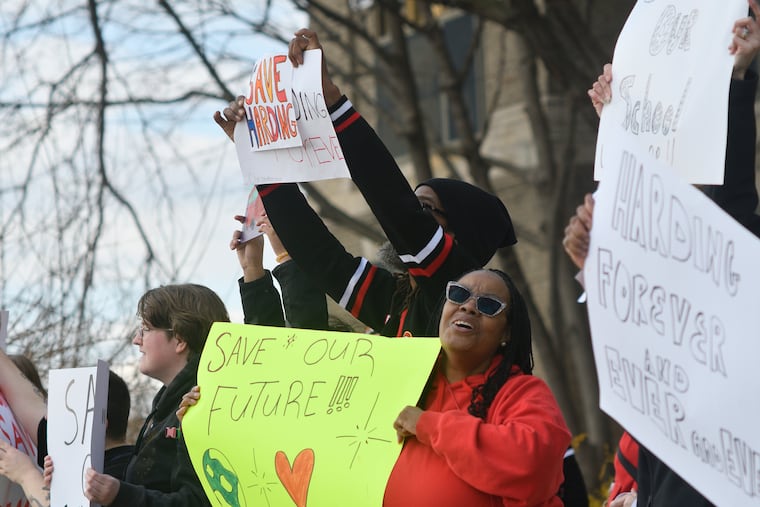
From sports like soccer, football, and cheerleading to Model United Nations and unified programs for students with and without special needs, Harding Middle School’s offerings reflect its diverse enrollment.
Of the Frankford school’s 570 students, more than 150 — nearly 27% — receive special-education services. About one quarter of students are English learners — with languages ranging from Spanish and Portuguese to Pashto and Ewe.
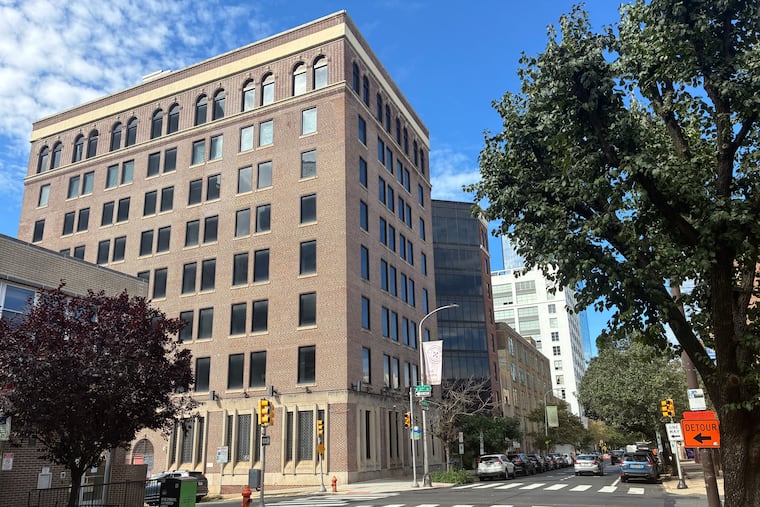
Teachers say the school will not be able to offer the same depth of programming if the Philadelphia School District moves forward with a plan to close Harding, which serves grades six through eight. The district is proposing to move Sullivan Elementary School into the Harding building, and expand that school into a K-8 as part of a sweeping facilities plan.
“We offer something for everybody,” said Beth Ann Dufner, a Harding teacher who coordinates the school’s English learner programs and has worked at Harding for six years.

Wholesale changes are coming to the Philadelphia School District, with the school board passing a $3 billion facilties plan that aims to close 17 schools permanently, and renovate 169.
Superintendent Tony B. Watlington Sr. presented the plan to the school board Feb. 26 and it immediately faced strong opposition. After some amendments, the board passed the plan April 30. Here's what we do and don't know about it.
And to see the proposed list school closures and check how your school could be impacted, use our interactive charts.
Each of the schools proposed for closure has its own story. Find them all here.
Because transitioning the building from a 6-8 school to a K-8 would mean fewer students per grade, Dufner said, she does not think the school’s programs for middle school kids could be replicated in the district’s plan — “not on a large scale like we have at Harding.” Teachers say students would have to travel to other schools to compete on some sports teams.
Harding, which has capacity for 1,110 students, is one of five middle schools recommended for closure under the plan. In total, the district proposes to close 18 schools, pitching the plan as a better use of limited resources.
Harding teachers disagree with the district’s shift away from standalone middle schools — saying that surveys did not give community members the option to voice support for the model.
“I’ve never heard any parents we’ve had enrolled say, ‘We hate middle schools,’” said Jessica Peruso, an autistic support teacher at Harding. “That was a theme — but where did that come from?"
A hub for special-education students
Teachers also dispute the rationale for closing Harding specifically — questioning how the district scored Harding as “poor” for program alignment on a rubric for determining which schools to close.
At one session, teachers were told the school did not have enough closet space, according to Dufner.
“The things they said they based their score on — we have all of those things," Dufner said, noting that Harding has two gyms, media and technology labs, and dedicated spaces for English learners and special-needs students.
Like other teachers, Dufner faulted the district for Harding’s underenrollment, saying its decision to allow charter schools had drawn students away.
But she also questioned whether Harding — which the district rated as only half utilized — was being penalized for its large population of students receiving special-education services. Autistic support classrooms, for instance, are required to have no more than eight students, far smaller than a standard class size.
That “creates the appearance of underutilized space,” but it’s not, Dufner said.
A district spokesperson said building utilization scores are not adjusted to account for smaller class sizes for special-needs students.
The spokesperson, Monique Braxton, said numerous factors resulted in Harding scoring poorly on program alignment, from gym facilities in disrepair to lack of appropriate spaces for music and art classes.
Harding serves as a hub for special-education students from a range of neighborhoods beyond the Harding catchment, teachers said. They described the school’s culture as particularly inclusive of kids with special needs.
“That makes me the most nervous for closing,” said Peruso, who has taught at Harding since 2014 and was recently named the district’s Teacher of the Month. “I’m concerned about my kids. I’ve been teaching autistic support here forever. I don’t want them to get lost.”
Under the district’s plan, Harding would have a phased closure, starting in the 2027-28 school year. Students previously assigned to Harding would instead attend Sullivan, John Marshall, Lawton, or Carnell schools. Meanwhile, the Harding building — rated by the district as in “unsatisfactory” condition — would receive upgrades before the expanded Sullivan school moves in.
“You’re going to come here and fix the building for Sullivan students? Why aren’t the Harding students worth that investment?” Peruso said.
A ‘tight knit’ community
While current students would not be affected by the closure, some have expressed dismay that they would not be able to return to the school and visit their teachers, said Amanda Chandler, who teaches English language arts at Harding.
Chandler, who has taught at Harding for seven years, called it “very tight knit.” Every year, she said, former students have come back to see her or her colleagues.
Compared with past teaching jobs, “I have never had kids more loyal to me, my well-being … than I have at Harding Middle School,” Chandler said.
In letters shared by Peruso, several students said they wanted Harding to stay open because of its welcoming environment. “Everyone is united like a big family,” one sixth grader wrote. Another sixth grader said that teachers “let me know that I am safe and that everything will be okay.”
Amarika Thomas, a paraprofessional at Harding who has lived in the community for 20 years, had been working in the school’s cafeteria when principal Mary Sanchez noticed her strong connections with students.
Sanchez “pushed me to come out of the cafeteria,” said Thomas, who hopes to become a special-education teacher.
While Thomas’ daughter attends a K-12 charter, she had hoped to possibly send her daughter to Harding for middle school, citing its array of activities.
The district should invest in Harding, Thomas said: “Harding literally just needs a fighting chance.”