Lower Merion is reconsidering issuing computers to elementary schoolers as parents demand to opt out
The district is also considering “specific parameters” for device use at different grade levels. Superintendent Frank Ranelli said he'll provide an update before the end of the school year.
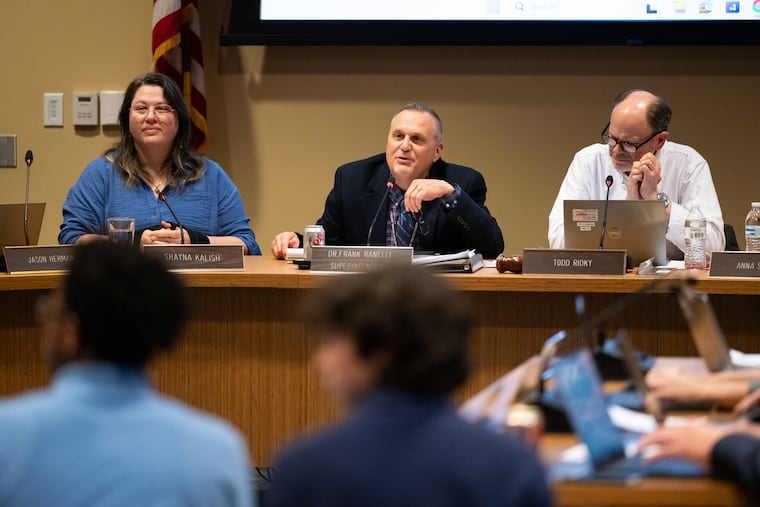
Lower Merion School District administrators are reconsidering whether to give each elementary school student a personal tablet or computer, as the district faces parental demands to opt children out of school-issued devices.
In a message to families Friday, Superintendent Frank Ranelli said the district would “review the need to assign individual devices” to its youngest students ahead of the 2026-27 school year.
The district is also considering “specific parameters” for device use at different grade levels, Ranelli said, and programs to monitor kids’ usage, including an app parents could use to review what their children accessed on their devices at school.
“Our administrators and staff value partnership with parents and guardians, as we all strive to achieve a balanced digital culture to benefit our students and prepare them for the future,” Ranelli said. He said he would provide an update before the end of the current school year.
The possible changes come as backlash to educational technology spreads nationally, with parents worried about how much time kids are spending on screens in school, and accusing districts of ceding too much control of education to technology companies.
In Lower Merion, parents have voiced concerns about distractions during class, the ability to access inappropriate content, and math and reading apps they believe are inferior to teacher-led instruction. More than 600 have signed a petition demanding the ability to opt out of assigned school devices, according to the petition’s creator.
But Ranelli has repeatedly told parents they cannot opt out, and administrators have indicated they are moving to change district regulations that say principals must accommodate parents who do so.
Parents who want to opt out have been organizing ahead of a May 11 school board policy committee meeting, where the board is expected to take up the issue.
Yair Lev, a Lower Merion parent who organized the opt-out petition, said the district’s message outlining potential technology changes reflected “the strength of the grassroots movement” challenging the district.
“I am happy to see that the district is responding,” Lev said. But, he said, parents still want the right to opt out of one-to-one devices — to have their kids only access shared computers from a technology cart or in a designated lab.
Ranelli’s message didn’t specify to what extent devices would still be used in elementary instruction, if the district stopped assigning kids individual computers.
“We absolutely think that using these devices is degrading that quality, deep connection” between students and teachers, Lev said, calling it “deeply troubling” that the district may change its policy to bar opt outs.
Some parents, including Lev, recently sent letters seeking to opt out of devices effective immediately. Lev — who had already opted his kindergartner out of an iPad at the start of the school year — said parents received identical letters from different principals, rejecting the requests.
Eleanor Stanford’s son, a junior at Lower Merion High School, handed in his computer Friday.
“He talked to all his teachers,” Stanford said. “They’re willing to work with him.” She said administrators hadn’t yet responded to a letter her son wrote, formally opting out.
Stanford called Ranelli’s message Friday a “positive sign,” indicating the district is taking the parental opposition seriously.
But “I don’t think it goes far enough,” Stanford said. She noted that Ranelli hadn’t committed to certain changes, and questioned whether giving parents a monitoring app was a solution to kids’ misuse of devices.
Theresa Doggett, who has a child in elementary school in Lower Merion and two in district middle schools, had been waiting to see how the district would respond to concerns parents raised at a community meeting in March. She was “pleased” by Ranelli’s message, she said.
Doggett hasn’t been worried about how computers are used in elementary school. Once her kids got to middle school and started carrying their computers around, however, she was concerned about “recreational” technology usage, such as emailing friends during class or accessing all kinds of websites.
Since the meeting, Doggett said, the district appears to have barred access to more sites, including games kids were creating and sharing with each other. She’s also heard friends say their kids are no longer allowed to play on their computers during homeroom.
Doggett, who doesn’t want to opt out of devices for her kids, said she’s satisfied with the direction the district is taking.
“I just want to see things improve,” she said.

Inquirer Lower Merion