Here’s what is new in South Jersey schools as classes resume
New Jersey's public school students returned this week for a new school year. More districts have cell phone bans, and Cherry Hill reconfigured its middle schools. Here's a look at what's new.
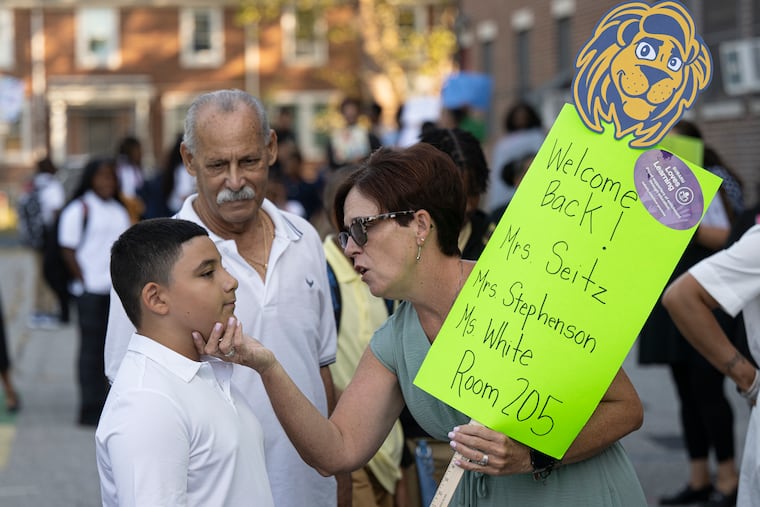
There were hugs, tears, high-fives and a few jitters as hundreds of students at Camden’s Yorkship Family School began classes Friday.
Escorted by parents and siblings, the students were greeted in the parking lot with cheers from acting state Superintendent Davida Coe-Brockington and city leaders for their first day.
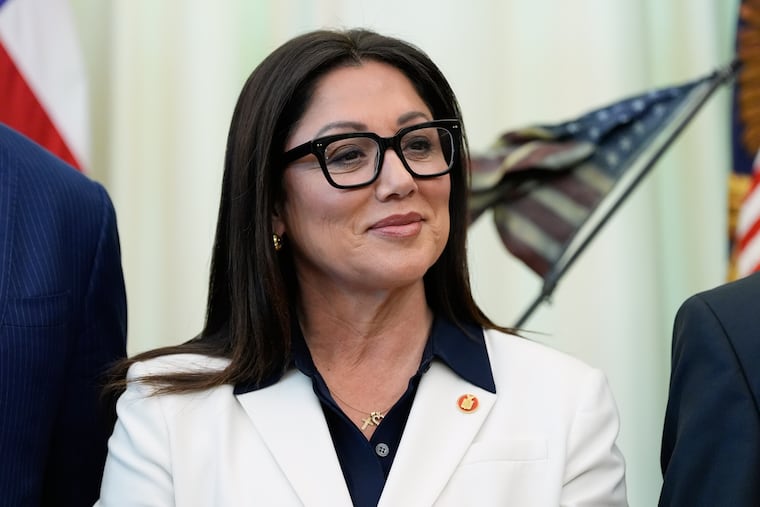
It was also the first school year opening for Coe-Brockington, who was named the district’s interim schools chief in June. She replaced Katrina McCombs, who took a job with the state.
» READ MORE: N.J. Education Board approves acting Camden schools superintendent
“I want you to have an absolutely amazing school year,” Coe-Brockington, a longtime educator in Camden, told the students. She will serve as the interim superintendent until the state names a permanent successor for McCombs.
Coe-Brockington inherited a district struggling to operate amid a fiscal crisis. Before her departure, McCombs cut nearly 300 jobs to bridge a $91 million budget gap, laid off 117 employees and restructured middle school.
This week was also opening day for most of New Jersey’s nearly 1.4 million public school students. There are changes and new policies in a number of districts, such as crackdowns on cell phone use.
The mood was upbeat Friday outside Yorkship, as music blared on a speaker and the students strolled down a “Soul Train” line to enter the building. Principal Michael Coleman rang a shiny bell to officially mark the start of the year.
Parent Ashanti Mortise said her three children, a second grader and two kindergartners, woke her up to start the day.
“They were excited to get back to school. I feel this is going to be a good year,” she said.
Inside, second-grade teacher Leslie Gaines quickly tried to settle down her nearly two dozen students. She read the book The First Day Jitters.
“What does jitters mean?” asked Elijah Martinez. His classmates responded, saying it means to be “kind of nervous, scared.”
“It’s OK to feel that way,” Gaines reassured them. “It’s going to be a good year.”
Here’s what’s happening in other South Jersey school districts:
Universal free breakfast and lunch in Clayton
In Clayton, the district now offers free breakfast and lunch to every student, thanks to a federal grant from the U.S. Department of Agriculture, said Superintendent Nick Koutsogiannis.
The district qualified for the program because at least 64% of its students were eligible for free or reduced-price meals, he said.
Koutsogiannis said the program eliminates the stigma often associated with free meals because every student gets the same meal. Clayton has about 1,500 pre-K through 12th-grade students.
“It’s just great for all of our kids,“ he said. ”Kids coming to school with hungry bellies affects learning."
New middle school model for Cherry Hill
In a cost-saving move, Cherry Hill reconfigured its middle schools and switched to a junior high school model this year.
Superintendent Kwame Morton has said switching the middle school model would provide flexibility and generate savings. The district said it had to make cuts due to a decline in state funding.
Cherry Hill has three middle schools: Henry C. Beck, John A. Carusi, and Rosa International. They enroll sixth through eighth graders.
Some parents expressed concern about the potential impact on students accustomed to having small learning environments in middle schools and a team of teachers assigned to groups of students.
Parent Toni Damon said she was “a little nervous” for her son, Aiden, 11, a sixth grader at Rosa. She worried about classroom time, shorter lunch periods, and less social time for students’ mental and emotional health.
Damon, a Philadelphia educator, said Aiden had a “great” first day. She believes other students will also adapt to the changes.
“He had absolutely no complaints,” Damon said.
Cell phone bans in several districts
Several school districts, including Deptford, Moorestown, and Clayton have joined a growing movement requiring students to put their cellphones away during class.
The policies seek to ease classroom distractions that keep students from learning by banning cellphones and other electronic devices, including wireless headphones, during school.
» READ MORE: How a South Jersey school district is implementing a cell phone ban to ease classroom distractions
There are exceptions for students with IEPs, or individual education plans, who use the devices as part of their curriculum.
In Deptford, phones and devices must be turned off and put away when the first bell rings. Students have the option to put them in their book bags or keep them in their pockets.
District spokesman Salvatore Randazzo said teachers are praising the ban, and students, especially high schoolers, are embracing it at lunch. Card and board games will be made available soon in the cafeteria, he said.
“No phones out, and lots of interaction and conversation,” he said.
Moorestown’s policy requires K-8 students to safely secure their phones during the day. Smart watches may be worn, but used solely for timekeeping.
High school students are allowed “to responsibly” use the devices between classes and at lunch, Superintendent Courtney McNeely has said.
Koutsogiannis, Clayton’s superintendent, said his Gloucester County district implemented a cell phone ban this week at its middle school and high school.
Students are required to lock up their phones in a pouch at the beginning of the school day, he said. They can keep the pouches in their possession all day.
Koutsogiannis said school officials have already noticed a difference. Students are more attentive in class, and more social at lunch, he said. One girl told him that she was easily making friends.
“They have been very compliant,” he said. “I think it’s going to have a big effect academically.”
Gov. Phil Murphy has called for legislation requiring all schools to adopt such policies.