Philly schools’ learning outpaces other big-city districts post-pandemic, a new report says
Evaluated against 24 other big-city school systems’ student achievement, Philadelphia’s “learning rate” ranked first, but it's a complicated picture overall.
Philadelphia School District students’ learning post-pandemic is tops in the nation among large urban districts, according to new research out of Harvard and Stanford universities and Dartmouth College.
Evaluated against 24 other big-city public school systems’ student achievement, Philadelphia’s “learning rate” — how much students’ reading and math scores improved as they move from grade to grade — ranked first.
Philadelphia students posted a 13.4% learning rate between 2022 and 2025. Fairfax County, Va., students were second-highest, with a 9.4% learning rate, and Chicago students were third, achieving a 7.5% rate.
» READ MORE: The Philadelphia School District just passed a $4.6B budget with classroom cuts
But it’s a complicated picture.
Even with those gains, students in the district performed 2.46 grade levels below the prepandemic, 2019 national average.
And the data are not perfect: They do not include results from New York, the country’s largest school system, or numbers from 11 other states. Also, Chicago’s figures do not include 2025 numbers.
On average, Philadelphia advanced an average of 1.13 grade levels per year between 2022 and 2025. That’s better than the Pennsylvania average, 0.95 grade levels, and significantly above its Pennsylvania peer group, the school systems in Erie, Pittsburgh, and Lancaster, which averaged 0.69 grade levels per year.
Philadelphia ranked higher than 84% of all school systems nationwide in average learning rates.
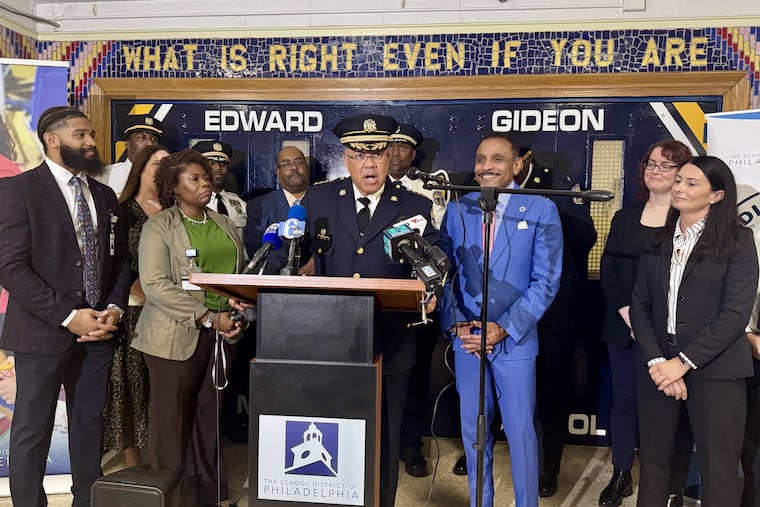
The news delighted district officials, including Superintendent Tony B. Watlington Sr., who often says he wants the district to be the fastest-improving school system in the U.S.
“While we have a long way to go to get to a place where the majority of our kids are demonstrating proficiency on state tests — I do want to own that — we know that success begets more success, and I am so proud and thankful for our families, staff, as well as the Board of Education," Watlington said.
As measured by the Pennsylvania System of School Assessment, just 33% of district students perform at or above grade level in reading, and 25% of its students meet the mark in math performance.
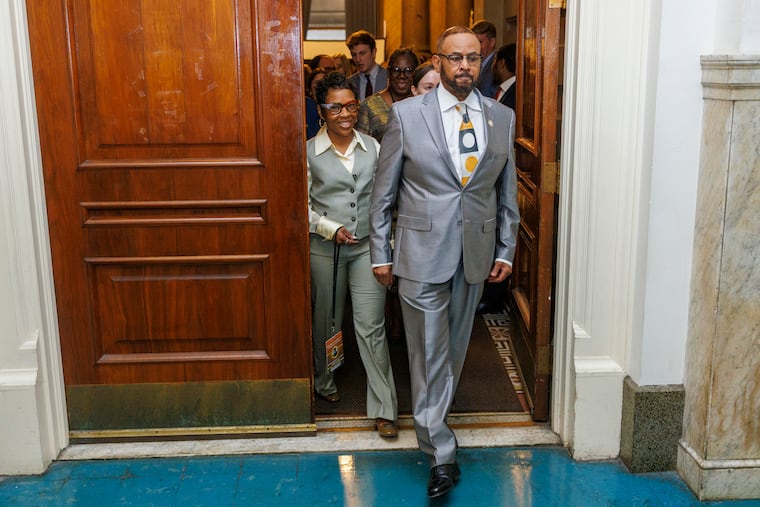
The academic recovery news is welcome, ChauWing Lam, a board member, said at a board meeting Thursday night where officials announced the results.
“It affirms the great work that’s happening across the district,” Lam said. “Certainly we have a long way to go, but it’s nice to see Philadelphia highlighted in such a manner.”
Board member Joyce Wilkerson, who was president of the board during its pivot to a sharper focus on academics, agreed.
“We’ve been very disciplined about focusing on student achievement, and it’s beginning to pay off,” Wilkerson said.
Despite the accolades, one community member reminded the board of its overall low achievement.
“You still can’t teach the children to do basic math and reading,” said Horace Clouden, an activist and former district building engineer.
The national picture
Nationwide, students continue to struggle significantly with reading.
The pandemic hurt students’ reading scores, but they were already on the decline prior to COVID-19 interruptions. Researchers suggested less test-based accountability and students’ social media use may be factors in the reading crisis.
The gains Philadelphia and other low-wealth school districts were able to achieve were spurred by an infusion of federal COVID relief funds, researchers said. That money has now dried up, and the school system is confronting budget cuts as a result.