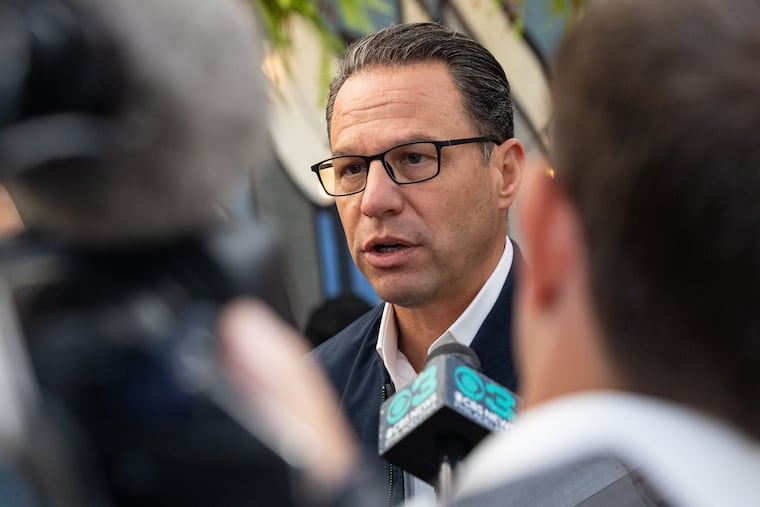
Gov. Josh Shapiro hasn’t decided whether he’ll opt into Trump’s new school choice program
Shapiro, who has previously drawn ire from fellow Democrats for supporting school choice initiatives, “is awaiting federal guidance to address key questions," his office said.
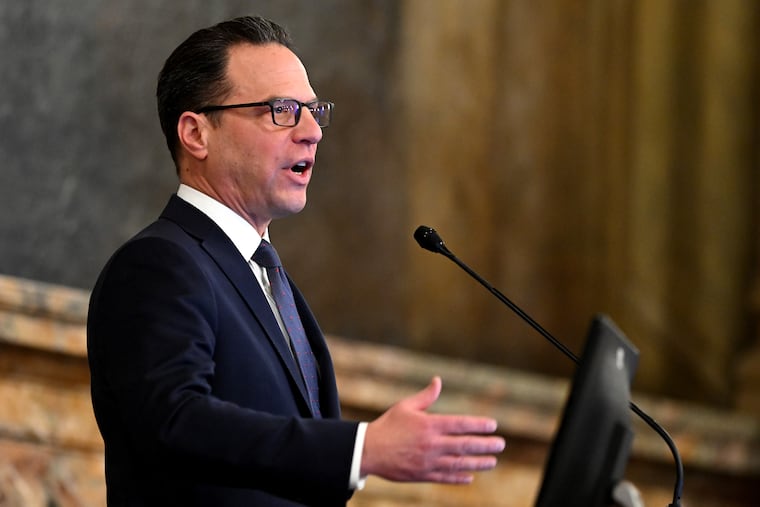
Starting next year, federal taxpayers will be able to get tax credits up to $1,700 for donating to organizations that give out K-12 scholarships.
But in order for any Pennsylvania kids to get money, Gov. Josh Shapiro has to say yes.
“There is truly no reason why you wouldn’t want to do this,” Jorge Elorza, president of Democrats for Education Reform, said at a news conference Thursday in Philadelphia held by school choice advocates pushing for Pennsylvania to participate.
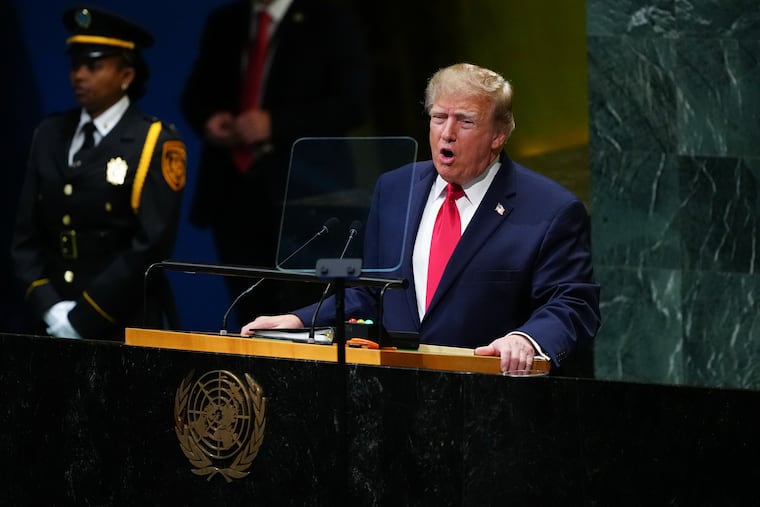
For the Democratic governor — who is viewed as a contender for the 2028 presidential primary and is facing reelection this year — the calculus may be more complicated. Across the country, 27 states have opted in to the new program, which was enacted as part of the One Big Beautiful Bill Act last year amid a push by President Donald Trump and Republicans to expand private school choice.
The states that have opted in are largely Republican-led, though Colorado Gov. Jared Polis, a Democrat, has joined the initiative.
A spokesperson for Shapiro said Thursday the governor, who has previously drawn ire from some fellow Democrats for supporting school choice initiatives, “is awaiting federal guidance to address key questions about how this program would work.” He has until Jan. 1 to opt in.
Democratic leaders and their allies, like teachers unions, have long resisted sending public money to private schools, including through school voucher programs.
The federal tax credit is not a direct voucher: Taxpayers would donate to participating scholarship organizations, and families would then apply to those organizations for scholarships, which could be used for tuition or other educational costs, including for students attending public schools.
But it could still impact the public system. The more students who enroll in private schools, the more public school enrollments will shrink — with implications for their budgets, said Jon Valant, director of the Brown Center on Education Policy at the Brookings Institution.
“The downside for Shapiro” and other Democratic governors is that opting into the program may mean “they’re going to have to be OK with funds going to schools that violate core Democratic principles,” Valant said. Federal rules are not yet finalized, but based on the U.S. Treasury’s request for comments, Valant said, it appears states will not be able to dictate conditions, like requiring private schools to not discriminate against LGBTQ students or students with disabilities.
Rosie Lapowsky, a spokesperson for Shapiro, said Thursday in a statement the governor wants to see “which students will be eligible, how this federal initiative will interact with existing programs, and more. We look forward to reviewing that guidance.”
School choice remains a contentious topic for Shapiro, who attended private school himself and whose children attend a private school in Montgomery County. He has previously said he supports school choice options, including a 2023 Republican voucher program that failed to gain support from House Democrats.
» READ MORE: Josh Shapiro's school voucher support draws criticism from fellow Democrats
Despite the partisan divide, “it’s hard for governors to say no to funds being offered to them, and taken into other states,” Valant said.
Shapiro is expected to face state Treasurer Stacy Garrity, the GOP-endorsed candidate for governor, in the November midterm election. Garrity will have the support of a political action committee backed by Jeff Yass, Pennsylvania’s richest man, as a strong advocate for school choice.
A debate over school choice
At Thursday’s news conference at the Notary Hotel near City Hall, advocates for the federal tax credit urged Shapiro to join the program.
While states have until the end of 2026 to opt in, “families and scholarship organizations need clarity now,” said State Rep. Martina White (R., Philadelphia), who described her experience growing up in Northeast Philadelphia attending Catholic school.
If Shapiro does not join, Pennsylvanians who want to support school choice initiatives will be able to receive tax credits for donating to other states, White said. “Pennsylvania taxpayers will help fund scholarships elsewhere while our students miss out,” she said.
Pennsylvania already has a network of organizations that give out K-12 scholarships, based on the state’s existing tax credit scholarship programs: the Educational Improvement Tax Credit and Opportunity Scholarship Tax Credit programs.
The latter program is targeted to students in low-achieving school districts, while any family within the income limits — an annual income of $116,055 plus $20,428 per dependent child — can qualify for the larger EITC program. The two programs have expanded under Shapiro and previous governors, topping $525 million available in the 2024-25 school year, according to the Education Law Center, a public education advocacy organization.
Keisha Jordan, president and CEO of the Children’s Scholarship Fund Philadelphia, said her organization is currently funding scholarships for 6,800 students, primarily with dollars from the EITC and OSTC. She said “thousands” of families apply every year, but “funding limitations mean we can only offer a fraction of them a scholarship that could change their lives.”
Under the federal program, families earning 300% of their area’s median household income could qualify for aid.
According to the Commonwealth Foundation, a Harrisburg-based libertarian think tank with ties to Yass that has long been pushing for expanded private school choice, 90% of Pennsylvania families could qualify.
Valant, of the Brookings Institution, said that research from states that have expanded private school choice programs shows the funds “disproportionately go to wealthier communities,” and that the federal program has “fewer and weaker guardrails” than many state programs.
He also said that while the federal program allows scholarships to be used for tutoring and other costs for public school students, it will likely be easier for scholarship organizations that serve private school families to solicit donations.
“It’s a little bit harder to figure out how you’re going to be able to recruit a lot of donors for tutoring services for students in poverty,” Valant said.
In an interview Thursday, Elorza called it “incredibly unlikely that regular taxpayers” would donate to organizations funding families that do not need it.
“The contributions are going to align with the broad values of the public,” said Elorza, a former mayor of Providence, R.I. He said Democratic leaders have been out of step with support for school choice among Democratic voters, including Black and Latino families.
Shapiro could gain favor with those voters by “going against the grain with party orthodoxy,” Elorza said.