This $21 zero-waste cocktail is a taste of the future
At Almanac, an ode to corn is much more than the sum of its parts.

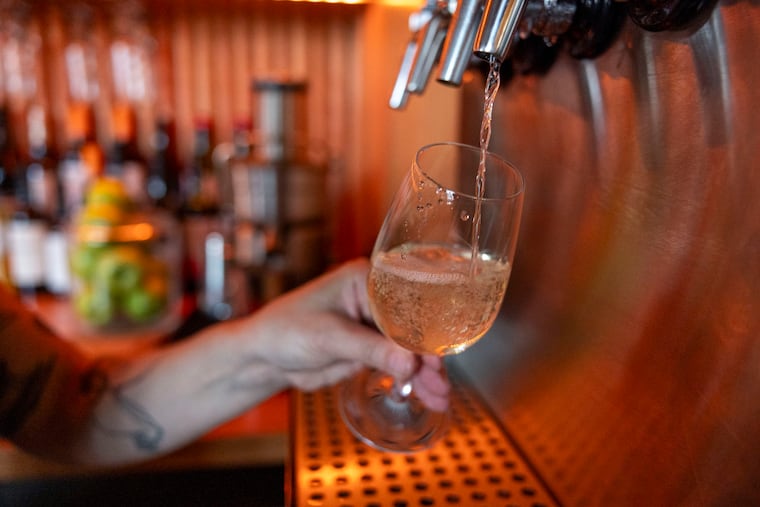
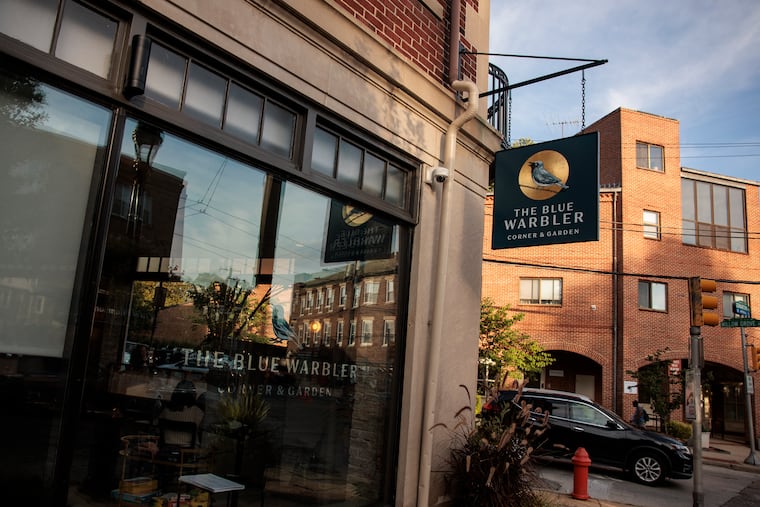
Enormous effort is being exerted at Almanac, the dark cocktail bar tucked above Ogawa Sushi and Kappo in Old City. The diminutive bar’s shelves are lined with local amari and nocini, made of foraged botanicals steeping in alcohol.
They‘re fermenting their own chrysanthemum kombucha and riffs on amazake, a spirit made from fermenting rice with koji, or Aspergillus oryzae, Japan’s most famous mold, but which Almanac’s bartenders has applied to other ingredients like ube, sweet potatoes, and corn. It’s a great example of why Almanac is one of the bars pushing Philly’s cocktail scene to new heights.
Zero-waste cocktails are trending, whether that means bartenders are utilizing whole ingredients or “waste” generated by the kitchens their bars are attached to. Bartenders across the country are, like Almanac’s Rob Scott and Beau Quick, rethinking what has long been considered waste. Pickle brine, wagyu fat, and citrus rinds are being given chances to shine as cocktail ingredients in the nearby District of Columbia. And it’s likely only a matter of time, during Philadelphia’s cocktail renaissance, that more bartenders think of what other ingredients they can rescue and transform.
Almanac’s Ride on Shooting Star ($21), conceived by Quick, seems deceptively simple and far more straightforward than, say, the Sadotini, a cocktail that requires whisking ceremonial-grade matcha to order. The drink is listed on the menu as: reposado tequila, mugi shochu (distilled from barley), amontillado, corn cob, hojicha milk tea, spice tincture, and corn husk ash.
It’s a cocktail that I found utterly mesmerizing and unlike anything I’ve had before. It’s hauntingly lovely with a light sweetness evocative of peak summer corn. Its effervescence lingers with big, juicy bubbles. It’s also a tiny bit smoky, with a hit of corn curd ash. When diving into how Almanac renders it into existence, I was shocked to find it’s as smart as it is nuanced, perhaps a harbinger of a wider trend toward zero-waste cocktailing coming to Philly.
What’s not immediately visible from the list of its ingredients is that Ride on Shooting Star is an ode to corn, with elements coming from every part of a corn cob except its kernels. The kernels are used by Scott for one of his amazakes. Left with the cobs, Scott and Quick make a corn cob stock, turn it into a cordial with some sugar and “acidulation, which just means adding some citric and malic acids to it,” said Scott. To the cordial they add Arette Reposado tequila, Barbadillo Amontillado sherry, Watanabe Mannen Boshi Genshu mugi shochu, and then “make it into a milk punch. But the acid from the cordial can cause the milk to curdle.”
The process uses hojicha tea powder, ground as fine as matcha, and milk powder. “We combine the two ingredients, then rehydrate them to create a hojicha milk tea,” said Scott.
The mixture sits for a day to let its flavors develop while the milk tea powder causes it to curdle, then it is strained.
“We take the milk tea curds and dehydrate them. Once dry, we blend them with corn husk ash and salt and sprinkle it on top of the corn air as both those components are in the air to further reinforce that flavor and aromatic component,” said Scott.
Before service, “the corn cob cordial we make for the drink has corn husk ash, salt, methylcellulose, and xanthan gum added,” said Scott. “And then we use a fish tank aerator in the cordial, which then bubbles up like cool air.”
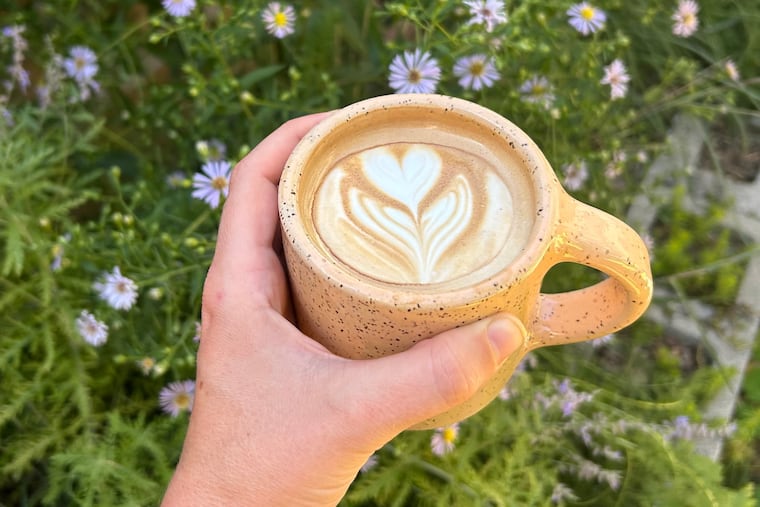
The result is a clear, gently yellow-hued cocktail, served in a Collins glass, with large bubbles that linger for an improbably long time and are dusted with corn curd ash, like furikake sitting upon rice kernels.
The cocktail uses several layers of ingredients that could have, at any point, been discarded. The primary ingredient, after all, is corn, whose first use was amazake. But its cob is given a second use. The curds rendered from the milk punch are given a third life.