Stephen Starr’s Borromini should be a showstopper. Instead, it’s a shrug.
Philadelphia's biggest restaurant opening in recent memory is a massive, glitzy Italian destination on Rittenhouse Square. The vibes are immaculate. The food...not so much.
Borromini’s 100-layer lasagna looks like a miracle of noodle engineering. It’s the kind of “more is more” pasta spectacle that commands its own showcase box on the menu, puts curious diners in chairs, and requires a team of three dedicated attendants in Borromini’s vast kitchen to meticulously construct its layers — a tall stack of pasta sheets alternating with microscopic schmears of ricotta, creamy béchamel, and tomato sauce — that get baked, sliced, then crisped on one side, to be served atop a puddle of pomodoro.
Its intricate ridges are beautiful to behold. But to eat, this lasagna is more like a doorstop than a showstopper. The layers are so tightly compressed, it’s closer to a muddled mush than a deck of delicate harmonies, a squidgy blur of cheese and dough whose individual virtues could have been more compellingly conveyed in 10 layers rather than 100. Add a slow-cooked, jammy tomato sauce that leans sweet rather than bright and lively, and the final effect is one-dimensional. It has subtly evolved over the course of my multiple visits, but each time it prompted a disappointed shrug.
That’s not the thrill I expected from the marquee dish at this glitzy $20 million, 320-seat trattoria, whose dramatically lit column facade glows red over the northern edge of Rittenhouse Square. Stephen Starr’s first major hometown restaurant in years (and his 41st overall) is arguably the biggest opening in Philly in 2025. He went all out transforming the former Barnes & Noble into what many have aspiringly dubbed “the Italian Parc,” a two-story Roman-themed palace with vaulted ceilings, an intricate stone chip floor, and walls lined with 3,000 bottles. Starr brought on legendary New York restaurateur Keith McNally to design the space (Starr has syndicated McNally’s Pastis bistro to multiple cities since they partnered to revive it in 2018).
He also enlisted a hive of respected culinary minds to create the menu over the course of 90-plus tastings, with his corporate food team and Borromini’s executive chef, Julian Alexander Baker, collaborating with Mark Ladner, the former chef of New York’s now-closed Del Posto, where Starr first tasted a magical rendition of that lasagna many years ago.
Ladner initially declined to recreate that decades-old hit when first asked. Starr should have listened. But Ladner — now the chef at Babbo, which Starr reopened in New York in October (and where a meaty version of that lasagna is also a menu feature) — ultimately gave in.
There are plenty of other, more admirable dishes on the menu here, including the focaccia di Recco from another consulting chef, Nancy Silverton, the LA star with whom Starr runs Osteria Mozza in D.C. The hot crisp of her flatbread’s wafer-thin rounds sandwiching tangy stracchino cheese is the one dish I order every time. I loved the contrast of silky braised oxtail that gathered in the frilly-edged ribbons of the house-extruded mafaldine. And the calamarata pasta loops, paired “Sicilian lifeguard”-style with look-alike rings of tender squid, chili spice, and golden raisins, is exactly the kind of delicious, obscure regional dish that shows how infinitely surprising the world of pastas can be.
But Borromini is more about polishing the familiar than unearthing regional quirks. And that big lasagna has become an apt metaphor for why Borromini’s food too often seems off. No matter how grand the ambitions of a dish (or this restaurant in general) may be, stellar Italian food comes down to finesse, touch, and soul — elements that a kitchen-by-committee cannot engineer. In a town with exceptional Italian restaurants in varied styles, not to mention a population with a deep reservoir of red-gravy family nostalgia, the room for error is slim for a dining experience that averages just under $80 per person (before tax and tip).
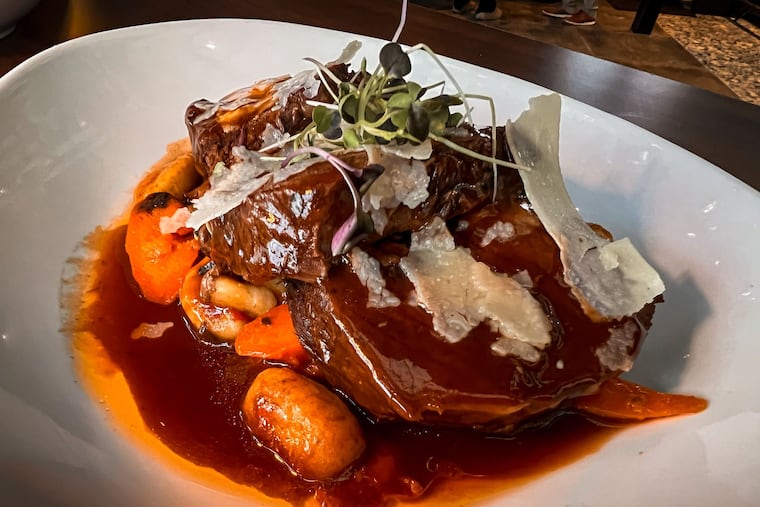
The crisply fried squash blossoms stuffed with lemony ricotta and the hamachi crudo dressed simply with Meyer lemon and olive oil were tasty, if not necessarily distinctive. The arugula with shaved raw artichokes would be my salad pick. The massive, fork-tender osso buco, a 1-pound shank drizzled with brown jus over saffron risotto with a marrow spoon poking skyward from its bone, is as close to textbook Milanese perfection as Borromini gets.
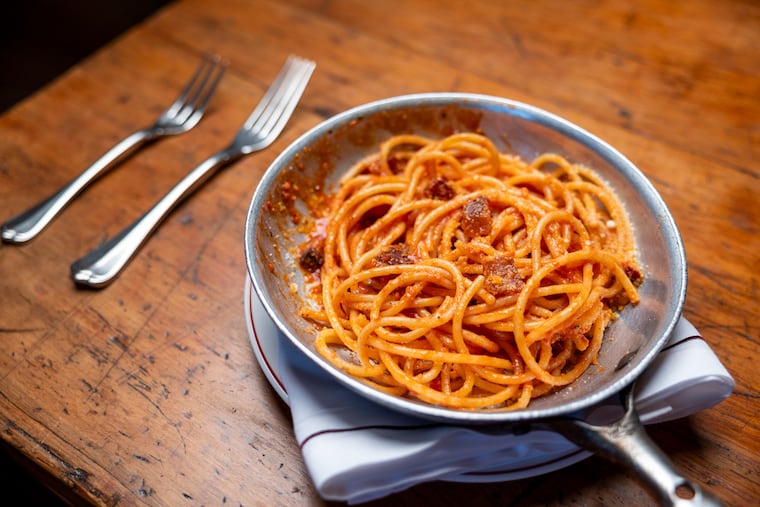
Borromini’s kitchen, however, struggled with consistency on several other traditional dishes. My favorite of the restaurant’s minimalist Roman-style pastas is the bucatini all’Amatriciana that’s brought to the table in the pan. But will you receive the version I tasted most recently, its simple tomato sauce vividly infused with the juniper- and pepper-sparked savor of properly rendered guanciale? Or will it taste bitter from the scorched nubs of cured pork I encountered at a previous meal?
I might agree with my Italian server, Thomas, that Borromini’s carbonara is one of the best I’ve tasted in Philly, its mezze rigatoni tubes glazed in a golden shine of well-tempered eggs and guanciale fat. Too bad it was already cold when I took a bite the moment it arrived at my table.
A number of the pastas were notable, including a spaghetti bright with lemon, butter, and pasta water, a deft display of minimalist satisfaction. I was also a fan of the Sardinian gnochetti with blue crab, uni, and tomatoes that brought a burst of seafood savor some other pastas lacked — like the linguine with clams that was virtually brothless, or the lobster spaghetti that was bountiful with crustacean but whose sauce lacked depth. The short rib agnolotti might have been excellent had their dumpling dough not been so thick.
The cacio e pepe has been consistently disappointing. Its peppercorn-speckled noodles were pasty and dry, with no halo of creamy sauce to spare. The clam pizzetta was a floppy round of spongy dough piled high with chopped Italian clams that radiated raw garlic. The $125 bistecca alla Fiorentina, a 2-pound prime porterhouse centerpiece for sharing, was so achingly oversalted, it wasted an otherwise stellar slab of beef that had been lovingly massaged with confit garlic butter.
The kitchen’s other stations turned in mixed results, as well. I much preferred the crispy-skinned dorade with salsa verde to the branzino with white beans, which was also horrendously oversalted. The eggplant parm was stiff with too much breading, though the splurge-worthy bone-in veal parm for $72 was good (unfortunately, they’ve since resorted to a boneless version). The lamb chops with salsa verde were more memorable, as was the rabbit cacciatore served in its metal crock with peppers and Castelvetrano olives, a rustic gem inspired by feedback from yet another consulting voice, the legendary Lidia Bastianich.
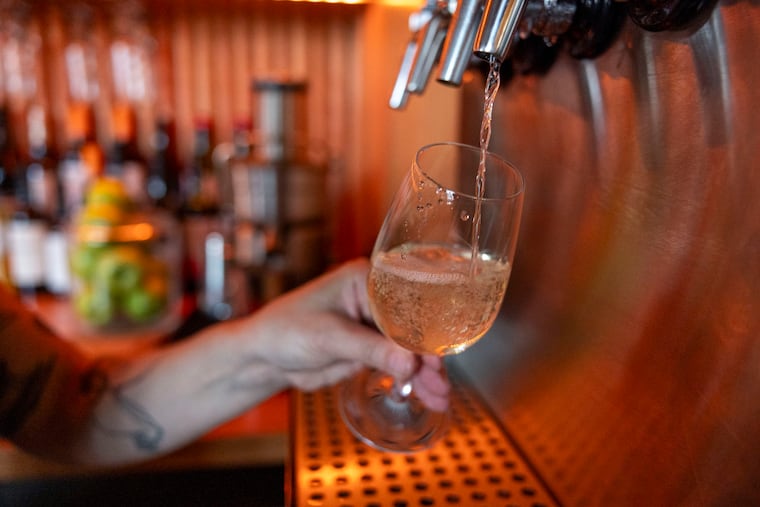
It would be wrong to call Borromini a total bomb. Any place with a steady deluge of crowds putting it on target to generate $20 million in annual revenue has to be doing something right, and that would be its La Dolce Vita vibes. These sprawling rooms are a boisterous and glamorous crossroads for a broad swath of Philadelphians out for a night in their finest — fueled by flutes of “mini-tinis” (which my guest gleefully declared “filthy” with salty burrata brine), sweet-side Negronis, and Cynar-spiked espresso martinis.
Starr’s greatest talent may be his gift for building energetic public spaces that feel as if they’ve always been there. And while Borromini lacks the corner space and open cafe windows that allow Parc in its al fresco moments to become part of the fabric of Rittenhouse Square, McNally has crafted a Fellini-esque stage set of leather booths, honeyed light, and linen-draped wooden tables that feels magnetic — especially the undulating copper bar on the ground floor, where an intriguing collection of 100-plus amari and digestivi awaits.
All my servers — five different people over the course of my visits — were personable, outgoing, and well-prepared to make smart pairing suggestions.
I should have stuck with their suggestions to indulge those digestivi with desserts. The airy tiramisu here backfired, its lightweight cloud of whipped mascarpone lacking the richness to counter an overzealous cocoa shower and the wickedly acidic twang of ladyfingers soaked in espresso.
My favorite finish was sour in the best way possible: a hollowed-out lemon stuffed with sweet-tart lemon sorbetto. You’ve maybe seen something just like this in your neighborhood Italian place, brought in from the Italian frozen dessert powerhouse Bindi. But this was Borromini at its best, transforming something familiar into a better, fresher, more elegant version of itself. It will make you smile even as it puts a pucker on your face.
Borromini
1805 Walnut St., 215-596-1000, borrominiristorante.com
Lunch served Monday through Friday, 11 a.m. to 3 p.m. Dinner served Sunday through Wednesday, 5 to 10 p.m.; Thursday through Saturday, until 11 p.m. Brunch Saturday and Sunday, 10 a.m. to 3 p.m.
Dinner pastas and entrees, $19-$72.
Wheelchair accessible.
There are several gluten-free options, including high-quality gluten-free pasta, which can be substituted with most sauces.
Drinks: The bar program offers 19 Italian wines by the glass, ranging from $12 house wines to $27 Franciacorta, a deep bottle list with more prestige options, Italian cocktails heavy on the expected spritzes and Negroni variations, and a list of nearly 100 amari and digestivi.
Menu Highlights: focaccia di Recco, squash blossoms; hamachi crudo; artichoke-arugula salad; pastas (spaghetti al limon, gnochetti sardi with crab, oxtail mafaldine, spaghetti all’Amatriciana, carbonara, “Sicilian lifeguard” calamarata); polpetta; rabbit cacciatore; dorade; osso buco; sorbetto al limon.