Fleur’s brings ambitious French fare and a much-awaited chef comeback to Kensington
Its prices may need tinkering.
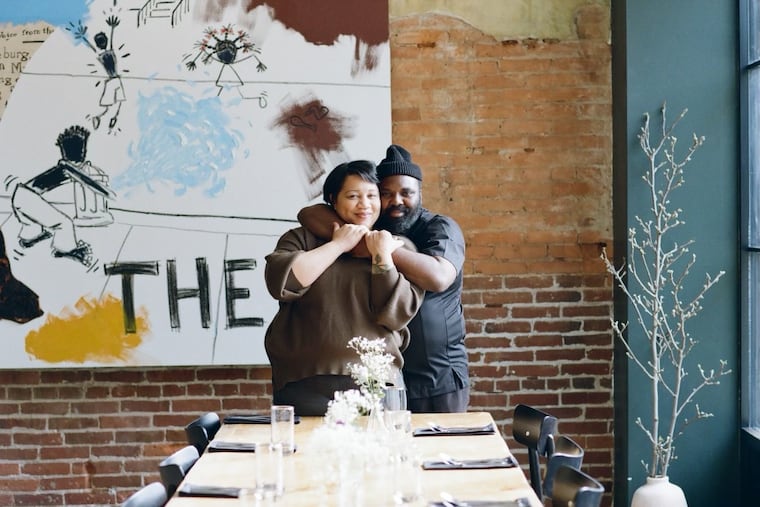
A chef’s career rarely follows a straight line, but as I settled into one of the cushy circular nooks at Fleur’s for a memorable meal, it was clear to me that George Sabatino’s story had detoured away from the spotlight for far too long.
Now a chef-partner at this gorgeous new Kensington restaurant, Sabatino was one of the most promising and inventive young chefs in Philadelphia a decade ago, spinning “herbivore” tasting menus, sous-vide shrimp ceviches, and crispy lamb rillettes at Aldine, his chef-owner debut near Rittenhouse Square that earned three bells in 2015.
When that restaurant closed three years later, however, Sabatino embarked on a journeyman’s path that never quite found sustained footing. He dipped back into his previous home in the Safran Turney universe for a spell as culinary director (reopening Lolita, helping with Bud & Marilyn’s at the airport, Good Luck Pizza Co., and Darling Jack’s), tried his hand at farming, worked as a private chef, and then helped stabilize Rosemary in Ridley Park.
But Fleur’s is the first time in eight years Sabatino has been able to cook his own food — a style that’s now matured beyond the molecular gastronomy tricks of his youth. He’s now focused more on using seasonality and fermentation to elaborate on some classic French ideas. A scallop gratin cradled in its shell, for example, appears familiar enough, evoking Fleur’s brasserie theme with an aromatic whiff of truffle butter. But when I cracked its toasty crumb surface, those sweet scallops were enveloped in a silky puree that traveled to unexpectedly earthy depths thanks to a celery root soubise touched with nixtamalized corn miso. This was just the first of many bites that reminded me why I had been looking forward to Sabatino’s comeback for some time.
An impressive larder of canned produce displayed in jars behind the bar adds inspiration across the menu. There’s watermelon vinegar in the mignonette for raw Island Creek and Savage Blonde oysters, a vivid memory of distant summer soon to be replaced with the tart essence of fall pumpkin. A custardy mustard infused with seasonal fruits — preserved peaches at a recent visit — comes layered beneath a perfect terrine of pork and pistachio wrapped in bacon with crunchy beet-pickled vegetables à la Grecques.
Even a platter of briny middleneck clams on the half shell get a boost from a house-fermented hot sauce made from Fresnos and dried ancho chiles; the simple combination of tangy spice and ocean spray elevates this often-undervalued mollusk into a star-worthy role at Fleur’s.
The raw bar’s shucking window sits at the crook of the long bar, which bends to follow the elbow-shaped contour of this historic space that is, in many ways, having a comeback of its own.
You could easily miss the understated green facade of this five-story building on North Front Street, its entrance partially obscured by the rumbling girders of the Market-Frankford El. Even friends of mine who live mere blocks away were unaware that the old Fluehr’s Fine Furniture store — active from the 1880s through the early 2000s, but vacant for 17 years — had been renovated and revived, with plans to transform the L-shaped building into a boutique hotel, restaurant, and roof-deck event space.
Aside from the spelling modification to make the name sound French, it took plenty of vision for Sabatino’s partners, Starr alums Joshua Mann and Graham Gernsheimer, to conjure an upscale brasserie as an anchor for this project. One of the city’s best Puerto Rican restaurants, El Cantinflas Bar and Taco Place, has been a mainstay around the corner. But in 2022, when Mann and Gernsheimer first walked in and fell in love with this quirky space, none of the places that have since marked gentrification’s steady march northward into Kensington — Starbolt, Lost Time Brewing, Rowhome Coffee, American Grammar, Lee’s Dumplings and Stuff — had opened.
The restaurant is phase one of the building’s ongoing development. And designer Lisa A. Calabro of cfTETTURA projects did a stellar job reimagining the deceptively large room into an inviting 130-seat space, preserving the mezzanine and art deco pendant lamps from Fluehr’s, then lining the dining room floor with geometric tiles and a chain of plush, semicircular teal banquettes that lend the dining experience an uncommon coziness.
Even more intimate is the “hot tub,” a partially enclosed room for up to eight diners in back. It’s an intriguing nook where conversation is easy and the well-informed, outgoing servers drop details on everything from the smoked beef heart grated over the roasted carrots with puffed amaranth to the pickled-grape prize at the bottom of Fleur’s signature martini (exceptionally aromatic with a French-y touch of Pineau des Charentes). Ultimately, I preferred being part of the date-night energy in the main dining room, even if midweek crowds have been light.
That’s perhaps no surprise, given that the check average of $71 (before tip and tax) hits a splurge level this corner of Kensington hasn’t seen to date. There’s solid value in the daily happy-hour specials, when you can snack on gluten-free frites crisped in beef tallow ($6) or a generous petite plateau from the raw bar ($40) to go with $8 glasses of French wine.
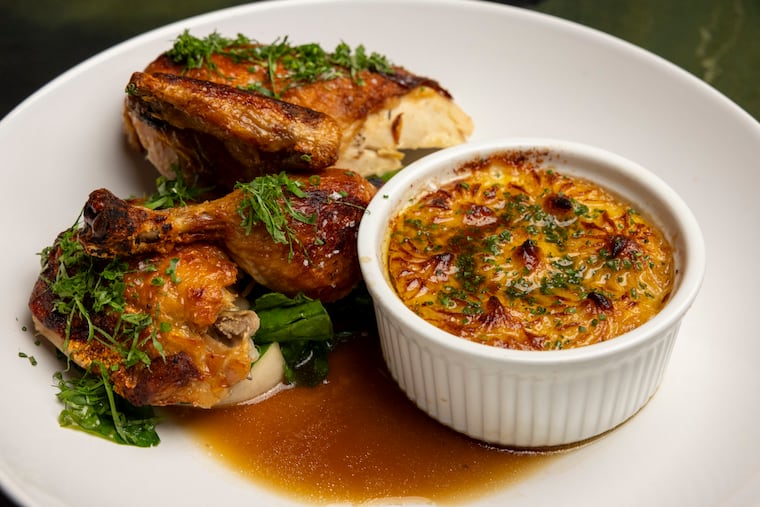
But Fleur’s regular dinner menu may oblige some light price-adjusting until it hits the sweet spot to attract a steady flow of neighborhood regulars. Sabatino’s roasted half chicken, for example, has instantly strutted into the top tier of my favorites, cured with duck fat-koji butter for a few days before it’s roasted to a crisp alongside a tub of impossibly good Duchesse mashed potatoes laced with Gruyère cheese. But at $39, it’s more expensive than similarly excellent chickens at Vernick Food & Drink, Parc, Honeysuckle, and Picnic.
Sabatino’s cooking is generally good enough to merit destination status, with a few exceptions. But in the tradition of ambitious new restaurants becoming pressure tests for the spending limits of a neighborhood in transition, Fleur’s will be an intriguing case to follow.
As it stands, aside from the chicken and a tasty cod in brown-butter meunière garnished with multiple varieties of pickled beans and caper berries, the entrees weren’t necessarily the highlights of my meals. The hanger steak frites, cooked sous-vide then finished to order, lacked the satisfying chew of a good steak properly cooked from raw. The Parisian gnocchi, the menu’s only sub-$30 entree, were a fine vehicle for a delicious ragout of Mycopolitan mushrooms, but the deep-fried plugs of choux pastry dough themselves were dry.
The most exciting bites here can be found among the more affordable small plates and raw bar offerings. Sabatino’s whitefish tartine is a wonder of textures and subtle flavors — the smoked fish salad layered between a bavarois cloud of fennel-steeped whipped cream beaded with salty trout roe and a toasty slice of duck fat brioche so good that I was stunned to learn it’s also gluten-free. There are tart shells stuffed with creamy uni custard. The dashi-poached shrimp cocktail is butter-tender and full of flavor. The zesty, hot-sauce spiked beef tartare comes decadently mounded over a roasted bone of melty marrow.
Sabatino’s talent with vegetables is also on full display, with half-moons of deeply caramelized onion tarte Tatin enriched with Gruyère and more of that corn miso (made for Sabatino by Timothy Dearing of the Ule supper club). Roasted rounds of sumac-cured sweet potatoes are encrusted with sunflower seeds drizzled in a sauce gribiche. Grilled caraflex cabbage is served “à l’orange” with pickled green tomatoes, preserved ginger relish, spiced peanuts, and herbs.
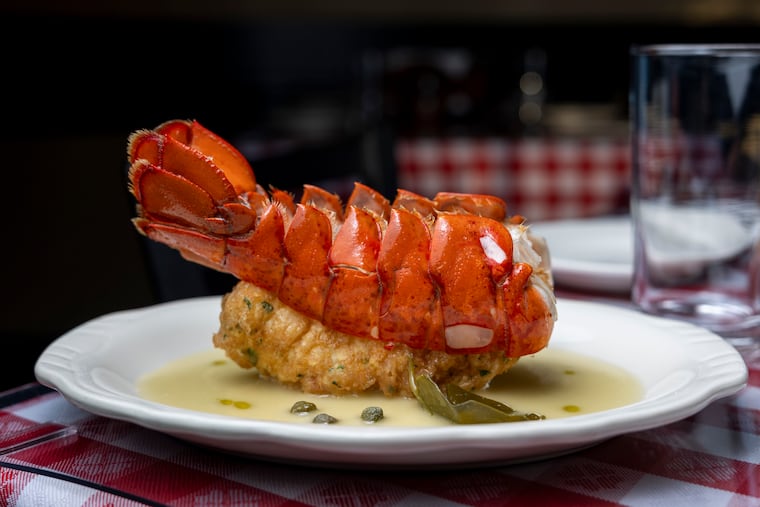
Pumpkin is also transformed into a luxuriously creamy soup with the fermented Japanese rice brew called amazake, poured tableside as an orange velouté over butter-poached lobster and crushed marcona almonds, chiles, and pickled pumpkin.
For dessert, you might go for the cheffy croissant stuffed with foie gras and white chocolate topped with sour cherry marmalade. But that croissant was even better blended with other bread scraps into a holiday bread pudding soaked with a rummy egg-nog crème anglaise garnished with brandied whipped cream.
My favorite finale here, courtesy of sous-chef Zoe Delay, is a regal take on the Mont Blanc, a brown-butter shortbread shell filled with brandied apples and a mountain of piped chestnut crème diplomate frosted with a peak of ginger whipped cream. The pastry first found popularity in France in the late 1800s.
Coincidentally, that’s around the same time the Fluehr’s family was opening its furniture store on North Front Street — just as Kensington was earning its industrial reputation as the “workshop of the world.” How fitting that it should mark the sweet revival of this venerable space. It’s a delicious comeback in every sense of the word.
Fleur’s
2205 N. Front St., 215-278-7675, fleursphilly.com
Dinner daily, 5 to 10 p.m.
Entrees, $25-$44.
Wheelchair-accessible.
About 85% of the menu is gluten-free or can be modified, but highlights include gluten-free frites and gluten-free brioche for the whitefish tartine.
Menu highlights: scallop gratin; smoked whitefish tartine; clams on the half-shell with house hot sauce; pork and pistachio terrine; squash velouté with lobster; marrow bone beef tartare; grilled sweet potato; roasted carrots with grated smoked beef heart; roast chicken; cod; Mont Blanc tart.
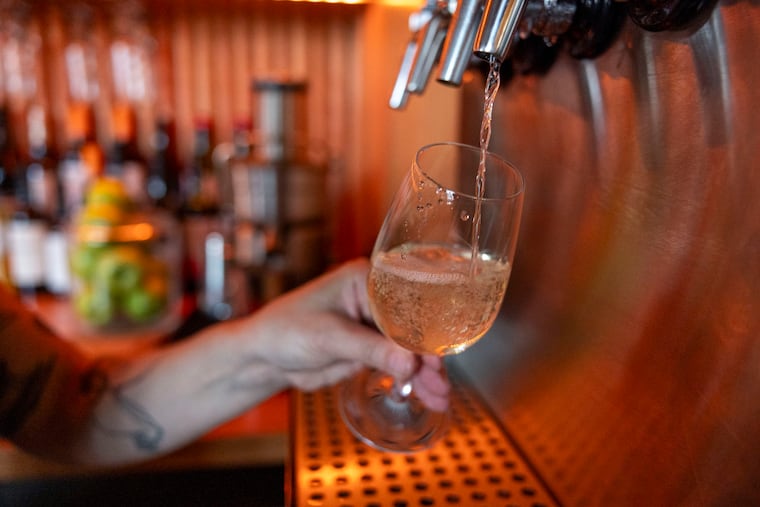
Drinks: The French theme and focus on seasonality and fermentation extends to the beverages, beginning with cocktails like the house martini kissed with Pineau des Charentes and a pickled grape, or the French 75-ish Esprit de Corps with sage syrup and cognac infused with Lancaster County trifoliate oranges. The wine list is entirely French, focused on lesser-known indie bottles, like a petit salé blend from Château Roquefort. Considerable effort has also been poured into zero-proof options such as the clarified chocolate-beet-ginger punch called Coupe Rouge.