Tom Culton, celebrity farmer, has died at 44
Tom Culton grew extraordinary produce for chefs like Eli Kulp, Thomas Keller, and Cristina Martinez, and helped revitalize the Philadelphia farmers market scene with the reboot of Headhouse Market.
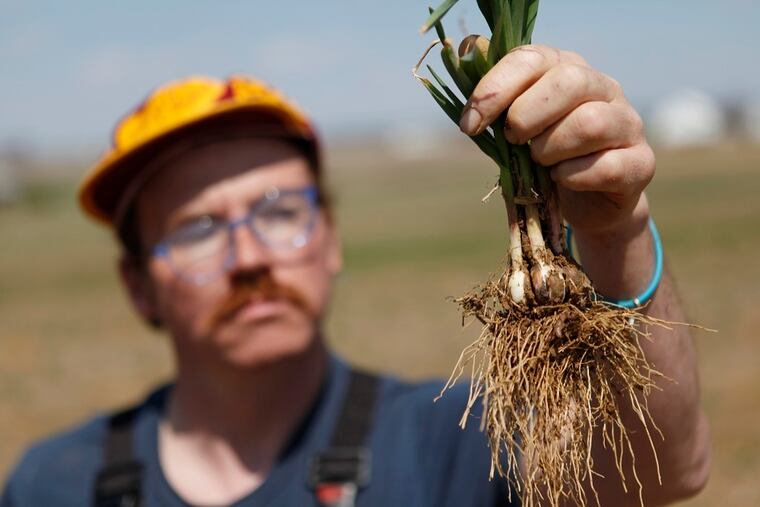
Tom Culton, the free-spirited and frequently barefoot farmer whose organic heirloom Lancaster County produce inspired a generation of Philadelphia chefs, earned him national renown, and helped jump-start the city’s farmers market renaissance, died on Wednesday, Aug. 20, from natural causes. He was 44.
“Man, he was a lot of different things,” said Eli Kulp, who worked with Mr. Culton between 2012 and 2014, when he was the chef at Fork and High Street on Market. “If I had to boil it down, he was the most brilliant farmer I’ve ever known.”
“He was a pioneer,” said Ian Brendle, a friend and farming contemporary of Mr. Culton’s whose family operates Green Meadow Farm in Gap, Pa. “I’ve never known anyone to focus so obsessively on old, forgotten vegetables, especially the French heirlooms that were his specialty.”
Mr. Culton fell ill last week while working on a tractor at Tidal Rhythm Organic Farm, the 38-acre plot of land overlooking the Chesapeake Bay on Virginia’s Eastern Shore, where he had moved around Christmas in 2021 from Lancaster County with his wife, Alicia Anderson. The duo spent the three subsequent years restoring the land. The 2025 growing season was the first that it was finally USDA certified organic, she said.
“He poured his heart and soul and everything he had into the land, but it had not rained for a very long time and all the plants were in stress,” Anderson said. Mr. Culton had not slept for days and his immune system was run down, she said. After becoming dizzy and sick, he died later that evening from electrolyte imbalance and cardiac arrest.
Mr. Culton burst into Philadelphia’s food consciousness with the reboot of the Headhouse Farmers Market in 2007. He was a descendant, on his father’s side, of the Chickasaw Nation, and on his mother’s side, of a German Anabaptist family that had farmed its 53 acres of land in Silver Spring, Lancaster County, since 1741. Dressed in a wide-brimmed straw hat with a billowing silk scarf and often in his grandfather’s lederhosen — but rarely any shoes — Mr. Culton’s impish grin, cracked-tooth smile, and wild-whiskered charisma quickly became one of the market’s biggest pulls.
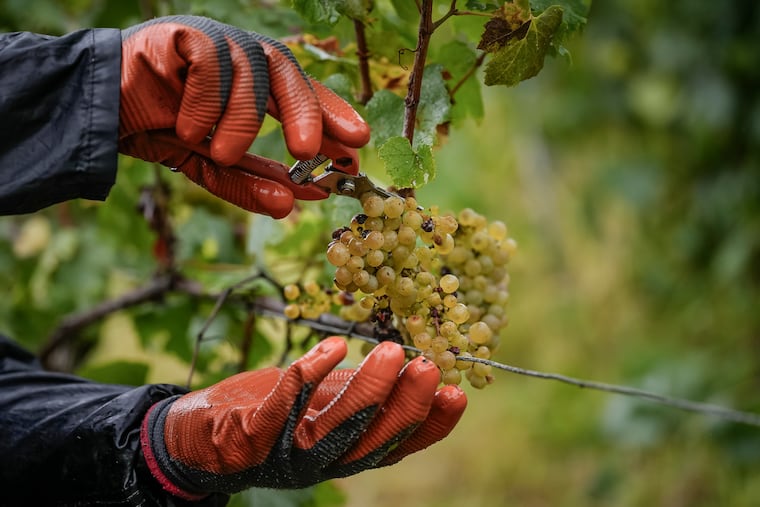
Mr. Culton grew extraordinary vegetables that few of his customers had ever seen. His flageolet beans, Rouge Vif d’Etampes Cinderella pumpkins, and purple brussels sprouts were a far cry from the standard cash crops cultivated by his forebears.
Mr. Culton took over the farm at age 20, when his mother, Nancy Fackler, died in 2001, and worked the land for two decades with his step-grandfather, Pete Herchelroth. His curiosity, old-school methods, and European travels produced some unique delights, including precious spring garlic, tiny artichokes, fragrant melons, and rare varieties of tomatoes, along with heirloom red Piedmont polenta and Basque Espelette peppers that both made it back through U.S. Customs as seeds hidden in his boots.
“The way I view it, farming nowadays is like abstract outsider art,” Mr. Culton, a fan of punk rock and an avid skateboarder, told the Inquirer in 2014. “It’s who you are, not a farm manual or text. It’s a feeling, a smell, and if it takes time, it’s worth it.”
Over his first decade running the farm, Mr. Culton’s eccentric approach won him many fans, with as many as 70 restaurant customers between Philadelphia and New York, including Zahav and Thomas Keller’s Per Se, by 2010. Chefs were impressed by his determination to grow the finest vegetables no matter the short-term cost. Kulp cited a year that Mr. Culton sacrificed a fall crop of Italian chicories in order to bolster the next year’s harvest. “By the following spring, they emerged stronger, sweeter, and more flavorful than anything you could imagine,” he said. “They grew so dense and compact they almost looked like succulents.”
His fame growing, Mr. Culton landed a spot in Sotheby’s “Art of Farming” auction of rare produce and began appearing in national magazines such as Bon Appetit; Top Chef’s Tom Colicchio wrote about a trip to Mr. Culton’s farm for Food & Wine where they feasted on apple sauce and stuffed hog’s maw (stomach) cooked by Herchelroth. Mr. Culton even showed up to Late Night with David Letterman having toted a 70-pound Lunga di Napoli squash by train from Lancaster to Manhattan.
Mr. Culton befriended musicians such as Bonnie “Prince” Billy, the stage name for Will Oldham, who played concerts at Mr. Culton’s farm and collaborated with him on at least 20 songs, using the farmer’s produce and words for inspiration. “Tom was a sensualist in the way that he seemed to be trying to wring out of his existence all of the potential reasons for being alive and relishing being a human being,” Oldham said.
By 2015, Mr. Culton’s fortunes had begun to change. The Headhouse market declined to invite him back that year with no public explanation, and multiple chefs, including Kulp, decided to stop purchasing from him, citing erratic deliveries that were too challenging for businesses with menus that rely on consistency. Some chefs remained loyal customers, including South Philly Barbacoa’s Cristina Martinez, who bought Zapatista red flint corn from Mr. Culton to make tortillas for her restaurants until 2019. But it was the beginning of Mr. Culton’s withdrawal from the Philadelphia food scene that, by the pandemic, was almost complete.
“None of that takes away from the brilliance he brought to the table,” Kulp said. “I’ll always respect his talent and the moments of joy he created when he was at his best.”
Anderson said that during those more fraught years, Mr. Culton was battling with alcoholism and also caring for Herchelroth, who died in 2023. The couple first met at an organic agriculture conference in Kentucky in 2013, after which Mr. Culton wooed her by handing her an ear of red corn he’d smuggled from Italy, which she planted to great success. They reconnected in 2018, when she was working for the Penn State Agricultural Extension researching hemp, a crop Mr. Culton was licensed to grow, and the two were married in 2019.
Anderson said Mr. Culton was sober for the next five years. The two undertook a major transition to reset their lives when he sold the family farm, disconcerted by encroaching development and the persistent drift of pesticides from neighboring farms onto their land, and relocated to the slower-paced lifestyle of Virginia’s Eastern Shore.
“He told me, ‘I’ll always love working in the soil, but the ocean calls to me,’” Ian Brendle said.
Indeed, in addition to taking daily pictures from their property of sunsets over the Chesapeake Bay, Mr. Culton began working with local watermen to learn how to harvest the wild oysters, bay scallops, and shrimp that surrounded them.
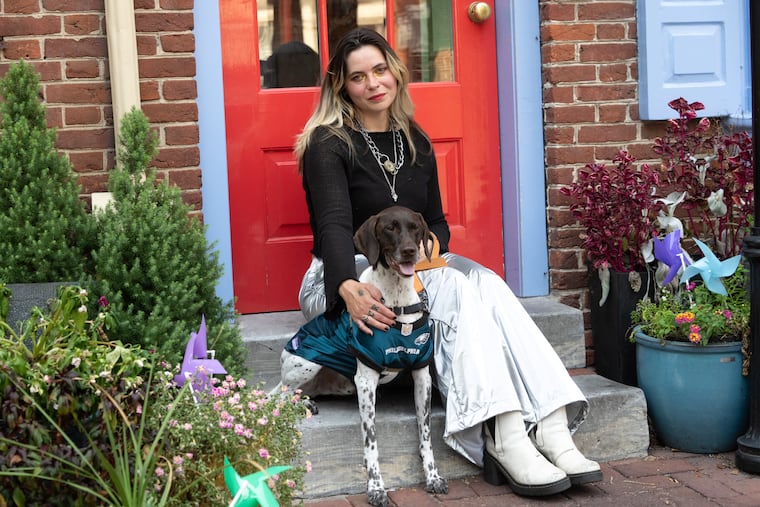
The couple threw themselves into getting 12 acres of their new farmland up to speed, working to restore the soil’s health. They slept in a tent in their fields with their rescued beagle, Chub, to protect their radicchio from marauding deer, enduring the biting cold from October through December.
Earlier this year, they leased an additional 80 acres in Machipongo, 21 miles south, in order to grow organic produce on an even larger scale for distributors such as Natoora and Baldor. With growing connections to the dining scenes in Virginia Beach and Washington D.C., where James Beard award-winning Oyster Oyster had begun using some of Tidal Rhythm’s produce, it seemed as if Mr. Culton, with Anderson’s help, was on the verge of a major comeback.
“I first met Tom 12 years ago at the back door of Le Bec-Fin,” Oyster Oyster chef-owner Rob Rubba said. “He arrived with a burst of energy, unloading crates of the most unique produce I had ever seen. His enthusiasm was infectious, and you could tell he wasn’t just delivering food — he was delivering something he believed in."
Rubba was particularly interested in Mr. Culton’s project to grow artichokes on the Eastern Shore, which he’d not seen before. He planned to grill them “like little treasures” and turn the leaves into an amaro for a beverage pairing. “This May, the artichokes arrived and they were stunning, along with some of the best petite pois I’ve ever tasted,” Rubba said. “His passing leaves a void, but his legacy — his passion for growing, and his eccentric spirit — will continue to inspire all who had the privilege of knowing him."
Anderson plans to continue the mission at Tidal Rhythm, but is still assessing how much of it she can sustain. She has launched a GoFundMe page to help with the farm’s finances. A memorial celebration is also being planned for Mr. Culton in early September, with details to be shared soon on Tidal Rhythm’s Instagram page.
Mr. Culton is survived by Annie Ebersole, a half sister on his father’s side, and an aunt, Candy Culton, whom he was close with.
In the meantime, Anderson takes solace in appreciating the row of sunflowers Mr. Culton hand-planted around the border of one of their farm plots, which, now in bloom, regularly draws passersby to stop and take pictures.
“He brought so much joy to the community,” she said, “and he’s doing it still.”