I tasted over two dozen falafels this summer — here’s what I learned
For The 76, I became a scholar in those delightful crispy chickpea fritters.
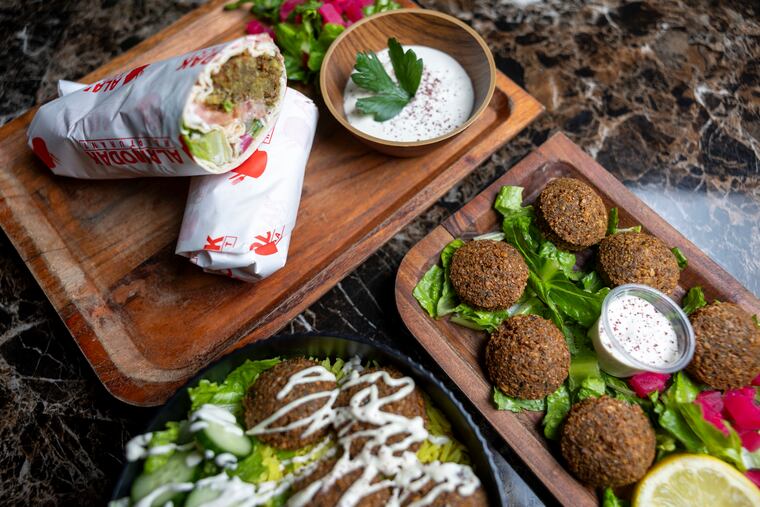
Eating at over 20 Middle Eastern restaurants as a scout for The Inquirer’s 76 list may seem like a daunting task (and in some ways it was). But when your search includes eating falafel over six weeks, the quest becomes a delightful lesson in texture and taste.
My beat included Lebanese, Yemeni, Afghan, Palestinian, Jordanian, Turkish, Egyptian, Syrian, and Moroccan restaurants, which meant I became a falafel obsessive, tasting over two dozen falafels. At every restaurant I went to I would ask my dining companions to evaluate the dish. And I would ask:
Could I feel the crispiness of the exterior by tapping on it? Was there a soft, herb-hued mush inside when I tore it in half? Did the earthy, nutty flavors of warming spices like cumin, coriander come through with each bite?
» READ MORE: My favorite falafels in Philly
No matter how it’s made — legumes soaked overnight, blended (with spices, herbs, and sometimes flour), and fried — falafel is about the herbs, spices, and legumes that come together to make the palm-sized rounds that are perfect on platters, in a sandwich, or as a snack by themselves.
While falafel originates from Egypt, there are various techniques used throughout the Middle East to create this popular dish. Growing up with many Arab friends, I knew falafel looked and tasted a bit different depending on the chef’s country of origin — after all, Middle Eastern cuisine is not a monolith.
What was fascinating to learn were the specific differences in technique and ingredients within Philly restaurants. Palestinian falafel, like those served at Al-Baik Shawarma, tend to have bronze exteriors with slightly spicy, earthy, light-green interiors. Egyptian falafels use fava bean and chickpea mixes fried to perfection for the most satisfying crunch at Cilantro near South Street. Fluffy Lebanese falafels are made gluten-free and with baking soda in Collingswood at Li Beirut.
My journey revealed the rich tapestry of falafels that make up this city. After a summer of munching, Cilantro, Al-Baik, and Apricot Stone falafels live rent-free in my head.
But most importantly, these palm-sized legume balls were a clear reflection of just how expansive and diverse the Middle Eastern dining landscape is in Philadelphia. One that only takes sinking your teeth into super-satisfying falafels to experience.