2026 may be the year of the listening bar in Philly
The line between DJ and bartender is blurring.
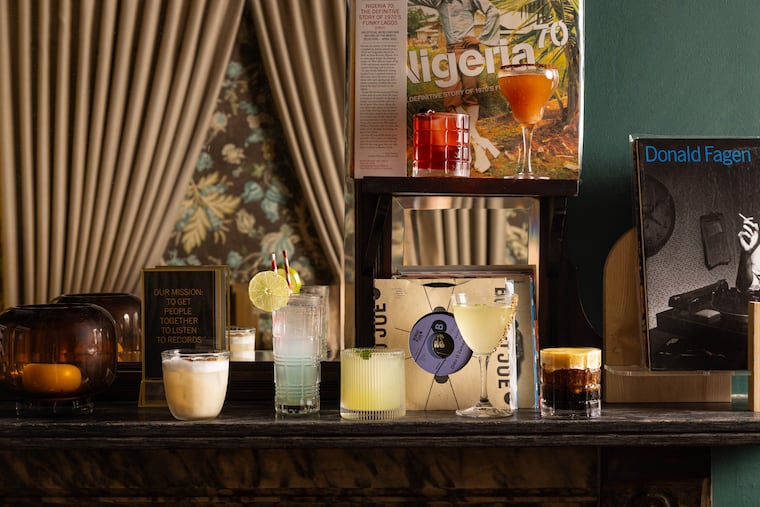
A curious thing is happening behind bars: The bottles of liquors and liqueurs are disappearing, stored somewhere unseen. Instead, the backbar shelves are stacked with vinyl records. And the sound systems are also very, very good.
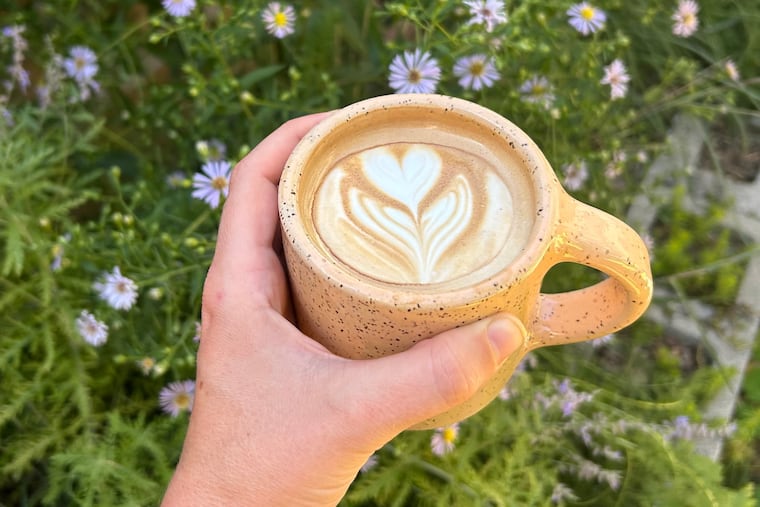
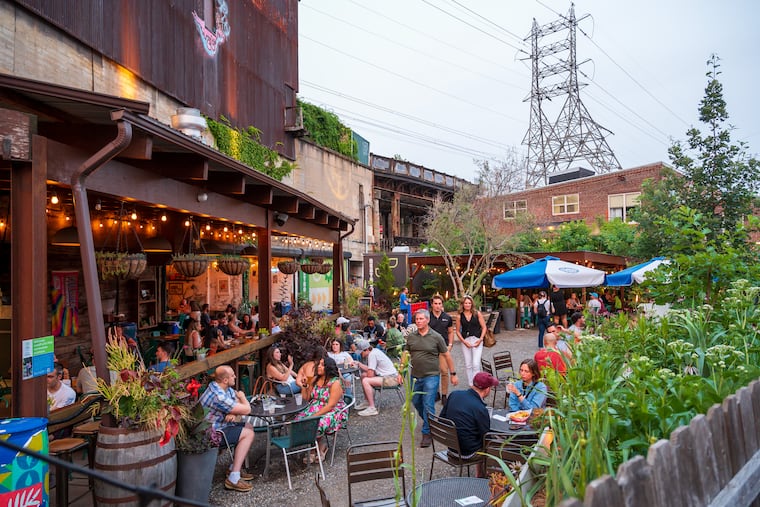
In the last few years, as the speakeasy trend has waned, listening bars have popped up all over, including in Philly. The perpetually full 48 Record Bar, above Old City standby Sassafras, boasts an “ultra-high-fidelity audiophile vinyl sound system.” Solar Myth, on South Broad Street, might be one of the coolest places to grab a drink — whether you’re looking for coffee or wine — and discover music you might never have otherwise.
Percy, which opened in May, has a listening lounge where you can sip on their house-made wines and spirits in what looks like the set of That ’70s Show. When a DJ isn’t spinning, the staff plays vintage reggae, punk, and calypso records — including ones that co-owner Seth Kligerman’s dad collected in the ’70s and ’80s, ranging from Jimmy Cliff to The Clash.
“The first thing I did when we got our listening room speakers hooked up ... I blasted the New York Dolls, my dad’s favorite band,” said Kligerman. (Percy’s speakers — four original Altec Lansing A7 Voice of the Theatre — are also from the ’70s.)
Stephen Starr’s LMNO has a listening lounge outfitted with a hi-fi sound system and record collection spanning soul, funk, disco, and Latin genres. “The focus is on immersive room sound rather than headphones — so the music feels shared, not isolated," said Kayla Hagar, LMNO’s general manager. Programming ranges from DJ-led nights, vinyl-focused sessions, and ambient background listening. Once a week, at LMNO’s “Off the Walls” series, guests are encouraged to browse their vinyl wall and select records to be played. It draws Fishtown’s “younger creative crowd, an art and music-oriented demographic — audiophiles, record-collectors, and music lovers," said Hagar. “Not necessarily a heavy mainstream dance-club crowd, but more niche, design-forward, scene-aware visitors.”
In 2024, after Milkcrate Cafe in West Philly and Fishtown called off vinyl nights, it seemed like the budding listening room boom may have been a scratch. But in the year and a half since, the concept has spread all over the country.
Listening rooms are seemingly everywhere — in New York, Chicago, Portland, and beyond. They integrate music into drinking experiences, often weaving in Japanese influences across menus. In L.A., chef Sean Brock, famous for specializing in Southern foodways, opened Darling, a hi-fi bar inspired by Japanese jazz kissas, or cafes where listening to records is central to the experience. In Austin, the Equipment Room serves record-inspired cocktail omakases, blurring the line between DJ and bartender.
At Press Club, a “record bar” in Washington, D.C., I snacked on chicken karaage and sipped an ume- and nori-infused shochu cocktail made by the same staffer who was spinning tracks. Press Club managing partner Will Patton listens to songs repeatedly to look for lyrical themes, and develops drink flavors according to rhythm and beat. (Think funky rum for a funky song, or melancholy music translating to cocktails with long, bitter finishes.) A rotating cocktail omakase menu, featuring multiple drinks paired with bites, is based on albums, most recently by Oasis and Bad Bunny.
Listening bars are starting to proliferate the way speakeasy-style cocktail bars did in the 2010s — popularizing hidden entrances and an Art Deco aesthetic so successfully that the speakeasy concept has been adapted to Italian restaurants and cookie stores.
At the listening bars, thoughtful, elevated beverages still reign, but bars are giving more and more physical space over to vinyl collections. They’re also hosting events throughout the day, often with visiting DJs.
An Eater article recently heralded Philly’s listening lounges as the “antidote to the loneliness.” They’re community-oriented in the sense that you commune with others. (Just don’t talk too loud.)
The community-mindedness is palpable at Solar Myth, which opened in November 2022 and serves many purposes. Housed in the former Boot & Saddle, it’s still a live music venue, but it’s also a bottle shop and cafe serving pastries, tomato pie from Cacia’s Bakery, and Rival Brothers’ coffee. They have a staggering amaro list, but you wouldn’t know it by looking at the bar, which features a collection of records — organized by vibe, from chill-out to Willie Nelson, with extensive collections of Ethio-jazz and electronic krautrock. They play the music of many small, avant-garde artists. (They also sometimes employ them: A member from the Philly-based band Knifeplay works at Solar Myth. “I feel so proud playing their record,” said barista Rachel Byrd.)
48 Record Bar’s bar shelves feature a collection of about 300 records. At 35 seats, it’s small, with a living room vibe. Up a winding staircase from Sassafras, the space is draped in dove-gray curtains; sound panels are upholstered in the same fabric. The bar’s host doubles as a DJ, who spun Sade and the Temptations on a recent evening. “We call that the record-butler shift,” said 48 Record Bar creative director Joey Sweeney.
Japanese ingredients are sprinkled all over the cocktail menu: yuzu, kombu, genmaicha, matcha, and of course, Japanese whiskies.
But drinks are only part of the experience, said Sweeney. “All the elements need to sing together.” The bar also hosts tiny-desk-style live music shows, author events, and deep listening events that start at 10 a.m. on some Sundays with coffee from Thank You Thank You.
But mostly the bar’s soundtrack is whatever records are playing. Seven years ago, Sweeney went to London and visited Japanese listening bars there. He and Sassafras owner Donal McCoy opened 48 Record Bar in December 2023.
“We want to honor the tradition of these Japanese listening bars without being mawkish about it, and not doing a cosplay.”
That wouldn’t suit Philadelphia. The night I went in, I could still hold a conversation at the bar over a mock milk punch. Try that in Japan and “they will shush you,” Sweeney said. “We can’t shush you. This is Philly.”