These Philly bars are making their own liqueurs, from amaro to nocino
Pennsylvania-made amari, or bittersweet liqueurs made by macerating herbs and spices, is a nascent category. Here are the bars and small producers making amari and other bitters in house.
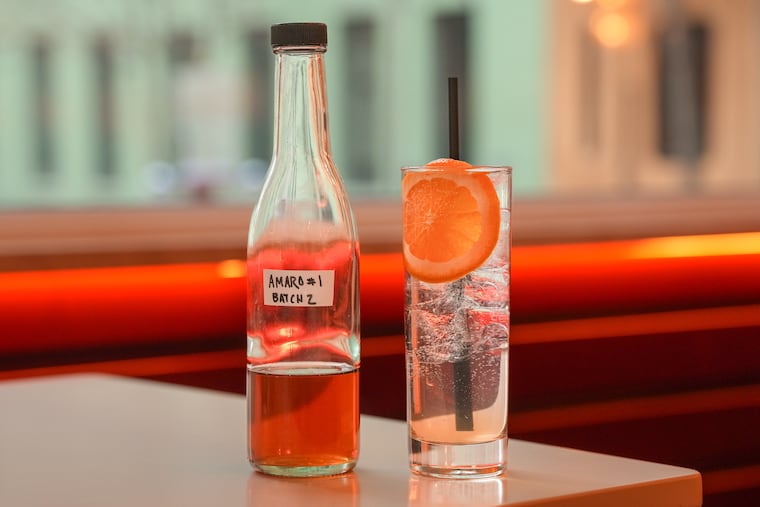
Pennsylvania-made amaro — bittersweet liqueurs made by macerating herbs and spices — is a nascent booze category. But its production isn’t restricted to larger distilleries like Philadelphia Distilling, which makes the popular Vigo Amaro. Bartenders around the city are making their own in-house.
The practice of making in-house amaro is a result of a relative lack of access. In Pennsylvania, amari are often expensive and the selection comparatively small due to what the Pennsylvania Liquor Control Board makes available. On the Fine Wine and Good Spirits website, there are only 41 amari listed, compared to 838 tequila and tequila-based drinks available.
Some bars, like Borromini and Le Virtù, maintain lists of 70-plus amari by sourcing them through what’s called Special Liquor Orders, or as Le Virtù’s general manager and beverage director Chris O’Brien explains, “something that is brought in from a smaller importer instead of getting it directly from the state.”
But bars with a limited winery, brewery, or distillery licenses — a vastly more affordable and increasingly popular path to a liquor license than a full restaurant license — can only serve beer, wine, and liquor that’s produced (or at least bottled) in Pennsylvania. That winnows the PLCB-stocked options from 41 to two, giving some establishments good reason to make their own amari.
The family of liqueurs known as amaro (Italian for “bitter”) are made from steeping botanicals in alcohol. They can be enjoyed before dinner (aperitivo) or after (digestivo). There are numerous types and subdivisions, like fernet. Nocino is a similar liqueur made from walnuts. Here in Philly, ambitious bartenders are making all kinds of variations.
Almanac
At Almanac in Old City, which is tucked above Ogawa’s omakase counter, large mason jars filled with witchy green-black liquid cover the shelving on one entire wall. Lead bartender Rob Scott brews his own amazake, a spirit typically made from fermenting rice with koji mold spores, and steeps mostly foraged nuts and leaves in Everclear and brandy for Almanac’s unique, house bitters.
Spinning one jar of amaro from October in his hands, studying the aromatics still steeping within, Scott recited each of them, “Fig leaf, apples of some sort, trifoliate orange, yomogi which is a cousin of mugwort, chrysanthemum, rosemary. We keep a book downstairs where we weigh and measure everything and write them down. Otherwise it’s easy to forget.”
They’re all autumnal flavors, and they steep for months in Laird’s Jersey Lightning, an un-aged apple brandy.
The jars of amaro sit next to about a dozen similar jars of nocino, made from local black walnuts. “You can taste a bit of astringency with nocino, but it goes away with time,” Scott said. “But if you make an amaro with, say, cardoons or wormwood, those will always be bitter.”
The nocino currently sitting on Almanac’s shelves were started on June 24, when their team harvested the nuts in Merchantville with Danny Childs, sliced them in half, put them all into 2-liter mason jars, and covered them with Everclear, a neutral grain spirit. They steeped until Thanksgiving, when the nocino was tempered with water and sweetened with Demerara sugar.
Scott offered a sample of what he called “hot nocino,” used for Almanac’s Manhattan. “We only put the nocino into cocktails because the other flavors in the cocktail temper its hotness. In order to get a true, sipping nocino, I would let this age for another six to eight months for it to become a more evolved drink. You can’t really over-extract [the walnuts], so we use them when they feel right.”
Almanac, 310 Market St., Second Floor, 215-238-5757, almanacphilly.com
Percy Diner and Bar
Percy Diner and Bar’s limited winery license means they can only serve Pennsylvania-made amari. So they decided to make their own.
Percy, which is part of the Forin group, serves Forin’s black currant and cherry fruit wines and their oaked ube and ube honey wines straight ($10) and blends them into cocktails.
They’ve used the honey wine as a base for their amaro, but more recently, the in-house selection is made with mostly neutral grain spirits. Lead bartender Sean Goldinger is hoping to slowly cultivate a series of house-made amari to feature in cocktails. At the moment he has made both a straightforward amaro with bitter orange peel, angelica root, fresh orange peel, star anise, hibiscus, gentian, wormwood, and sweetened with Demerara sugar, as well as an aperitivo that follows a similar recipe but is sweetened with a syrup made from clarified fresh-squeezed orange juice.
The aperitivo is wonderfully citrusy and significantly less bitter than the amaro. Goldinger also makes a house riff on Benedictine, a French herbal liqueur typically consisting of a couple dozen secret ingredients, with Stateside vodka and Dad’s Hat whiskey, Fell to Earth sweet vermouth, and Peychaud’s bitters. It’s infused with cinnamon, cloves, fresh thyme, lemon and orange peel, vanilla, cardamom, wormwood, fresh ginger, star anise, and angelica root, sweetened with both Demerara sugar and honey.
Percy Diner and Bar, 1700 N. Front St., 215-975-0020, percyphl.com
Le Virtù
While the majority of Le Virtù’s robust menu of amari and other liqueurs is sourced from Italy and Eastern European countries, the East Passyunk restaurant also offers some house-made options. Three house-made digestivi stand out: acqua santa (an agrumi, Italian for “citrus fruits”), genziana (a traditional Abruzzese gentian digestivo), and caffè, a coffee liqueur. These aren’t amari, as they use far less ingredients, but they serve the same purpose — helping you to digest the pasta dinner you’ve just indulged in.
For $15, you can get a generous pour of one of these digestivi. They’re all made by owner Francis Cratil Cretarola’s brother Fred, who’s been making amari since 2013, when he attended a wedding in Abruzzo, in the town of Pacentro and “became drinking buddies with a guy who taught him,” according to Francis. “Amari are much more complex, with 10 to 12 different ingredients, but these are the things Abruzzese are making in their homes,” he said.
Acqua santa is a light golden yellow. Le Virtu’s beverage director, Chris O’Brien, referred to it as a “high-octane limoncello.” It’s made with lemon, grapefruit, orange, and lime. With less sugar than limoncello, it’s much more nuanced in its citrus flavors.
For the caffè, Fred takes fresh espresso grounds and infuses them in Everclear for 30 to 40 days, turning them each week to make sure they’re evenly distributed, Francis explained.
The genziana is clear, amber-hued, and bracingly bitter, but still very balanced. It opens with a bright citrusy burst and is made bitter with gentian root, a common ingredient in amari. The root, brought to the U.S. by Francis’ friends who live near the Maiella mountains, steeps in Trebbiano or Pecorino wine from Abruzzo. Fred adds some lemon peel and coffee beans to it, along with Everclear.
Le Virtù, 1927 E. Passyunk Ave., 215-271-5626, levirtu.com
Fell to Earth
You may recognize Tim Kweeder’s name from his viral concoction, Dumpster Juice, a line of vermouths born at Bloomsday, but his making of liqueurs has come a long way. He’s the producer, bottler, salesperson, and delivery person for Fell to Earth, Philly’s first vermoutherie. It’s technically both a winery and a distillery: “The state made us get both licenses,” said Kweeder.
Fell to Earth’s liqueurs can be found at about 40 different Philly bars. Kweeder sources fresh ingredients for his fernet, like nepitella and chamomile, from Green Meadow Farms. He sweetens them with blackstrap molasses from Bucks County, then blends them with a neutral grain spirit and lets them sit for a week before blending the tinctures.
The base of his amaro starts with spruce tips from Green Meadow. “There’s a two-week window where you can forage for them, between late March and April. I throw them all into a big vat with neutral grain spirit ... That becomes a base for amaro, and I build on top of that, blending in other tinctures,” he said.
“Though most of our ingredients are from the Mid-Atlantic, we have a tiny ‘spice cabinet’ of traditional amaro ingredients that don’t grow here, like gentian, cinchona (a bark that yields quinine), etc. which we use like chefs would use seasonings. We get these locally from Penn Herb Co.”
If you can’t decide whether you’re looking for a nocino or an amaro, you may find your solution in Fell to Earth’s Nocinaro — a hybrid of the two made from green walnuts, walnut leaf, black walnut syrup, trifoliate orange, wormwood, blackstrap molasses, and a gentle seasoning of cinchona bark and gentian root.
Available for delivery in Philadelphia (four-bottle minimum), shipping outside the city available via Vinoshipper; felltoearth.com