8 Amanda Shulman-approved cookie recipes to bake this holiday season
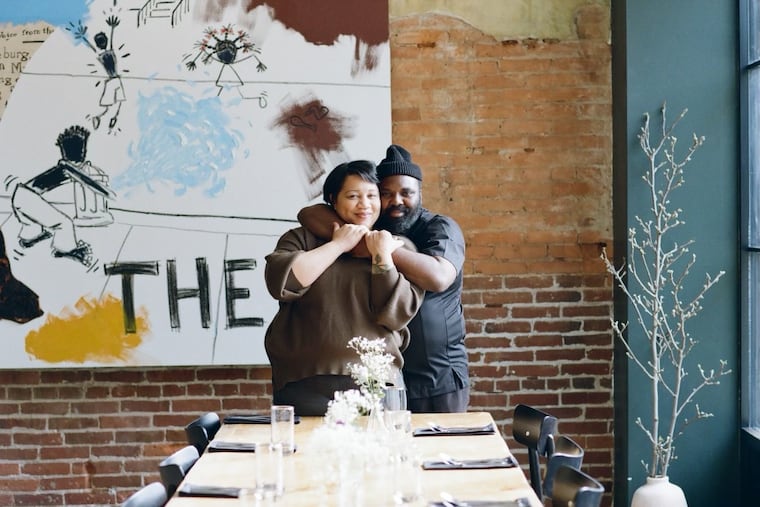
The Michelin star-winning chef behind Her Place Supper Club curates 30-plus cookies (and their recipes) every year to raise money for the Sunday Love Project.
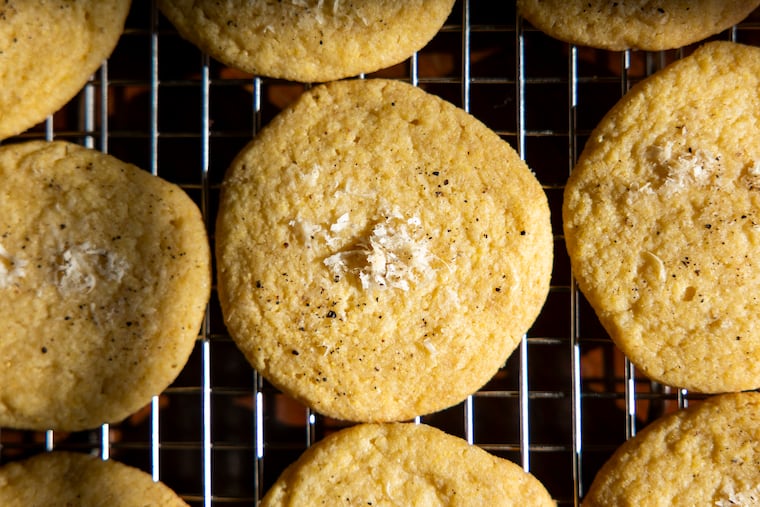
These cookies were among chef Amanda Shulman’s favorites of the 40-plus entries included in last year’s Cookies 4 Coats box, which Shulman coordinates and sells every year with the help of more than two dozen contributors, with 100% proceeds split between the Sunday Love Project and Broad Street Love. The recipes, sourced from Philly kitchen pros, have been lightly edited for clarity but not tested.
Note: While some recipes call for cups and teaspoons, several of them call for grams (one generous contributor includes both). Most baking professionals measure ingredients by weight, using a digital scale to ensure accuracy; not only does it result in more accurate measurements, it also saves time and cleanup. If you want to convert from one measurement to another, you can find a very helpful equivalencies chart online at King Arthur Flour’s website. — Jenn Ladd
Parmesan cornbread cookies
Recipe by Ashley Huston, Dreamworld Bakes
Makes 45 cookies
This fun recipe from Ashley Huston, the baked-good mastermind behind Kensington’s Dreamworld Bakes, yields soft, chewy cookies, and a lot of them. You can easily halve the ingredients below for more modest batch, but they’re so good (and freeze well) that you’re better off making it as written.
Cornmeal gives cookies the faintest grainy texture — in the best way — and a big dose of honey lets you inform their flavor with your favorite type, be it clover, wildflower, or buckwheat. Top the cookie dough rounds with as much grated fresh Parmigiano Reggiano (or sprinkle the nicest pre-grated parm you have) and cracked black pepper as you like; if you sprinkle it on before you chill the cookies, it’ll hold up better upon baking for a more visually interesting cookie.
525 grams all-purpose flour
350 grams cornmeal
12 grams salt
6 grams cornstarch
6 grams baking powder
3 grams baking soda
450 grams (4 sticks) butter, softened
400 grams white sugar
200 grams honey
110 grams egg (2 eggs), room temperature
Parmesan cheese, freshly grated, to taste
Black pepper, freshly milled, to taste
Heat the oven to 350°F. Sift together the flour, cornmeal, salt, cornstarch, baking powder, and baking soda. Set aside.
In a stand mixer with the paddle attachment, cream the sugar and butter together until light and fully incorporated. Add the eggs and honey, then beat until blended.
Gradually add the dry ingredients to the mixer, beating until combined. Do not overmix.
Scoop out 1.5-ounce portions of dough onto onto a lined sheet pan, form discs, top with Parmesan and pepper. Refrigerate for 15 minutes.
Bake for 9 to 11 minutes, until set.
Italian almond cookie
Recipe by Christopher DiPiazza and Siobhan McKenna, Mighty Bread Co.
Makes 20 large cookies
This crowd-pleasing cookie — which is giant, a characteristic of all things Mighty Bread — was inspired by the quintessential sprinkle cookies found in virtually every South Philly Italian bakery. Head pastry chef Siobhan McKenna says Mighty Bread swaps orange-vanilla sugar for sprinkles to make it “a bit more elevated.” But we won’t tell if you cover your cookie dough in rainbow sprinkles (or, you know, jimmies).
750 grams all-purpose flour
10 grams baking powder
3 grams baking soda
8 grams salt
450 grams butter
110 grams cream cheese
500 grams granulated sugar, plus 200 grams for coating
16 grams vanilla paste
100 grams eggs
4 grams almond extract
Finely grated zest from an orange
Vanilla bean, split
Combine the flour, baking powder, baking soda, and salt. Set aside.
In a stand mixer with the paddle attachment, cream the butter, cream cheese, vanilla paste, and sugar until pale and doubled in size. Scrape down bowl and paddle.
Add the eggs in two increments, beating until fully incorporated. Add the almond extract and scrape down the bowl and paddle. Add the dry ingredients in several increments until incorporated. Transfer the dough to another bowl or container, cover, and chill for 45 minutes to an hour.
While the cookies chill, scrape the vanilla bean seeds into the remaining 200 grams sugar. Add the orange zest. Rub together to combine thoroughly.
Scoop the dough into balls (100 grams each for a Mighty Bread-sized cookie). Dip each cookie in the orange-vanilla sugar before placing on a lined sheet pan, spacing appropriately, six to a half-sheet pan.
Bake at 350°F for 14 to 16 minutes, rotating after 6 and 12 minutes and checking for another 2 to 4 minutes, until edges are set and center is cooked but soft.
Hazelnut shortbread
Recipe by Michal Shelkowitz, Vetri Cucina
Makes 24 cookies
There’s not much backstory to these simple (but delicious) cookies, says pastry chef Michal Shelkowitz. “I just love shortbread! They’re the only cookies I allow to be crispy,” she says, adding “maybe a hot take, but crispy chocolate chip cookies make me want to die inside.”
100 grams hazelnuts
275 grams all-purpose flour, divided
½ teaspoon baking powder
½ teaspoon salt
250 grams butter, room temperature, cubed
70 grams powdered sugar
60 grams egg yolks
Heat the oven to 350°F. Spread the hazelnuts on a baking tray, toast in the oven for 5 to 8 minutes, until golden and fragrant. Allow to cool completely. Once cool, place hazelnuts in a food processor along with half of the flour and grind to a fine powder. Add the hazelnut mixture to the remaining flour, then mix in the baking powder and salt. Set aside.
In a stand mixer with the paddle attachment, cream the butter and powdered sugar for a few minutes until butter is light in color and fluffy. Scrape the bowl down well, then add the egg yolks. Mix until completely incorporated. Scrape down once more, then add all of the dry ingredients. Mix on low speed until all of the flour has been absorbed and a soft dough forms.
Transfer the dough to a piece of parchment paper. Press down to even it out, place another piece of parchment on top, and roll out the dough to about ½-inch thickness. At this point you can either cut the dough into 3-inch squares or use similar-sized cookie cutters. Transfer the sheet of dough onto a tray and chill in the refrigerator until firm.
Once firm, use an offset spatula to transfer the cookies to a lined baking tray, placing them about 1 inch apart. Bake for 10 to 12 minutes, until the edges turn golden brown. Let cool on the sheet tray before removing.
Roasty toasty kinako cookies
Recipe by Linna Li, Aidomi Cafe
Makes 12 cookies
This project cookie comes from Chester Springs native Linna Li, a veteran of New York’s restaurant industry who now owns Mama Wong in Exton and is searching for a home for Aidomi Cafe, a forthcoming all-day spot with a menu that will blend Li’s Chinese background with the Honduran roots of her partner, chef Jose Nunez. That cultural combo informs these cookies: They get crunch from a brittle made with cancha, or toasted corn nuts, and warm, nutty flavor from kinako, or roasted soybean flour. Those ingredients are widely available in Latin and Asian supermarkets, respectively. (You can also sub a store-bought brittle or toffee if you like; see note below.) Optional buckwheat flour plus masa harina and cornmeal add further complexity, which is what Li’s all about.
“Anytime I create like a cookie recipe,” she says, “I’m really focused on flavor — something that’s not too saccharine, has a little bit of a more salty component to it — but also something that’s pretty interesting in texture.”
Note: If substituting the canchita brittle with store-bought brittle or toffee, reduce the brittle weight from 120 grams to 90 grams.
For the canchita brittle
2 tablespoons any cooking oil
100 grams cancha (dried corn)
2 teaspoons kosher salt, divided
150 grams (¾ cup) granulated sugar
43 grams (3 tablespoons) unsalted butter
3 tablespoons water
1 teaspoon baking soda
For the cookie
120 grams (1 cup) buckwheat flour or AP flour or any gluten free flour
60 grams (½ cup, plus 1 tablespoon) masa harina
48 grams (⅓ cup) finely ground cornmeal
30 grams (4 tablespoons) kinako powder
1 teaspoon baking soda
1 teaspoon kosher salt
226 grams (2 sticks) unsalted butter, softened
75 grams (⅓ cup) granulated sugar
100 grams (½ cup, packed) dark brown sugar
1 tablespoon vanilla paste or vanilla extract
1 large egg, room temperature
120 grams (1 heaping cup) canchita brittle, chopped into pea-sized pieces, plus more for garnish
Flaky sea salt
For the canchita brittle
Line a sheet pan with parchment paper and set aside. In a pan over medium heat, combine the oil, cancha corn, and 1 teaspoon of the salt, stirring occasionally to get even coloring. After a few minutes, the kernels will start to pop; you can partially cover the pan so the kernels don’t pop out. Stir until the canchitas are golden brown and have a nice crispy bite, about 10 minutes. Transfer to a bowl and set aside.
Combine the sugar, butter, and water in a saucepan, preferably with a light-colored bottom. Warm the mixture over medium heat until it melts and begins to bubble, swirling the pan occasionally. Cook the butter, swirling often, until it is golden and the milk solids are dark caramel-colored (with a temperature of 300°F), 6 to 8 minutes.
Once the mixture is golden, thick, and bubbly, fold in the canchitas, stirring until evenly coated. Add the baking soda and the remaining salt. Turn off heat and stir until baking soda is completely dissolved. Spread the mixture over the lined baking sheet and spread to a single layer. Let cool completely before chopping into shards.
For the cookie
Stir together the buckwheat flour, masa harina, cornmeal, kinako powder, baking soda, and salt in a medium bowl and set aside.
In a stand mixer with the paddle attachment, beat the butter, sugar, and dark brown sugar on medium speed for about 5 minutes, until the mixture is smooth and fluffy, scraping down the bowl and paddle as needed. Drizzle in the egg and vanilla, beating until the egg is fully incorporated, about 1 minute.
Add the flour mixture in small batches, reserving a few tablespoons, and mix on low speed for about 30 seconds until the flour is almost combined, with few visible flour streaks. Stop the mixer and scrape down the bowl and paddle.
Combine the reserved flour with the canchita brittle, evenly coating each piece with flour. Add half to the dough, folding it in by hand. Once folded, pour in the remaining half and scrape the bowl from bottom up to release any ingredients that may be stuck.
Using an ice cream scoop or your hands, portion out cookies to 70 grams and place on a lined sheet pan, making sure they are close but not touching. Cover the baking sheet with plastic wrap and refrigerate overnight or up to 24 hours to allow the dough to rest.
When ready to bake, heat the oven to 350°F. Transfer portioned dough to another lined sheet pan, leaving about 2 inches between each cookie. Top each cookie with a small piece of canchita brittle pressed down into the dough.
Bake for 15 to 17 minutes. You want the cookies to be slightly underdone. They will feel soft to the touch but will firm up as they cool.
While the cookies are still warm, tap the center of each with a spatula to create an indent. Top each with flaky salt and shape with a 4-inch cookie cutter (they will spread so shaping while warm is crucial). Cool completely before transferring to a wire rack. Cookies can stay at room temperature in an airtight container for up to one week. Unbaked dough can stay frozen for up to one month.
Black & white cookie
Recipe by Brandon Parish, the Kibitz Room
Makes 12 to 14 cookies
Brandon Parish’s spin on this classic deli treat uses an ultra-moist muffin batter for the cookie, yielding a fluffy, not-too-sweet base for the black-and-white icing. If you want to recreate a Kibitz Room dessert at home, try serving a hot black-and-white cookie with powdered sugar, sprinkles, and a scoop of ice cream or gelato.
For the cookies
1⅔ cups all-purpose flour
⅔ teaspoon baking soda
⅔ teaspoon salt
½ cup buttermilk
⅔ teaspoon vanilla
½ cup unsalted butter, softened
⅔ cup sugar
1⅓ large egg
For the icing
2 cups confectioners’ sugar
1⅓ tablespoons clear corn syrup
2⅔ teaspoons lemon juice
⅓ teaspoon vanilla
1⅓ tablespoons water (roughly)
⅓ cup cocoa powder
Heat the oven to 375°F if using a conventional oven or 350°F if using convection. In a small bowl, sift together the flour, baking soda, and salt. In a separate bowl or measuring cup, mix together the buttermilk and vanilla.
In a stand mixer with the paddle attachment or with an electric mixer, beat butter and white sugar together in a large mixing bowl with an electric mixer until it’s evenly distributed, about 3 minutes. Add the egg and beat until blended.
Alternating with each addition, gradually add the dry ingredients ½ cup at a time, incorporating the buttermilk mixture between each addition. Mix until smooth, occasionally scraping down the sides of the bowl.
Spoon ¼ cup portions of batter onto a lined sheet pan. Bake for 15 to 17 minutes, or until the tops are golden brown and spring back when touched. Place on a cooling rack and allow to cool completely before icing.
In a large bowl, stir together the confectioners’ sugar, corn syrup, lemon juice, vanilla, and ½ tablespoon of water until smooth. Place half of the mixture into a separate bowl and add the cocoa powder, and remaining water bit by bit until it is the same consistency as the white icing. If the icing is too runny, whisk in more confectioners’ sugar until smooth and spreadable.
Turn cooled cookies flat side up. Using a pastry spatula or a butter knife, spread on the icing, white over one half, chocolate over the other. Let set.
Brutti ma buoni (ugly but good)
Recipe by Justine MacNeil, Fiore
Makes 18 cookies
These chewy-crunchy meringue cookies use a slightly unusual cooking process — there aren’t too many stovetop cookies — that will fill your kitchen with the sweet smell of toasted hazelnuts and caramelizing sugar. “All the classic Italian recipes are quite bizarre,” says Justine MacNeil, the reining pastry queen (and co-owner) of Fiore, who is delighted by this nutty cinnamon-spiced cookie. “They’re my fave.”
250 grams hazelnuts
250 grams granulated sugar, divided
90 grams egg whites
125 grams sugar
½ teaspoon kosher salt
¼ teaspoon vanilla extract
⅛ teaspoon ground cinnamon
Toast the hazelnuts at 350°F until golden brown, 12 to 15 minutes. Let cool. Reduce the oven to 275°F (convection) or 300°F (conventional). Line a sheet pan with parchment or Silpat.
In a food processor, grind the hazelnuts and 125 grams of the sugar into small pebble-like pieces. Be careful not to overgrind and turn the mixture into nut butter. Set aside.
In a stand mixer with the whisk attachment, whip the egg whites on high speed. Once they are opaque, slowly stream in the remaining 125 grams of sugar and whip until thick and shiny, about 5 minutes. Fold the hazelnuts into the egg white mixture. Fold in the salt, vanilla, and cinnamon.
Transfer the mixture to a 4-quart pot or saucepan. Cook over medium-low heat, stirring often, until the mixture thickens and begins to gain a caramelized color, 8 to 10 minutes.
Scoop immediately onto the lined sheet pan using either a 2-tablespoon scoop or two spoons. (They are supposed to be irregularly shaped.)
Bake for 20 to 25 minutes, until dried and lightly golden. Allow to cool and then store in an airtight container for up to one month.
Limoncello cookies
Recipe by Aurora Samsel
Makes 5 dozen cookies
Try a nub of this cookie dough raw and you’ll get the bite of raw olive oil and the tang of fresh lemon juice and limoncello. But these three-bite cookies bake up into mild lemony treats that are absolutely kid-friendly. They come courtesy of pastry chef Aurora Samsel, who developed them while working at Osteria. Samsel characterizes this as a basic dough with some Italian spins (including semolina flour). She likes to bake the cookies so they come out a very light golden brown, but it’s OK if you take them a shade darker around the edges. “They taste delicious either way,” she says.
2 cups all-purpose flour
⅔ cup semolina flour
1 teaspoon baking powder
½ teaspoon baking soda
½ teaspoon kosher salt
½ cup (1 stick) unsalted butter, softened
2 tablespoons extra-virgin olive oil
1 cup granulated sugar, plus more for rolling
1 large egg
1 large egg yolk
Freshly grated zest and squeezed juice of 1 lemon
2 tablespoons limoncello
½ teaspoon pure vanilla extract
Heat the oven to 325°F. Line a sheet pan with parchment or Silpat and spray with oil.
Sift together the flour, semolina, baking powder, baking soda, and salt and put it aside.
Using an electric mixer with a paddle attachment, cream together the butter, olive oil, and 1 cup of the sugar.
Scrape the bowl, then with the mixer on, slowly add the egg and egg yolk. Scrape again, then add the lemon zest, lemon juice, limoncello, and vanilla extract.
Once combined, add the dry mixture, and continue to mix until all combined. The dough will be soft and sticky. Place the dough in the fridge and chill for 1 hour (or longer).
When ready to bake, place some sugar in a small bowl. Scoop the ball into 15-gram portions, rolling each to a 1-inch ball. Roll in the sugar, then place on the prepared pan.
Bake for 12 to 14 minutes, rotating the pan halfway through, until the cookies are a pale golden brown and set. When out of the oven, transfer the cookies onto a wire rack to let cool completely.
Mocha snickerdoodles
Recipe by Jessica LaTorre, High Street Philadelphia and the Bread Room
Makes 30 cookies
Buy a bunch of butter for these snickerdoodles, which call for browning 2 pounds of it and combining some of that with regular salted butter, too. High Street bakery production manager Jessica LaTorre notes that these cookies came about as a result of tinkering with the restaurant’s cornmeal snickerdoodle, and that it’s a crispy-crunchy variation of the cinnamon-coated classic. “Don’t expect much chewiness,” she says. “If you are looking for a bit more of a classic snickerdoodle chew you can swap in up to half brown sugar for the granulated.” A stickler for detail, LaTorre also suggests using fine or medium-grind cornmeal and erring on the side of underbaking.
For the cookies:
230 grams brown butter (see below), room temperature
230 grams salted butter, softened
600 grams granulated sugar
15 grams espresso powder or finely ground coffee
400 grams all-purpose flour
300 grams cornmeal
14 grams cream of tartar
12 grams baking soda
5 grams kosher salt (Diamond Crystal)
100 grams (2) eggs, room temperature
100 grams dark chocolate, finely chopped
For the dusting sugar:
100 grams granulated sugar
10 grams cinnamon, ground
20 grams espresso powder or finely ground coffee
5 grams cocoa powder
For the glaze (optional):
130 grams confectioners sugar
16 grams milk
20 grams light corn syrup
2 grams kosher salt
For the brown butter: Cube 8 sticks (2 pounds) of unsalted butter. Cook in a medium pot over medium heat, allowing it to foam and bubble. Stir frequently until the butter and milk solids at the bottom turn a golden brown. Cool to room temperature. You’ll have extra. Save for another project (like Amanda Shulman’s brown butter sourdough chocolate chip cookies).
For the cookies: In a stand mixer fitted with the paddle attachment, cream both butters, the sugar, and the espresso powder until light and fluffy. In a separate bowl, whisk together the flour, cornmeal, cream of tartar, baking soda, and salt.
Scrape the bowl and paddle with a spatula. Mixing on low speed, add the eggs in one at a time. Scrape again. Add in the dry ingredients and mix on low until just combined. Fold the finely chopped chocolate into the dough.
Using a 2-ounce scoop or two spoons, scoop the dough onto a lined and greased cookie sheet and then chill in the fridge for at least an hour.
Heat the oven to 350°F. Mix the sugar and spices together and roll your cookies in it. Space them 6 to a cookie sheet and bake for about 8 minutes, until the cookies have completely puffed. Tap the tray on a counter to gently deflate the cookies.
For the glaze: Whisk all the ingredients together. Transfer to a piping bag and drizzle over cooled cookies. Allow to dry before stacking.