‘Nothing seemed real’: Inside the explosion that rocked New York Bagels
For 60 years, Philadelphia came here for kosher bagels. Then everything blew up.
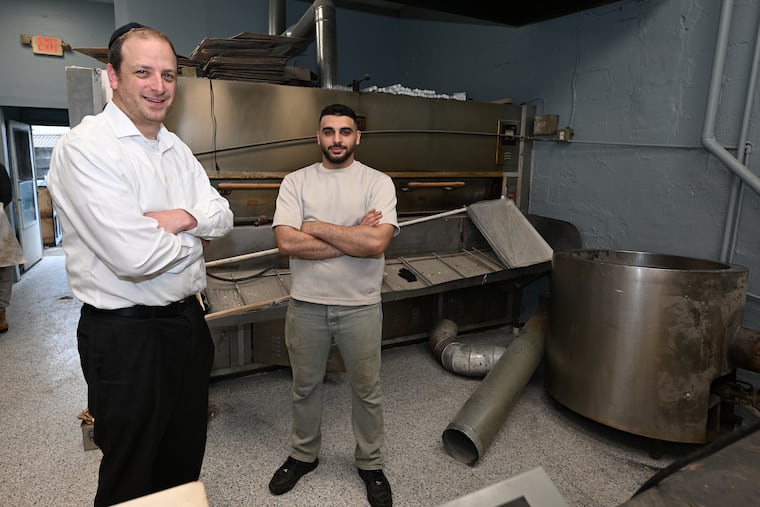
The cream cheese in Rabbi Yonah Gross’ refrigerator seems to be lasting a lot longer over the last two months.
There have been no bagels from New York Bagels.
The kosher bagel bakery — which opened in 1964 on Haverford Avenue near City Avenue in Overbrook Park — has been closed since March 3, when it was heavily damaged in a gas explosion.
It will reopen at 8 a.m. Sunday.
“We’ve never missed Mother’s Day in this shop,” said owner Rayyan Kayyali. “Mothers are a blessing.”
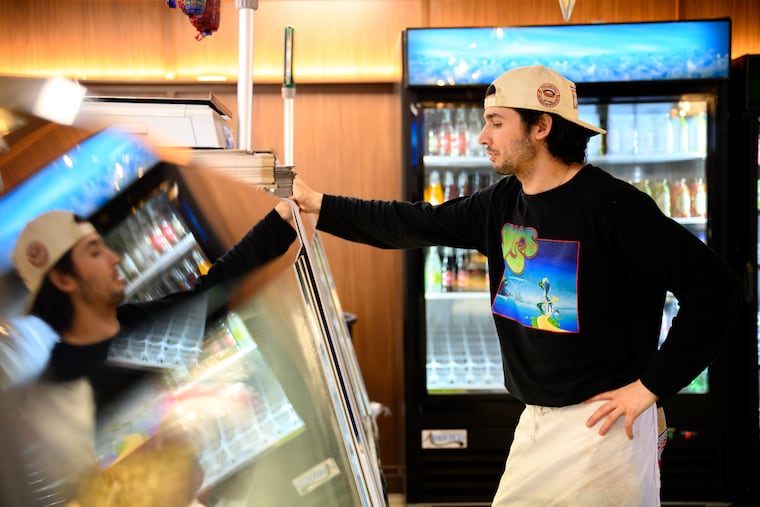
On Wednesday, as Kayyali and workers scrambled to finish renovations, he recounted his own blessings. “I’m here because of God,” he said, pointing to the ceiling, where one panel was still askew.
The morning of the explosion, he had arrived early, about 5:30, because a synagogue had placed a large order of smoked fish for Purim. He needed to slice it. His baker was on his way to tend to the bagels.
But something was wrong. The oven was cold.
Every morning, Gross starts the oven before 5 on a timer that he has set, as part of his role as kashrus administrator for the Community Kashrus of Greater Philadelphia. As Kayyali is not Jewish — he’s Muslim — Gross’ act of starting the oven achieves a higher level of kosher known as pas Yisroel, referring to bread that a Jewish person has had a role in preparing, Gross said.
Puzzled, Kayyali leaned down almost to the floor to press the reset button inside the oven, rather than do it through the wall switch.
When he hit the button, the igniter sparked.
“Everything just exploded,” he said.
Kayyali, who learned later that gas had been flowing for nearly an hour, was shielded from most of the blast by the shelf in the front of the oven. His decision to duck is “what really saved my life,” Kayyali said.
He ended up on the floor, unconscious. At first, he thought he had been out for about 15 seconds. Security footage showed that it was almost five minutes.
He staggered outside into the 25-degree morning and collapsed in front of the store. “When I woke up, it seemed like a dream,” he said. “I was looking around thinking, ‘Why is the shop open?’ There used to be glass here. Nothing seemed real.”
The front windows were gone. Inside, the floor, walls, ceiling, lights, counter, and equipment had been destroyed.
Kayyali said he was treated at a hospital for a minor concussion. His hair, lashes, eyebrows, and parts of his hands were burned. He praised the police and fire departments, as well as Philadelphia Gas Works, for their quick response.
The timing was eerily coincidental. A construction company had been scheduled to visit that very day to discuss a small renovation Kayyali hoped could be done during Passover, when the bakery would be closed for a week. He had asked whether the entire shop could be redone, but was told that would take too long.
“The same day, the entire shop exploded,” he said. “Now we changed out everything.”
The oven survived. Manufactured in 2005, it had been installed by the previous owner a few years ago, Kayyali said.
A service technician later told him that seeds may have blocked the igniter. “He told me a similar incident happened at another bakery a few months ago, but there is supposed to be a safety feature where, if the igniter doesn’t spark, the gas shuts off,” Kayyali said. “That didn’t happen here.”
“Nothing is making sense,” Kayyali said the technician told him.
“Just to be clear, we didn’t rig the system or create something unusual,” Gross said of the timer function. “This was part of the factory settings we were working with.”
The bakery has since added safety features to the oven and plans additional protections for the bakery’s kettle, which is also controlled by gas.
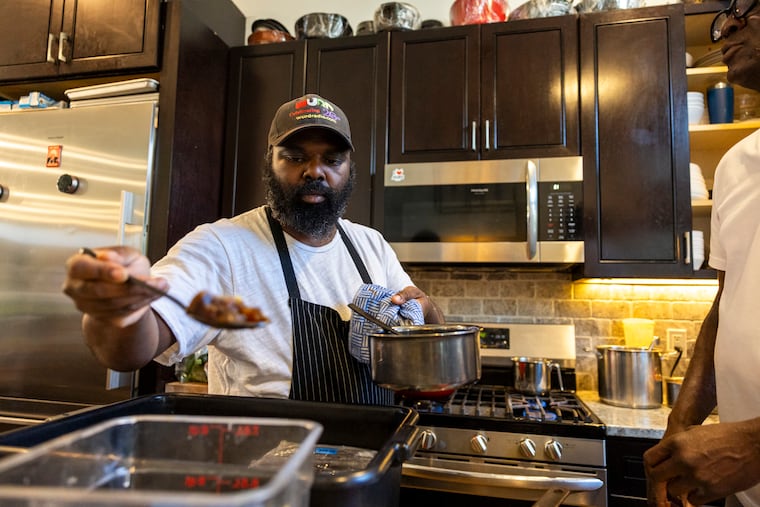
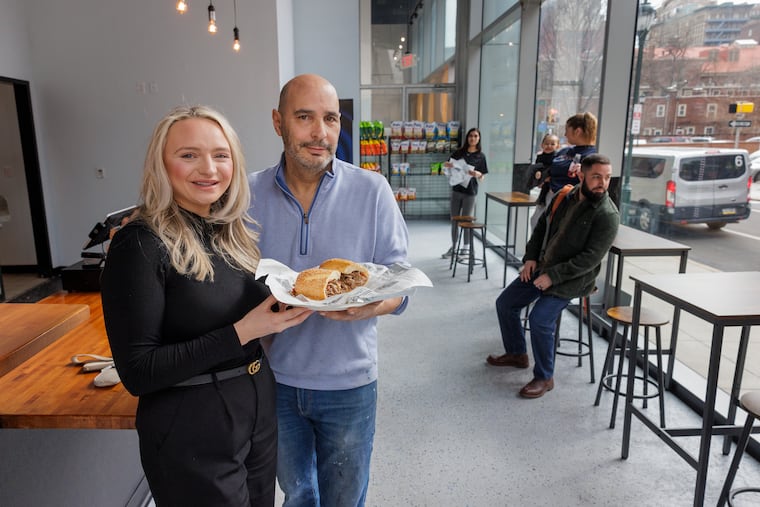
Kayyali bought the bakery in 2024 after his brother Fares, a Drexel University student, had worked there for the previous longtime owner, Nick Sammoudi. When Sammoudi said he was ready to retire, Kayyali — a native Floridian then living in California and working for AAA — saw an opening.
“I worked here for almost a year, learned everything, wrote everything down — all the recipes,” he said. “It was his golden chance, and my golden chance.”
The menu will remain largely the same, including the tuna salad, a specialty. Kayyali plans to bring back rye bread, eventually add bagel chips, and is working on coffee. Bagel prices will rise slightly, to $1.99, though dozens will remain $20 at reopening.
A brief history of bagels in Philadelphia
Kayyali acquired more than an oven, recipes, and a loyal kosher clientele. He inherited a 60-year bagel lineage that began with two New Yorkers convinced that Philadelphia needed the real thing.
Pennsylvania business records show that brothers Jack and Irv Tillman signed a lease in 1964 in the “new Haverford Avenue shopping center” through Herbert Yentis Co., the Overbrook Park brokerage that still operates today.
That month, Inquirer reporter Henry Neiger dropped by 7555 Haverford Ave. to see what the fuss was about. He found the Tillmans — two New Yorkers who were fifth-generation bagel bakers.
Philadelphia was hardly bagel-barren in the mid-1960s. The city’s thriving Jewish community supported dozens of bakeries that turned out mainly breads such as pumpernickel and rye. Big names such as Bogoslafsky’s and Rosen’s are long gone, but Kaplan’s New Model, also kosher, is still around after 107 years.
But New Yorkers, then as now, were doctrinaire about their “water bagels”: high-protein flour, malt, yeast, and salt, cold-fermented and boiled before baking. They had the shiny exterior and dense, chewy interior that most others lacked in Philadelphia.
The Tillmans saw an opening.
“We heard that water bagels were not available in Philadelphia and decided to do something about it,” Irv Tillman told Neiger. “We feel sure that Philadelphians will become just as addicted to bagels as New Yorkers.”
Then came the boast: “In New York, there are 250 bagel bakers. In Philadelphia, we are the only ones who bake real bagels.”
The bagels seemed to pass the New Yorker test. Neiger’s article quoted “a young housewife” who had wandered in hunting for an authentic water bagel.
“Divine, absolutely divine,” she said. “I feel like I’m back in New York City again.”
Gross said it was not clear when New York Bagels came under rabbinical supervision, a selling point to many observant neighbors in Overbrook Park and Lower Merion.
“This might be the longest-running place we’ve been with,” Gross said of Keystone-K, which started in the early 2000s. Local rabbis from synagogues would certify bakeries in their areas.
The Tillmans were not in business for long. In June 1965, they sold the bakery to another New York bagel baker, Melvyn Leibowitz, who used the recipe developed by his Romanian great-grandfather. After Leibowitz’s death in 1983, his wife, Doris, took it over. She sold it in 1988 to a group of investors.
Eventually, the bakery came into the hands of Sammoudi, who ran it for a quarter-century before selling it to Kayyali in 2024.
And part of that tradition lives on 20 minutes away in Broomall: In 1995, Mike Leibowitz and his wife, Christine, opened Original Bagel, where they still bake from his father’s recipes.