Michelin-recommended restaurant Roxanne shut down by city over licensing issues
Roxanne, one of Philly's first restaurants to be honored by the Michelin Guide, was shut down after operating without a food license for more than a year.
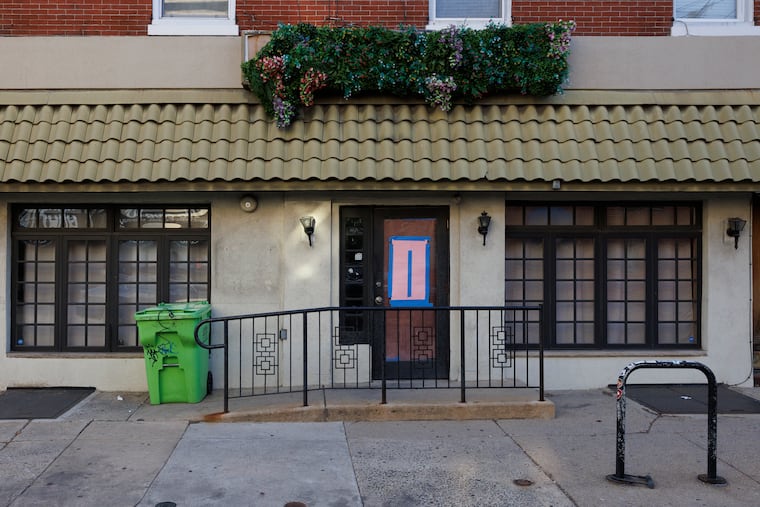
One of Philadelphia’s first Michelin Guide-recommended restaurants has been operating without a license to prepare or serve food since it opened, according to the City of Philadelphia.
The Department of Licenses and Inspections ordered Roxanne — the avant-garde supper club from chef Alexandra Holt at 607 S. Second St. — to cease operations on April 6 for failing to obtain a food license, department spokesperson Kandyce Stukes confirmed via email. That order still remains active, she said.
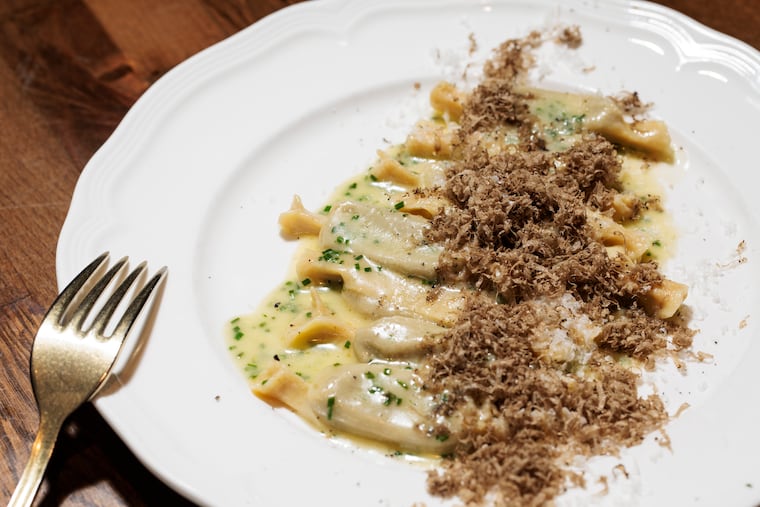
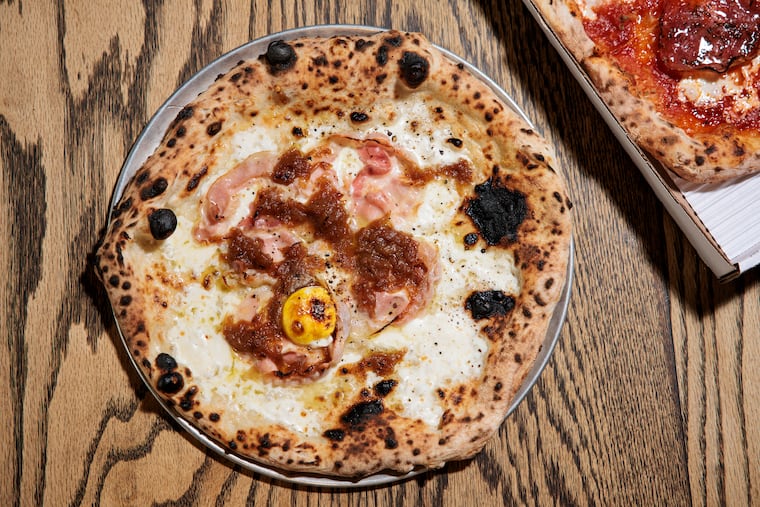
According to a search of L&I records by an Inquirer reporter, Roxanne has never had a food preparation and serving license since Holt started offering her genre-bending six-course tasting menu of raw cheesesteaks, dessert burgers, and pastries-as-political-commentary in Queen Village in December 2024.
A search of Department of Public Health records also revealed Roxanne never received a health inspection in the 14 months it operated at 607 S. Second St.
“Roxanne did not ever submit a plan review application as part of [the] new stationary food business process. As such, Roxanne also never had a valid Food Preparation and Service License from L&I," Department of Public Health spokesperson James Garrow told The Inquirer over email. “Roxanne’s was never inspected [by the health department] because it was never legally operating” in Queen Village.
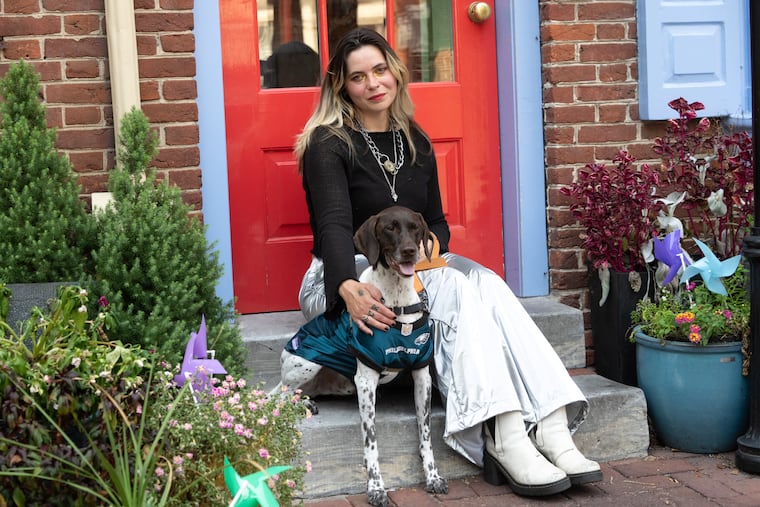
Holt, a Culinary Institute of America-trained pastry chef who previously worked at the two Michelin-starred restaurant Olivo in Germany, opened the first version of Roxanne at 912 Christian St. in September 2022, using an eight-course tasting menu to convey her feelings about the world using complex amalgamations of pastries, sauces, and deli meats.
According to a search of L&I records, Roxanne also did not have a food license registered at 912 Christian St. A search of Department of Public Health records also did not turn up a health inspection.
Roxanne landed a spot on Esquire’s list of the Best New Restaurants in America in 2022. The restaurant would hit its stride two years later, when Holt moved Roxanne from Bella Vista to its current 2,600-square-foot Queen Village location, the previous home of Queen & Rook game cafe.
Holt used the move to pare down the tasting menu and refine her cooking, a move that landed Roxanne a spot on The Inquirer’s The 76, a rave review from critic Craig LaBan, and, most recently, one of 21 recommendations in the Michelin Guide’s first trip to Philly.
Different from a coveted Michelin star, a recommendation from the storied gastronomic travel guide is a sign that a restaurant is serving good food “with quality ingredients that are well cooked,” according to the Michelin website. In the gastronomy world, the recommendation is often regarded as a stepping stone to a potential Michelin star.
“Restaurants could learn a thing or two from this eccentric spot in Old Town [sic],” reads Michelin’s praise of Roxanne. “Chef Alexandra Holt just wants to cook — and cook she can."
Licenses and inspections
Opening a restaurant in Philadelphia often involves navigating a complex web of approval processes from different city departments. Openings can face lengthy delays if an establishment needs, for example, a zoning variance, a sidewalk cafe, or extensive renovations. On average, restaurant owners must work with 10 city and state agencies before they’re allowed to open, according to research from the Institute for Justice, a public interest law firm.
And yet, according to the Institute for Justice, nearly every restaurant in Philadelphia must take the same three steps before it opens. Once a restaurant finishes construction, its owner must submit a license plan of review to the health department that details operating procedures. From there, an initial health inspection is conducted, and if approved, a restaurant can obtain the required food preparation and serving license after paying a $299 or $415 fee, depending on its size.
The whole process can take up to four to six weeks, food safety experts say. Licenses are renewed annually.
Roxanne “did not submit the standardized, required documentation and did not receive Health Department approval to operate” at 607 S. Second St., wrote Garrow.
‘All mistakes are definitely my mistakes’
On Wednesday morning, the striped cease-operations order on Roxanne’s door had been pasted over with pink construction paper and blue painter’s tape — an act that is against the law in Philadelphia and can result in arrest. That obfuscation, Holt told The Inquirer, wasn’t her doing. It is unclear how the notice came to be covered.
Though she never made a formal announcement, Holt — who works alone in the kitchen with three front-of-house employees — told The Inquirer that she temporarily closed Roxanne at the end of February due to health issues and has only been at the property intermittently since. Reservations are currently unavailable on Resy.
“My health had deteriorated quite a bit and I just wasn’t able to put in the hours needed,” Holt said.
Holt told The Inquirer that she was blindsided by the cease-operations notice, which came more than a month after Roxanne closed. The restaurant has always had the appropriate licenses to operate, she said.
“I have two pieces of paper hanging on the wall, well, three,” said Holt. She declined repeated requests by The Inquirer for documentation of those pieces of paper.
The restaurant also carries “cocktails, beer, and PA wines,” according to its website. A search of Pennsylvania Liquor Control Board records did not return a liquor license for Roxanne at 607 S. Second St. Some restaurants are permitted to serve alcohol through partnerships with in-state wineries, breweries, or distilleries.
“The PLCB’s review of its records did not immediately reveal an apparent connection between any licensee” and Roxanne, a spokesperson for the PLCB told The Inquirer via email Wednesday.
That same day, Roxanne’s alcoholic drinks menu disappeared from its website.
Holt said she is working on rectifying the licensing issues and hopes to reopen Roxanne by May 20. Holt said she is “scared” and “panicked” over the situation.
“I operate with a really small team, so all mistakes are definitely my mistakes,” Holt said, choking up. “I’m not the best at this [business] stuff.”
Over a year off-the-books
Why did it take over a year for the City of Philadelphia to discover that one of its fastest-rising culinary stars was apparently operating a restaurant illegally?
Because in order to shut down a restaurant, city inspectors must first observe it operating illegally.
L&I “is not notified every time a business opens in the City,” Stukes, the spokesperson, said. The department “has taken strides to be more proactive ... but to be informed on every business as soon as it opens, especially if that business fails to obtain proper licensure, is an arduous task,” said Stukes.
The Department of Public Health returned a similar explanation.
“Health Department inspectors can only inspect a business if they see it open and operating. That process has nothing to do with what’s happening in the press,” Garrow said.
“It is important to note that virtually all restaurateurs understand the need for working with food inspection regulatory offices, so it is quite rare for a business to so flagrantly flaunt well-established norms in food service,” Garrow said.
The health department receives most reports of illegal, unlicensed, or out-of-compliance food businesses through 311 complaints, not proactive monitoring, according to Garrow. He confirmed that a 311 complaint precipitated a visit by L&I inspectors to Roxanne, but did not immediately respond to a request regarding the date and nature of the complaint.
L&I inspectors first visited Roxanne on Feb. 1, where they found four fire code violations and no active license to operate, according to city records. They returned on March 27 to find the fire code violations rectified, but the business still lacked a proper license.
Roxanne was shut down by the city nine days later. No fines have been issued at this time, Stukes said.
Still, Holt is concerned about what this situation means for the future.
“I feel so bad. I don’t want to hurt anybody, and I don’t want to embarrass my family,” Holt said. “I just feel like an a—.”
Inquirer Food Festival
Get your ticket to Philly’s ultimate food party! Join top Philly chefs and bakers for one unforgettable day of food.