Korean and Japanese omakase is coming to the Main Line in a set of restaurants from the owners of Salt Korean BBQ
The owners of Salt Korean BBQ are planning restaurants on the former site of La Jonquille and Shiraz in Devon. One of them will offer a Korean omakase experience, the Philadelphia area's first.
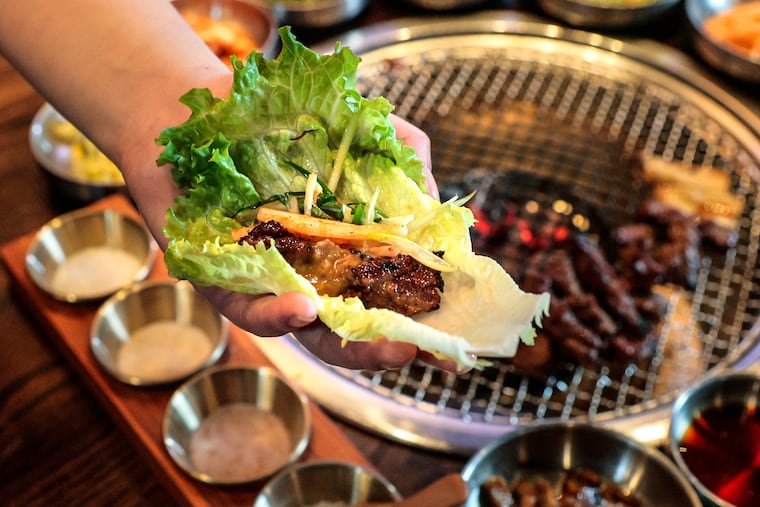
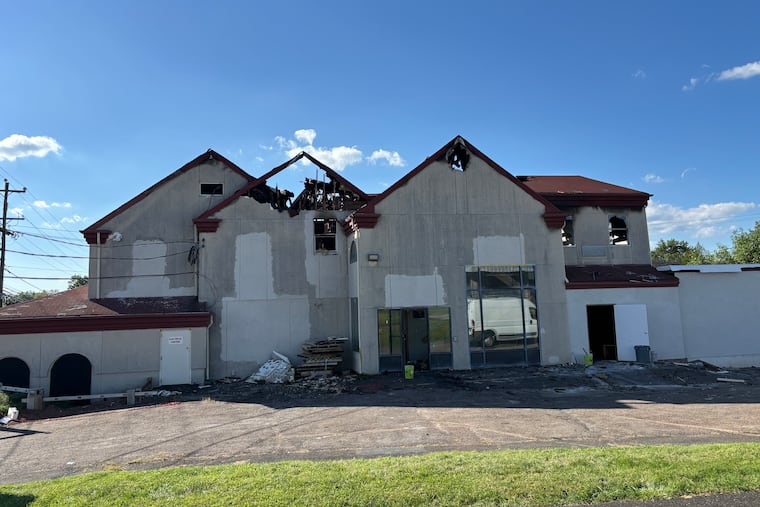
High-end Korean dining — including an omakase experience not found now in the Philadelphia area — will be part of a new restaurant complex opening next year at the landmark building in Devon that housed La Jonquille and Shiraz until their closings two decades ago.
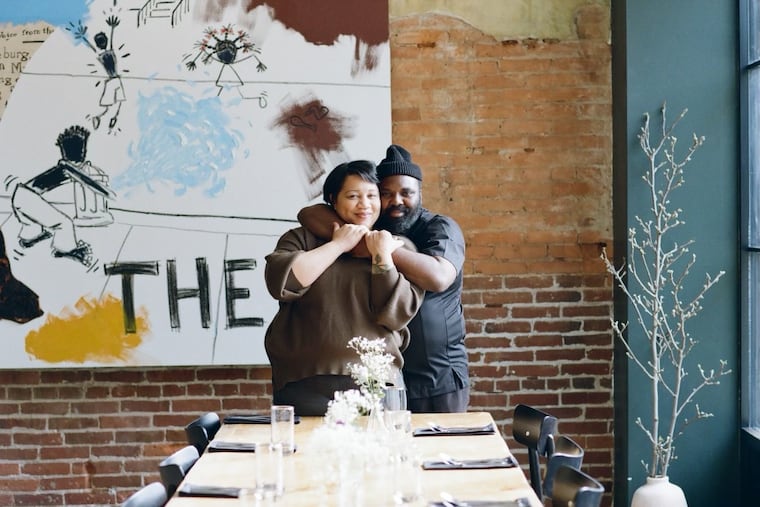
Rich Kim and partners, who own the acclaimed Salt Korean BBQ as well as a Chinese-Korean noodle house called Sang Hi in North Wales, closed last week on the purchase of the property at Berkley Road and Lancaster Avenue in Tredyffrin Township. In April, Kim confirmed that he and his partners had filed for a liquor license.
The sale was not yet listed in Chester County records. Neither Kim nor Paul French, a principal of Avison Young who represented the seller, Matt Vegari, would disclose the sale price.
The property, with its distinctive gazebo resembling a kushk facing Lancaster Avenue, had been vacant and on the market for years. Though the asking price was never included in sales brochures, it is believed that Vegari was seeking as much as $13 million. Vegari, a neurosurgeon who conceived La Jonquille and Shiraz as a passion project 25 years ago, did not reply to text messages seeking comment.
Kim and partners are planning Salt Korean Barbecue Steakhouse, a fine-dining Korean restaurant with tabletop cooking, on one side of the first floor of the two-story building. In another section, they plan a Korean omakase experience offering high-end meat, including Japanese wagyu.
Kim cited two Korean restaurants in New York — Oiji Mi and its sibling, bōm, which each has a Michelin star — as inspiration, though he said his omakase would serve Korean dishes exclusively. Also planned on the first floor is a fast-casual Korean concept with food at a lower price point.
The second floor, whose restaurant has not been named, will be dedicated to sushi and also offer an omakase experience.
All told, the restaurants will employ 70 to 80 people full and part time, Kim said.
Though some of the over-the-top decor will be preserved, Kim said, “we’re going to flip it upside down. People will be wowed.” He intends to lease out a second building, which previously housed a spa and aesthetician’s office.
Kim said he had been searching for restaurant space on the Main Line for a while with his brokers, Christopher Giovanisci and James Creed of CBRE.
“I knew right away he was the right guy,” French, who represented Vegari, said. “He was the only prospective buyer with a plan to repurpose the site rather than demolish it.” Parking also was a draw. The site has at least 130 spaces, and “to get that amount of parking on the Main Line is almost impossible,” French said.
The sale took more than a year from Kim’s first walk-through to settlement, French said.
In his 2000 review of La Jonquille, the French restaurant on the first floor, Inquirer critic Craig LaBan called it “the pinnacle of gaudy excess — panels of padded fabric on walls of padded fabric, and that Versailles-size chandelier. It’s a doozy, but I’d hate to clean it.” (Kim said he was not sure if he would incorporate it in his design.)
La Jonquille’s six-course menu was priced at $105 — about $200 in today’s dollars.
Vegari designed Shiraz, the Persian restaurant and banquet room upstairs with hand-hammered murals and hand-painted tile, to showcase the cuisine of his childhood in Iran.
After what Vegari described at the time as a small kitchen fire and management issues, the restaurants closed in 2001. Starting in 2003, Shiraz reopened in fits and starts before the complex closed permanently a few years later. Parts of it were subdivided into offices.