The revived Tequilas is many restaurants in one — each more intriguing than the last
Tequilas lives again, but we’re more enthralled by what’s new than what’s restored

Craig LaBan is recused from the formal full-length review of Tequilas because of the reporting trip he took to Mexico with founder David Suro Sr. in 2023. Kiki Aranita reviewed it in his stead, following similar critical practices — for instance, eating multiple meals over a period of time and making reservations under aliases to avoid detection. The Inquirer pays for all travel and meals eaten by its journalists.
Tequilas is large. Tequilas contains multitudes. Over the course of three months of dining, I have tried to put my finger on what this new era of Tequilas is. Every visit to the conjoined concepts of Tequilas and its new counterpart, La Jefa, has been like cracking open a matryoshka doll, each layer revealing yet another one. There’s the classic Tequilas, with its boisterous dining room splayed out beneath the antique, storied Baccarat chandelier, and La Jefa, which is an all-day cafe, a sunlit brunch spot, and a moody cocktail bar — itself with two distinct concepts in one.
At my first time dining at Tequilas in May, a tamal de acelgas was placed before me, masa woven with ribbons of swiss chard, tucked carefully into a folded banana leaf. It was dotted with green salsa and blanketed with a snowfall of Parmesan. It was so light and fluffy that it made me question if I even knew what a tamal was. My dining companion, who grew up in Celaya in Guanajuato state, and I elbowed each other to devour the rest of it, scraping its banana leaf cocoon for every last morsel of masa. It was a dish that set the course, and high expectations, for ensuing visits, which coincided with the rolling openings of Tequilas’ dining room, La Jefa, the adjoining all-day cafe, and La Jefa Milpa, the cocktail bar tucked into the back of the space.
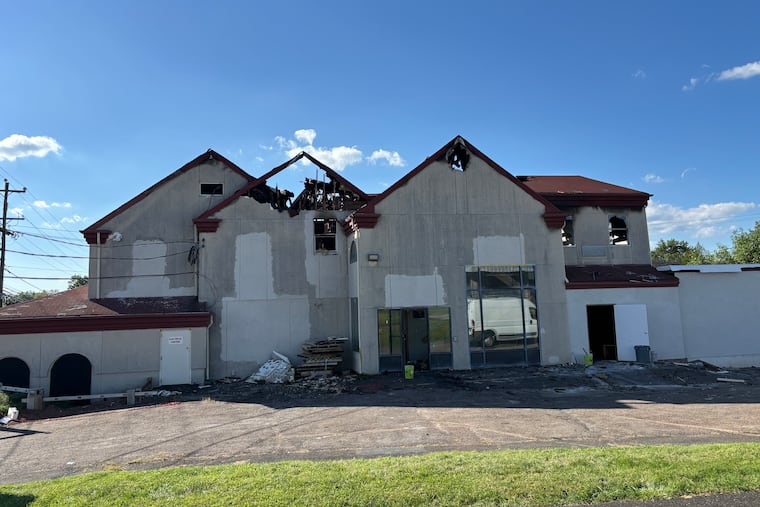
In 1985, David Suro Sr. was 24 years old and working at El Metate, a Mexican restaurant at 1511 Locust St. He purchased it and renamed it Tequilas. In 2001, he moved the restaurant to its present location, at 1602 Locust St., briefly calling it Los Catrines Restaurant and Tequilas bar. It expanded Philadelphians’ understanding of Mexican food at a time when dried chiles, avocados, and cilantro were not commonplace ingredients in the city. A fire destroyed its kitchen in February 2023 and rendered the Rittenhouse fixture immobile for eight months before reconstruction could begin.
Tequilas was ultimately closed for two years, during which it was mourned by longtime regulars. It reopened on March 15 this year, coinciding with Suro’s 64th birthday. “It felt like I was starting all over again,” he said in a phone interview. Indeed, after two years of working with the insurance company, contractors, artists, and consultants from Guadalajara, Suro and his family have opened a brand new restaurant, and an old one. Immediately after the fire, “We decided to divide Tequilas into two restaurants,” Suro said. “We decided to maintain Tequilas and keep it the way it was, but we added La Jefa into the equation.”
The revamped Tequilas proper, its walls and ornate crown molding color-washed in sage like the ballroom of Mérida mansion, which you access after stepping into a foyer painted with skeletons, is the old Tequilas resurrected, just a little spruced up. Enter the dining room and bless yourself at the entrance from the stoup filled with tequila. Fittingly, Tequilas’ strongest presences are a trinity: father, son, and a library of agave spirits.
Seeking to bring more of the contemporary Guadalajara food scene to Philadelphia, the Suros enlisted Guadalajara-based Fabián Delgado Padilla as the consulting chef. He designed two menus for the conjoined concepts, executed in the same kitchen, by chefs and cousins Eduardo Moreno Sanchez and Jessica Sandoval. The reimagined Tequilas menu is a parade of dishes familiar to an American audience, including updated versions of Tequilas’ beloved ceviche and molcajete de pollo, but also dishes that reach further into the Mexican culinary canon, like the mole dulce — which, unlike Oaxacan moles, pairs mole with pork. Where Tequilas is classic, dinner at La Jefa is innovative, serving ceviches, aguachiles, tostadas that center vegetables over meat, and tacos that I will never tire of eating.
While rooted in Guadalajara, Tequilas’ menu is tinged with influences from Baja California, especially its seafood dishes; Tamaulipas, from which the carne asada la tampiqueña gets its inspiration; Sinaloa; and Yucatán. There’s an excellent, straightforward Caesar salad ($18), a quarter of a head of romaine painted with a classical Tijuana Caesar dressing and topped with a cascade of Parmesan, served with a crisped slice of a rustic loaf from Mighty Bread. The chile relleno ($24) blends regional traditions: It resembles the Poblano chiles en nogada but in place of a creamy walnut sauce is a Yucatecan green pipián sauce.
Bring a party, as entrees are hefty, most ample enough to share with a table of four. The barbacoa tapatia ($34) of tender, pulled brisket in a moat of consommé and an ancho and guajillo chile sauce is practically a stew, which I spooned on to hot, wonderfully elastic corn tortillas — the product of a robust corn program executed in collaboration with chef Cristina Martinez of Casa Mexico. “She provides the masa for us and we make our tortillas from it in house,” Suro said. “We didn’t have a solid tortilla program back then, but now we do.” One person in the kitchen is now dedicated solely to making tortillas.
Dishes like the barbacoa, along with a hearty chicken tinga poblana ($32), served with two bean-filled empanadas and topped with pink pickled onions and large, floppy petals of purslane, make me forget that I’m in Philadelphia. The fistfuls of tart, sap-filled purslane, or verdolagas, are redolent of the enormous bouquets I had seen for sale in Central de Abasto, the world’s largest wholesale produce market, outside of Mexico City.
But the food at Tequilas is not always consistent, which can quickly jolt you back to Philadelphia. The first two times I ordered the tamal de acelgas, I fought off my dining companions as we vied for bites of this airy, miraculous thing. A third time, it was a dense brick. It can be difficult to translate the vibrancy of cochinita, the slow-roasted pork dish that, in Yucatán, sparkles with the bitter oranges and the smoke of a pibil or pit, to any kitchen stateside, but both times I ordered it at Tequilas, it was distinctly bland. The mole dulce ($34), which consists of crisped, inch-wide slabs of pork belly interlaced with grilled scallions in a pool of sweet mole sauce rendered from pasilla peppers, dark chocolate, and walnuts, sprinkled with white sesame seeds and crowned with purslane — a recipe passed down to Delgado from his grandmother — was meltingly magnificent on one night and leathery on another.
In 2005, Suro founded Siembra Spirits, his importing company that also produces agave spirits under its own label. Through it, he has educated Americans, including Craig LaBan, about mezcal culture, agave production, and its agricultural threats.
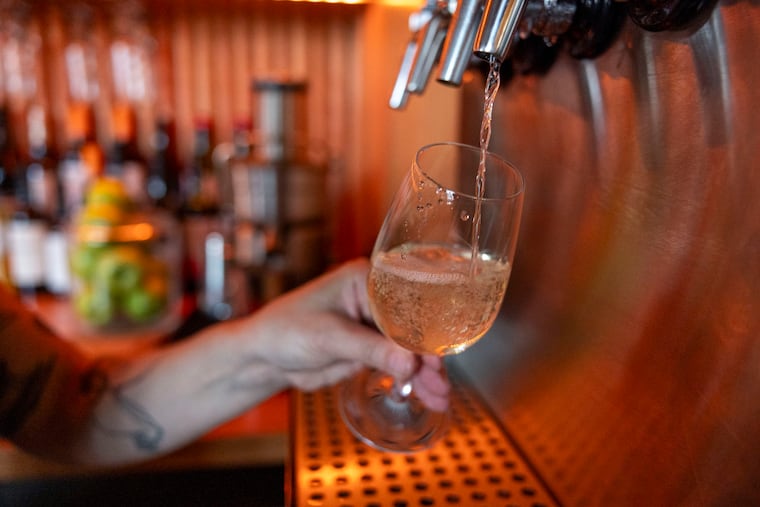
The Tequilas cocktail menu consists of 14 drinks, half of which are margaritas — in contrast to both La Jefa and another Mexican fine dining restaurant that just opened, Amá – both of which pointedly do not serve them. The house margarita comes in two forms: one using earthier, vegetal lowland tequila and the other a highland, which is generally sweeter and more floral. There are seasonal margaritas, too, like a refreshing cucumber and epazote margarita garnished with an erect epazote leaf and kissed with Raiz, a Portuguese skin contact wine made from loureiro grapes (which is also on the menu by the glass).
To uncover the full library of spirits available to you, you must have a conversation with someone behind the bar; those card catalogs exist in their heads. Twenty employees, or roughly 90% of the staff, worked at Tequilas before the fire. Speak with one of them: You’ll see them delivering margaritas balanced upon their heads and occasionally slamming cucaracha shots in front of patrons celebrating birthdays while belting out “Las Mañanitas.” General manager Oscar Serrano, who has been at Tequilas for 29 years, displays an enthusiasm as infectious as it is educational, distilling a vast amount of agave knowledge into tableside recommendations. When Tequilas was closed, “I was here four days a week doing nothing during the day,” he said. “I was here for support, drinking mezcal. And I’d work three nights a week in South Philly.”
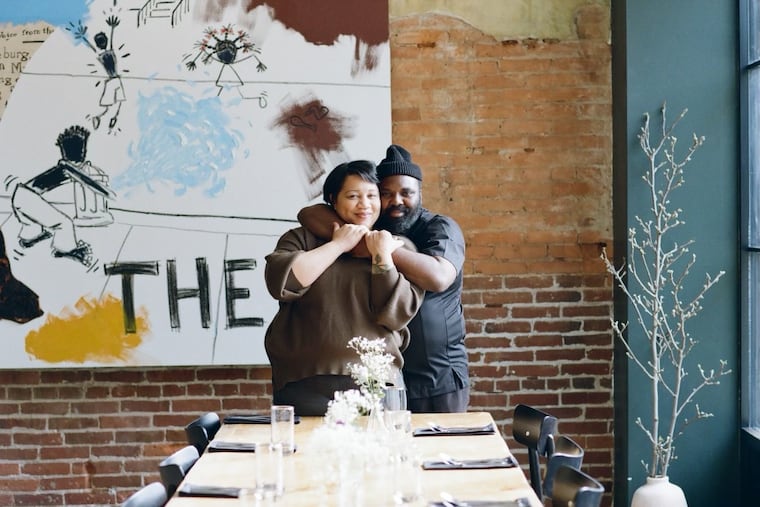
The operation is a family affair, run by David Suro Sr., sons David Suro-Cipolloni Jr. and Dan Suro-Cipolloni, and daughter Elisa Suro-Cipolloni; La Jefa is named in honor of Annette Cipolloni, their late mother. While Suro roams the grand dining room of Tequilas as an avuncular presence, Dan Suro-Cipolloni helms La Jefa, dashing between the two concepts though a hallway flanked by the shared kitchen and restrooms. (Neither technically hold any stake in Tequilas or La Jefa; tied-house laws that originated during Prohibition preclude it because of their ownership of Siembra Spirits.)
The expansion that created the space for La Jefa — into the former stables of the Duane-Dulles House, a mansion built in 1864 — offered the Suros a new opportunity: to incorporate the gastronomic concepts they were observing in Mexico into their restaurant in Philadelphia. Suro sees Tequilas as foundational, but “La Jefa [represents] today’s Guadalajara,” he said. “I have always been in favor of not interrupting the evolution of Mexican food through the centuries. If we don’t evolve, we are putting our longevity into jeopardy.”
So La Jefa represents Tequilas’ future. La Jefa resembles modern Mexican fine dining — vegetable-forward but still indulgent, hinging on fried corn, with half the menu falling under their fritanga category. That includes puffed corn salbutes, dorados or rolled tacos, and a marvelous quesadilla de calabaza rendered from a bicolor tortilla.
But brunch feels like a true melding of Guadalajara and Philadelphia, encompassing thoughtful interpretations of chilaquiles ($16), which at La Jefa are salsa roja-soaked, still-crisp corn tortillas swaddled inside a paper-thin egg omelet with a tangle of queso Oaxaca, and served with crema and a salad of arugula, pea shoots, and pickled ayocote beans. On one visit, I shared a pastrami de lengua sandwich ($18) of housemade pastrami, chile relish, red cabbage coleslaw, and chile mayo on grainy sliced bread with my Jewish in-laws, who, in shock, declared it the best pastrami sandwich in the tristate area. The barbacoa sandwich ($17), is served French dip style, on a crusty baguette with a cup of rich, beefy consommé. “People in Guadalajara aren’t going out for Mexican food,” Suro-Cipolloni said. Places “there have their roots in Mexican food but they’re doing their own thing.”
Still, perhaps no aspect of La Jefa is more forward-thinking than its beverage program, which is split between the day-time cafe that shifts into a casual, front room to gather a group for cocktails at night, and the more refined La Jefa Milpa behind the velvet curtains. A collaboration with James Beard award-winning Danny Childs of Slow Drinks, the beverage program is defined by in-house fermentation, corn manipulated into innumerable drinks and distillates — from tejuino (a fermented beverage made from the same masa as their tacos) for its jejuichela, or citywide, to a totomoxtle latte with a syrup made in-house from charred corn husks — and flourishes like cooked agave hearts in cocktails. “We put way too much work into all of them,” Suro-Cipolloni said.
The new Tequilas and La Jefa are a balancing act, tethering two cities on either side of a border, and straddling the past and a new future, striving to make old customers happy and bring in new ones. Like Janus, the Roman god of beginnings and transitions, it has two faces or two entrances, looking forward and looking back. It’s up to you which entrance you choose, but you’ll find the same principles, hospitality, and culinary obsessions at its heart.
Tequilas (1602 Locust St.) is open for dinner from 5 to 9:30 p.m. Monday through Thursday and 4 to 10 p.m. Friday and Saturday.
La Jefa (1605 Latimer St.) operates as a cafe seven days a week from 8 a.m. to 3 p.m., serves dinner 5 to 10 p.m. Wednesday, Thursday, and Sunday, and until 11 p.m. on Friday and Saturday.
La Jefa Milpa is open 5 p.m. to 12 a.m. Wednesday, Thursday, and Sunday, and until 1 a.m. Friday and Saturday. The operations are conjoined and can be accessed through a door between the shared restrooms and kitchen.
Inquirer Food Festival
Get your ticket to Philly’s ultimate food party! Join top Philly chefs and bakers for one unforgettable day of food.