Yemeni coffee culture is taking over Philly
The wave of Yemeni coffee chains is a boon for those who prefer a late-night latte, particularly the Muslim community.
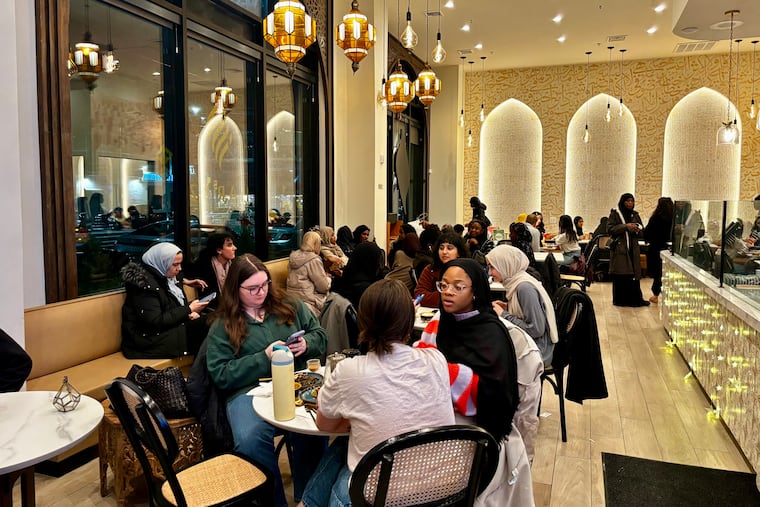
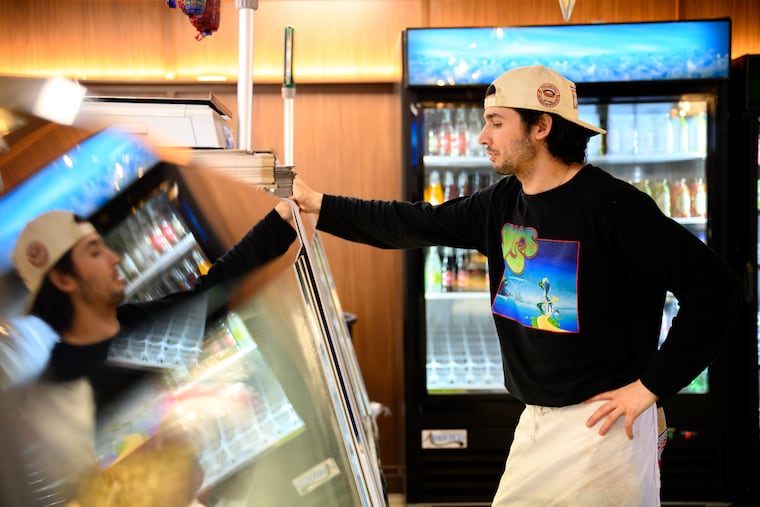
On a Friday night at 10 p.m. in West Philly, a rambunctious line of college students and families in pursuit of basque cheesecakes and date lattes spills out the door of Shibam Coffee on Lancaster Avenue.
A half mile away, a Delaware couple is celebrating their seventh anniversary with Adeni chai and a Dubai chocolate brownie at Haraz Coffee House on Chestnut Street. And over in Fishtown, a group of young women in hijab toast a birthday with matchas and lattes in one corner of Haraz, while a group of uncles from the mosque share a pitcher of hot chai until 2 a.m.
Philly is experiencing a boom in late-night cafe culture thanks to the influx of Yemeni coffeehouses across the city and suburbs.
It’s meant not just the availability of espresso drinks at evening hours, but the growth of places to sit, work, talk, and linger without alcohol or reservations. In 2025, coffee houses became Philly’s most-important third spaces, and Yemeni coffee chains, in particular, were the epicenter of this trend.
Philadelphia has four Yemeni coffeehouse franchises — Haraz Coffee House in West Philly, Fishtown, and Flourtown, Shibam Coffee in West Philly, and Moka & Co. in Center City — with more on the horizon — another Haraz location and Jabal Coffee House in Center City, and Qamaria Yemeni Coffee in Newark, Del.
“If you compare Philly to New Jersey, New York, or a bigger Muslim-populated city, Philly is coming up in the fourth quarter,” said Fahad Azam, co-owner of Shibam. “So there’s still room and areas for Yemeni coffee shops to thrive here in the City of Brotherly Love.”
For immigrant and diasporic communities, particularly Muslims, these coffee shops are often the center of community building and gathering. But it’s also popular among non-Muslims. According to Bon Appetit, the demographic of customers has shifted as Yemeni coffeehouse chains expand across the U.S. “These coffeehouses have grown due to a combination of cultural preservation, a need for community gathering spaces, and the rising popularity of Yemeni coffee,” Amr Abozaid, with the Yemeni American Merchants Association, told BA.
Philly’s Yemeni coffee culture stands out to customers, like high school student Sajida Kazi and her friends, for offering more than just a late-night hangout spot and alternative to conglomerates like Starbucks.
“It’s been a hard time — with everything’s that happened to us [Muslims in America] in the past and what’s still going on," Kazi said. “I think Yemeni coffeehouses just open Philadelphians’ minds up to us [our community].”
The menus are part of the appeal, too.
Jannah Williams and Isana Stewart came to Shibam for the mocktail refreshers and halal snacks. “There’s not many places you can go and eat and not worry about whether you’re mixing the pork with the non-pork food,” Williams said.
For others, it’s shaping up to be the new hotspot for finding love. Waiting for his drink at Shibam, Shereif Saleh overheard rumblings from other customers searching for marriage prospects. He and friend Harun Kashem drove from Cherry Hill to get some caffeine after fasting that day and did not expect Philly’s Muslim singles to be on the hunt during Ramadan.
“There was a group of dudes next to me and they were looking around and asking each other, ‘Are you looking for a wife?’” Saleh said.
The 31-year-old South Jersey resident isn’t keen on bringing a date to a Yemeni coffeehouse — he can’t have the aunties catching him. But he imagines these cafes are quickly becoming a popular spot for date night.
Take Naveed Hasan and Hina Ahzaz, who drove from Newark, Del., to enjoy a sweet treat and chai after their anniversary dinner.
“Why not here? These places should be culturally rich in not just food, but socializing and meeting people, too,” Hasan said.
“It’s Muslim culture to go out for dessert and coffee/tea,” Ahzaz added.
For Ahmad Wali Rahimi, it’s a place for suburban friends to hang in the city. The 48-year-old Bensalem resident texted his friends in their Whatsapp group chat to meet for chai at Haraz Fishtown.
Almost 20 miles from home, the group of six sat for nearly two hours around two marble-topped tables pouring cup after cup and chatting past 1 a.m.
“It’s something new in Philly’s food industry, but you’ll find this culture in countries overseas,” he said. “These cafes are bringing that culture we hold dear here.”
But the biggest draw to late-night Yemeni coffee houses across the city is the comfort and acceptance many Muslims, who make up 1% of the state’s population. according to Pew Research Center, feel at these cafes.
“Philadelphia’s got a lot of Muslims here, but it’s hard to find places you can eat comfortably with your head covered and not have people looking at you sideways,” Williams said. “Having a place to be in community with people that look like you, dress like you, know the culture, is huge.”