The top five Philly restaurant trends of 2025
Michelin stars, oysters, coffee houses, food halls, and a billion-dollar newcomer helped shape the 2025 Philadelphia restaurant scene.
Michelin stars, oysters, coffee houses, food halls, and a billion-dollar newcomer shaped the 2025 Philadelphia restaurant scene.
The awards keep rolling in
As Philadelphia gears up to mark the Semiquincentennial, its restaurant scene sits squarely on the national radar.
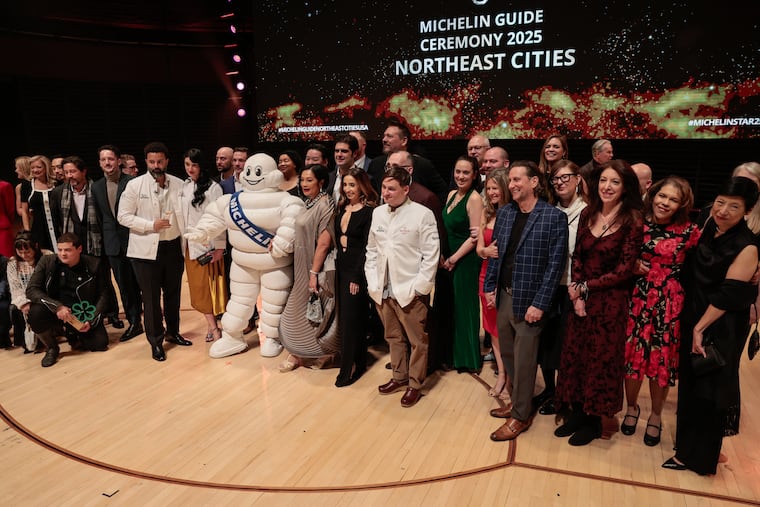
Michelin inspectors seemed to have had a good first impression of Philadelphia’s dining scene. At the Nov. 18 ceremony, which attracted more than 500 culinary professionals from around the world to the Kimmel Center for the U.S. Northeast Cities awards, nearly three dozen Philadelphia restaurants earned recognition. Center City’s Friday Saturday Sunday and Her Place Supper Club, and Society Hill’s Provenance received a star, while 11 others were designated as “recommended.” Ten others were conferred Bib Gourmand selections for serving what Michelin calls “exceptional food at great value.”
In other awards, chef Phila Lorn of South Philadelphia’s Mawn won the James Beard for Emerging Chef in June and was named one of Food & Wine’s Best New Chefs in September. He and his wife, Rachel, also opened a second South Philadelphia restaurant, Sao.
Chef Yun Fuentes of the Center City Puerto Rican restaurant Bolo was named to the Beard Foundation’s TasteTwenty list of industry “ones to watch.”
It was also a standout year for Kalaya, a Fishtown Thai destination, and its founder, Chutatip “Nok” Suntaranon. Kalaya, along with Center City’s Friday Saturday Sunday and South Philadelphia’s Royal Sushi & Izakaya, were all named to 50 Best’s inaugural list of North America’s 50 Best Restaurants. Suntaranon was also included on Time’s list of the 100 Most Influential People of 2025, and Kalaya joined Society Hill’s Zahav and Center City’s Vetri Cucina on Robb Report’s ranking of the 100 Greatest Restaurants of the 21st Century.
Coffee houses claim their role as third spaces
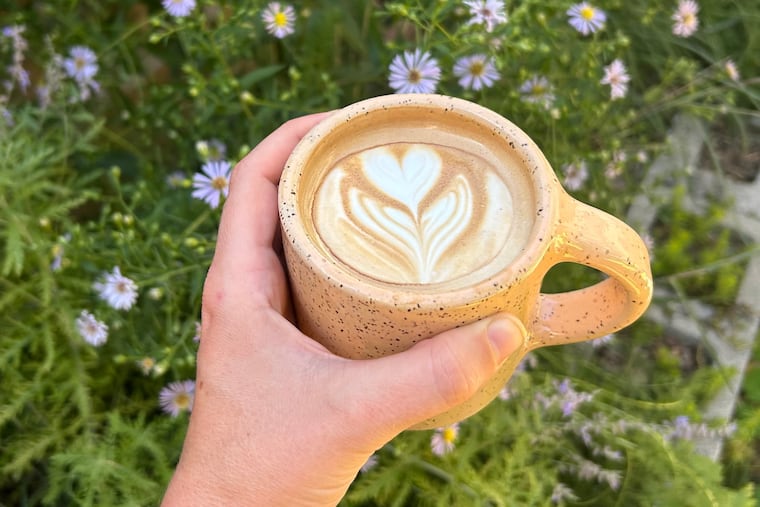
Coffee houses became Philadelphia’s most important third spaces — places to sit, work, talk, and linger without alcohol or reservations. Yemeni coffee chains, in particular, expanded.
Haraz Coffee House opened locations in University City and Fishtown, while Moka & Co. opened one on South Penn Square across from City Hall. The popular Vietnamese coffee chain Trung Nguyen Legend rolled out a two-level location in South Philadelphia, joining other linger-friendly destinations in the city, such as Rival Bros Coffee’s cushy, new Washington Square West location, the Bread Room, Olive Roots Cafe, Seaforest Bakeshop, and La Maison Jaune. More are on the way soon, including a Haraz location in Flourtown, a Moka at Temple University, M.O.T.W. (Muslims of the World) at the Murano in Center City, and Shibam Coffee in University City.
Oysters go social
Oysters are everywhere as raw bars multiplied. Sao reimagines seafood through a Cambodian influence. Lauren Biederman (Biederman’s) is behind Tesiny, a South Philadelphia raw bar; restaurateur Felicia Wilson and chef Darryl Harmon offer bivalves at their First Daughter Oyster & Co. at the Renaissance Philadelphia Downtown Hotel; and chef George Sabatino and partners have put a raw bar front and center at Fleur’s, their French spot in Kensington.
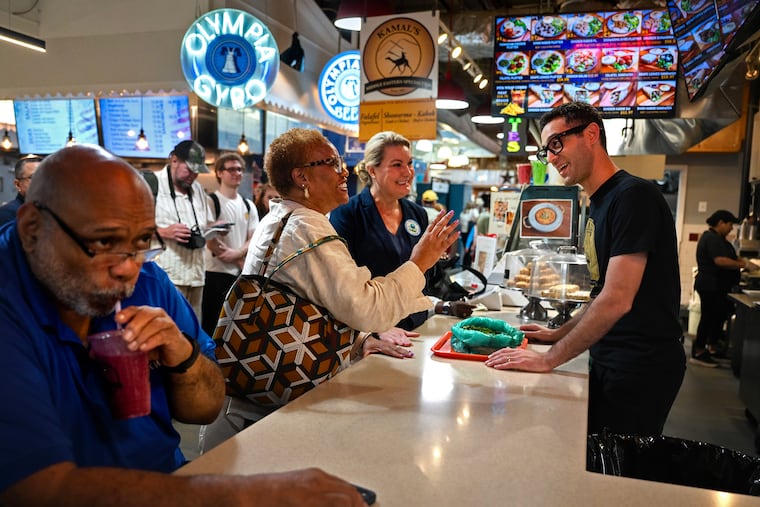
Food halls grow up, and find their footing
You could describe Eataly, the Italian emporium that opened in October in King of Prussia, and the new Feed Mill Eatery in Medford as food halls because of their everything-under-one-roof setup. But they have common ownership. The new Gather Food Hall and Ridge Hall, however, are assemblages of local operators united for a common mission.
Gather, in the former Bulletin Building across from 30th Street Station, has not only gathered Mexican, Cambodian, Peruvian, Indian cuisine, and pizza in University City, it has created a model to combat food insecurity among college students. Gather’s operators partner with Believe in Students, a national nonprofit, and have pledged to give out 5,000 low-cost meals in its first year, backed by a $250,000, 10-year commitment from developer Brandywine Realty Trust.
In Ambler, developer Dan DeCastro has set up Ridge Hall to function as a neighborhood anchor of small businesses, such as Twisted Gingers Brewing Co., Lucky’s Roadside Stand, Pho Mi Please, Mary’s Chicken Strip Club, 2Street Sammies, Pierogie Kitchen, Herman’s Coffee, and Char, A Lobster Rolls and More Experience. In a food scene shaped by high rents and thin margins, food halls lower barriers for operators while broadening access for diners.
Then came Wonder.
Wonder arrives, forcing a reckoning
Nothing in 2025 unsettled the local industry more than the rapid expansion of Wonder, going from zero to 20 locations in Philadelphia and South Jersey, with even more on the way.
Wonder, backed by $1.5 billion in venture capital, sells food via walk-in, app, and delivery from a diverse lineup of menus by such chefs as Bobby Flay, José Andrés, and Marcus Samuelsson. Want a steak, a pizza, an order of nachos, and a grilled chicken sandwich from the same place, all delivered in 30 minutes? That’s the wonder of Wonder.
Wonder, based in the New York City area, calls itself a food hall. In reality, it’s a ghost kitchen. Food is prepared at a central kitchen and trucked down to each location, where workers (not actual cooks) set up and reheat the dishes in ventless kitchens.
For diners, the appeal is convenience and, for now, price. But as Wonder blankets the region with ads and offers of half-price orders and free delivery to gain a foothold, it is disrupting the industry.
Wonder steers diners away from local shops. It turns choosing a restaurant into scrolling menus on an app, not supporting places you may know. And by pushing everything toward delivery and pickup and by undercutting prices, it makes it harder for independent restaurants — especially neighborhood takeout spots — to survive on already thin margins.
In a year when so much of Philadelphia’s food culture emphasized independent owners and the importance of community, this contrast is striking.